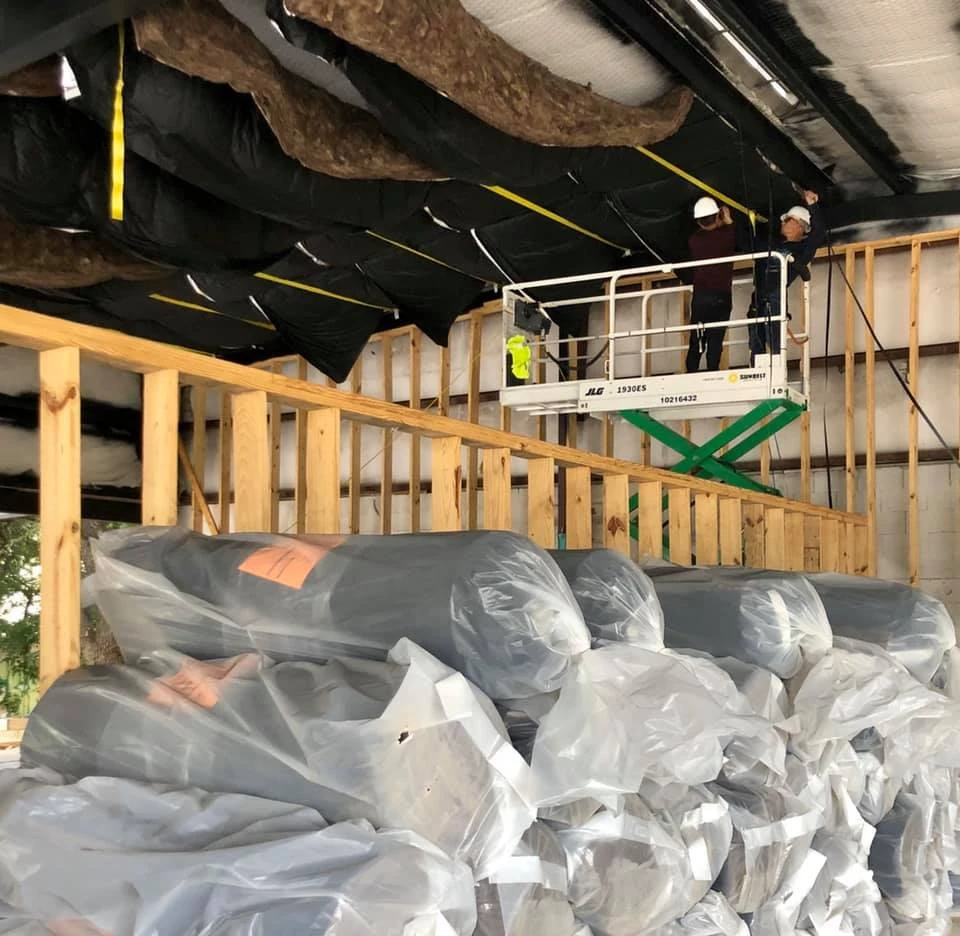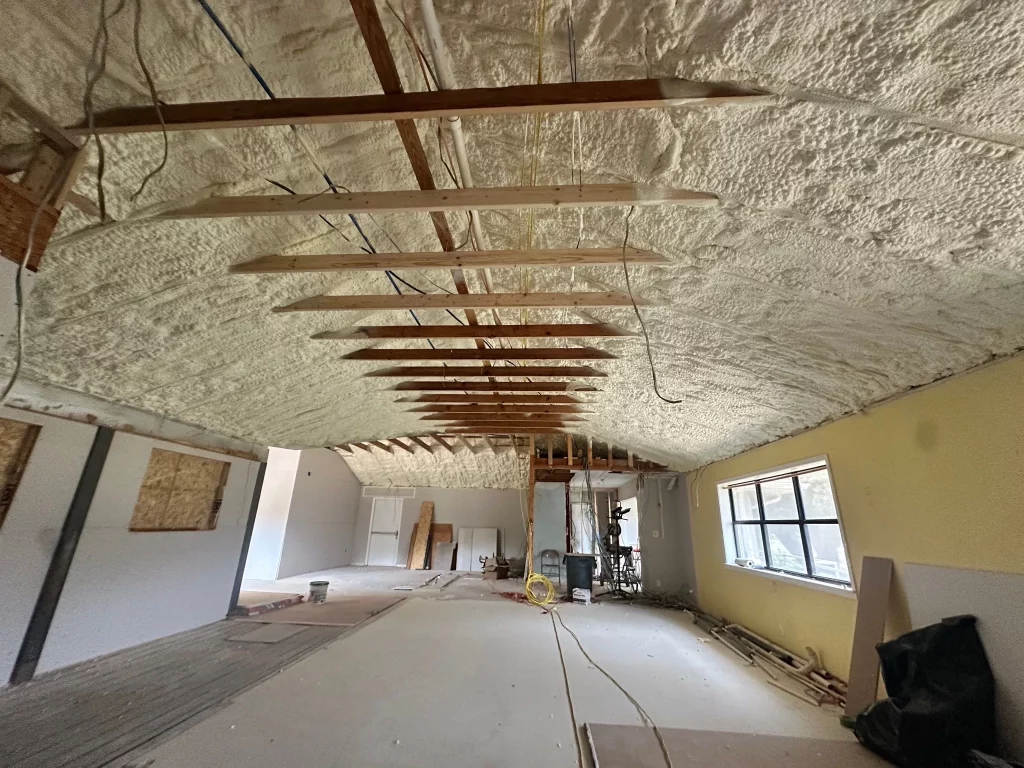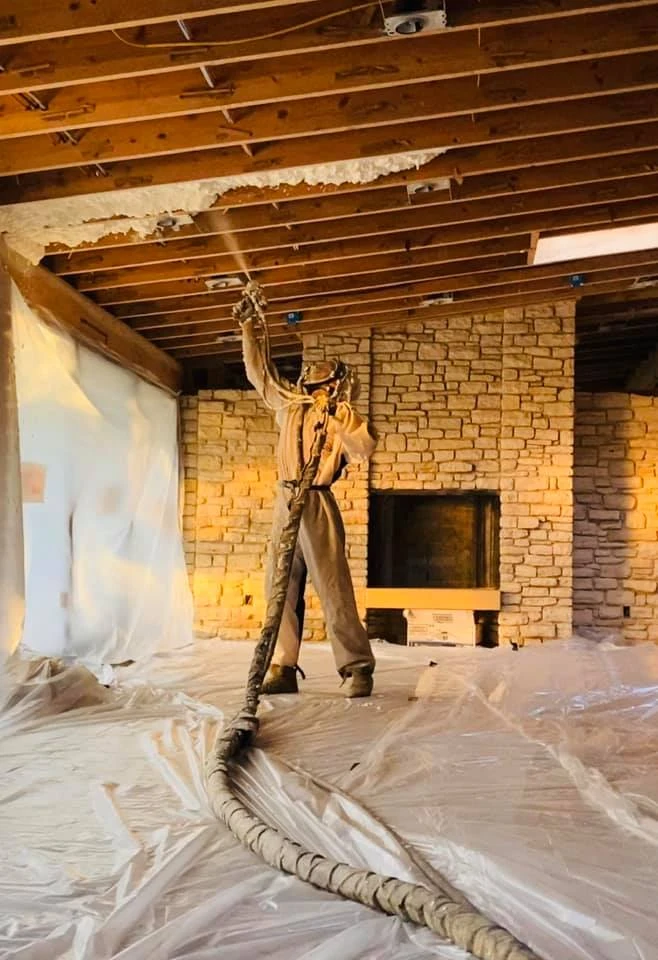


An airtight seal creates a continuous boundary between the home’s conditioned living space and the unconditioned outdoor environment. For residential spray foam in Cedar Park, this barrier specifically functions to stop uncontrolled air leakage, known as infiltration and exfiltration, which is the primary driver of energy waste and discomfort. By closing gaps in the building envelope, an airtight seal stabilizes indoor temperatures, prevents humid Texas air from saturating wall cavities, and physically blocks allergens, such as mountain cedar pollen, from entering the home.
Establishing this seal requires more than just applying caulk around windows. It involves a systematic approach to identifying and blocking air pathways in attics, crawl spaces, and wall penetrations where pressure imbalances force air through the structure. A Department of Energy reportindicates that reducing air leakage is one of the most cost-effective ways to cut heating and cooling costs while improving overall durability. This process fundamentally changes how a house manages the intense Central Texas climate.
The Mechanics of Air Movement and Pressure
Understanding why an airtight seal matters requires looking at the physics of a house. Air moves from high-pressure areas to low-pressure areas. In a typical home, this movement is driven by the stack effect. During the cooler months in Cedar Park, heated air rises and escapes through the attic. This escaping air creates a vacuum at the bottom of the house, pulling in cold air through the crawl space or foundation cracks.
In the summer, the process often reverses or changes based on wind and mechanical systems. The air conditioner runs constantly to cool the interior, but if the return ductwork leaks or the building envelope has gaps, hot, humid outdoor air is sucked into the living space. This forces the HVAC system to work harder to cool down air that shouldn’t have entered in the first place.
Moisture Transport via Air Leaks
Air leakage is not just about temperature; it is the leading cause of moisture problems in walls and attics. Air acts as a transport mechanism for water vapor. In a humid climate like Cedar Park, outside air holds a significant amount of moisture. When this warm air leaks into a cool, air-conditioned wall cavity, condensation can occur.
Research published by Building Science Corporation demonstrates that air leakage moves more moisture exponentially into building assemblies than vapor diffusion through materials. A small hole can deposit quarts of water into a wall over a single season, whereas vapor diffusion might only move a teaspoon. An airtight seal stops this airflow, thereby preventing the moisture accumulation that leads to mold growth and structural rot.
Bonus Tip: Check recessed lighting fixtures (can lights) in the top floor ceiling. These are often major sources of air leakage where conditioned air escapes into the hot attic.
Impact on Indoor Air Quality and Allergens
Cedar Park residents are familiar with “Cedar Fever” and other seasonal allergies. A home without an airtight seal allows these outdoor contaminants to bypass filters. Pollen, dust, and particulate matter enter through small cracks in the attic floor, around plumbing penetrations, and through leaky ductwork.
The Environmental Protection Agency states that controlling pollution at its source is usually the most effective way to improve indoor air quality. Sealing the building envelope acts as that primary control. It forces air to enter through controlled points, such as a mechanical ventilation system or filtered HVAC intake, rather than seeping in through dirty attics or crawl spaces. This results in a cleaner living environment and reduces the dust load on surfaces and lungs.
Energy Efficiency and Equipment Sizing
When a home leaks air, the heating and cooling equipment must run longer to maintain the set temperature. This is often misinterpreted as the unit being too small or old. In reality, the unit is trying to condition the outdoors. An airtight seal retains the conditioned air, allowing the HVAC system to cycle off more frequently.
Proper sealing also affects equipment longevity. Systems that run continuously to combat air leakage experience more wear and tear. By reducing the system’s load, the equipment lasts longer and requires fewer repairs.

Air Sealing Material Performance Comparison
Different materials address different types of leaks. The following table outlines common materials used to establish an airtight seal and their best applications.
| Material | Best Application | Sealing Capability | Durability |
|---|---|---|---|
| Spray Polyurethane Foam (Open Cell) | Attics, roof decks, wall cavities | High (Expands to fill gaps) | Long-term |
| Spray Polyurethane Foam (Closed Cell) | Crawl spaces, metal buildings | Very High (Water & Air barrier) | Long-term |
| One-Part Foam (Canned) | Small gaps around pipes/wires | Moderate (Good for spot sealing) | Moderate |
| Caulk/Sealant | Window trims, baseboards | Low (Surface level only) | Varies (3-10 years) |
| Weatherstripping | Doors, attic hatches | Low (Mechanical seal) | Short (Replace often) |
Things to Consider Before Making a Decision
Before attempting to seal a home, certain factors must be evaluated to ensure safety and effectiveness.
Ventilation Requirements The phrase “build tight, ventilate right” is a standard in modern construction. When a home is sealed tightly, natural ventilation through cracks is eliminated. This is good for energy efficiency, but it requires a strategy for fresh-air exchange. Mechanical ventilation, such as an ERV (Energy Recovery Ventilator) or a fresh-air intake on the HVAC system, ensures that stale indoor air is replaced with filtered, fresh air without sacrificing energy efficiency.
Combustion Safety Homes with gas furnaces, water heaters, or fireplaces rely on air for combustion. If a house is too tight, exhaust gases might be pulled back into the living space (backdrafting). A combustion safety test is mandatory whenever significant air sealing is performed to ensure these appliances properly vent harmful gases like carbon monoxide to the outside.
Condition of Existing Insulation Air sealing is often done in conjunction with insulation services in Cedar Park, TX. If the existing insulation is old, contaminated by rodents, or compressed, it may need to be removed to access the air leakage points on the attic floor. Placing new insulation over unsealed gaps will not solve the airflow problem.
Bonus Tip: Look for dirty insulation in the attic. If fiberglass insulation looks black or dirty in specific spots, it acts as a filter for air passing through it. This visual cue indicates a significant air leak beneath it that needs to be sealed.
Conclusion
An airtight seal is the foundation of a high-performance residential spray foam insulation in Cedar Park. It separates the indoor environment from outdoor extremes, allowing the homeowner to control temperature, humidity, and air quality. While insulation slows heat transfer, the air seal prevents conditioned air from escaping and unconditioned air from entering.
Homeowners should assess their current envelope tightness through diagnostic testing before adding more insulation or replacing HVAC equipment. Addressing the air barrier first ensures that all other systems operate at peak efficiency. This strategic approach protects the structure from moisture damage and provides a healthier, more comfortable living space for years to come.
Ready to Secure Your Home?
Stellrr Insulation & Spray Foam helps Cedar Park homeowners regain control over their indoor environment. Identifying the sources of air leakage and implementing a robust sealing strategy can improve comfort levels and reduce energy consumption. Contact the team at (512) 710-2839 or email info@stellrr.com to schedule a diagnostic evaluation. Fixing the seal today protects the home for the future.
Frequently Asked Questions
What is the difference between insulation and air sealing?
Insulation resists heat flow (conduction), while air sealing stops airflow (convection). Think of insulation as a wool sweater and air sealing as a windbreaker. You need both for optimal thermal protection. A sweater offers little warmth if the wind blows right through it; similarly, insulation performs poorly if air passes through it easily.
Will air sealing cause moisture to get trapped inside?
Air sealing prevents moisture from entering through leaks, which is the primary source of humidity. However, internal moisture from cooking and showering must still be managed. Proper exhaust fans in bathrooms and kitchens, along with an appropriately sized HVAC system that dehumidifies effectively, will manage internal moisture levels.
How much can I expect to save on utility bills?
According to Energy Star data, homeowners can save an average of 15% on heating and cooling costs by air-sealing their homes and adding insulation. In areas with extreme temperatures like Cedar Park, savings can be even higher because reduced strain on air conditioning systems during peak summer heat reduces energy use.
Is spray foam the only way to achieve an airtight seal?
Spray foam is one of the most effective single-product solutions because it insulates and seals simultaneously. However, an airtight seal can also be achieved using a combination of rigid board insulation, tapes, gaskets, and canned foam, though this method is often more labor-intensive and prone to human error during installation.
Sources
- Department of Energy – Guide on the benefits and methods of air sealing for energy efficiency.
- Building Science Corporation – Technical digest explaining air barriers and moisture transport via air leakage versus diffusion.
- Environmental Protection Agency – Information on improving indoor air quality by controlling pollution sources.
- Energy Star – Methodology and data regarding potential savings from sealing and insulating homes.