
The best spray foam insulation for your energy-efficient home depends on your climate zone, budget, and the specific areas you need to insulate. For most homeowners, the decision comes down to two main categories: open-cell spray foam, which offers lower cost and strong sound dampening at roughly R-3.7 per inch, and closed-cell spray foam, which delivers higher R-values (up to R-6.5 to R-7 per inch), moisture resistance, and added structural rigidity at a higher price point. The right choice balances your home’s thermal performance needs, available wall and attic cavity depth, and how quickly you want to recoup the investment through lower energy bills.
TLDR / Key Takeaways
- Closed-cell spray foam delivers R-6.5 to R-7 per inch, making it the strongest performer per inch of thickness and ideal for tight cavities in extreme climates.
- Open-cell spray foam offers R-3.7 per inch at a lower cost, with superior sound dampening qualities that work well for interior walls and attics in moderate climates.
- Homeowners who upgrade to spray foam insulation typically see energy savings of 15% to 50% on heating and cooling costs compared to traditional insulation methods.
- Spray foam costs roughly $3,000 to $8,000 more than fiberglass or cellulose for a typical 2,500 square foot home, with annual savings of $500 or more depending on climate and usage.
- Closed-cell foam doubles as a vapor retarder and adds structural strength to walls and roof decks, while open-cell foam allows moisture to pass through, reducing the risk of trapped condensation.
- A hybrid approach, using closed-cell in basements, crawl spaces, and exterior walls and open-cell in large attic spaces, often delivers the best value for energy-conscious homeowners.
Understanding Spray Foam Insulation Basics
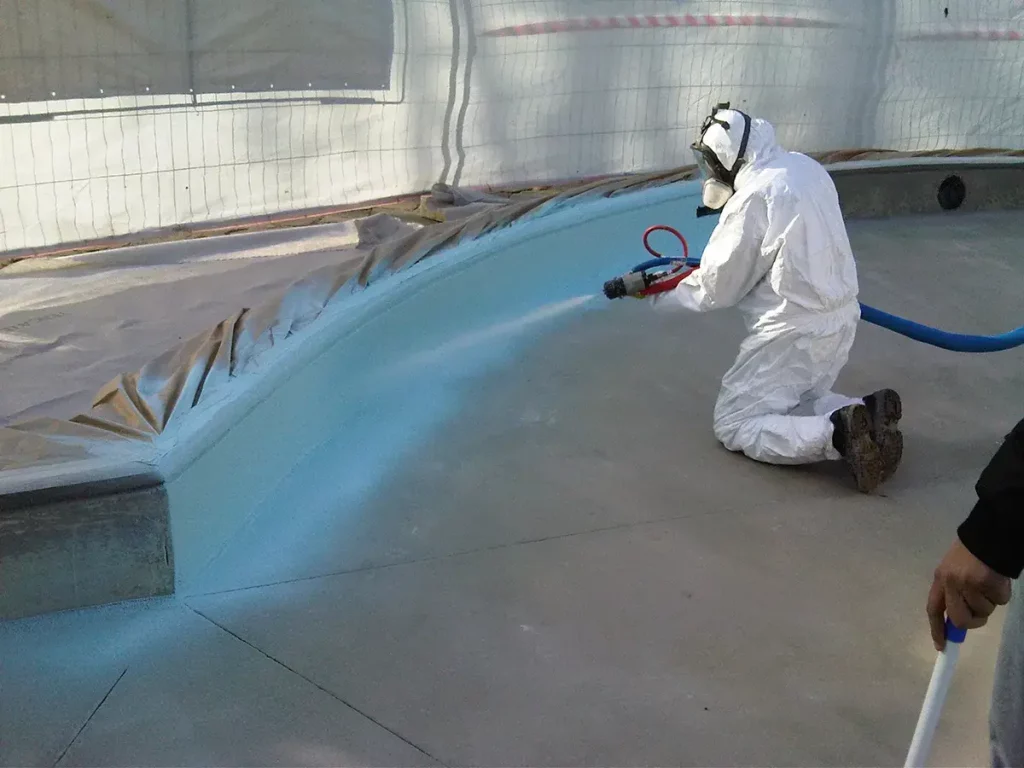
Spray foam insulation is applied as a liquid that expands and hardens into a continuous barrier, sealing gaps, cracks, and hard-to-reach spaces that traditional batt or blown-in insulation cannot effectively cover. Unlike fiberglass or cellulose, spray foam creates an airtight seal that dramatically reduces air infiltration, which is one of the largest sources of energy loss in most homes. According to the U.S. Department of Energy, proper air sealing combined with insulation is one of the most cost-effective ways to improve a home’s energy efficiency.
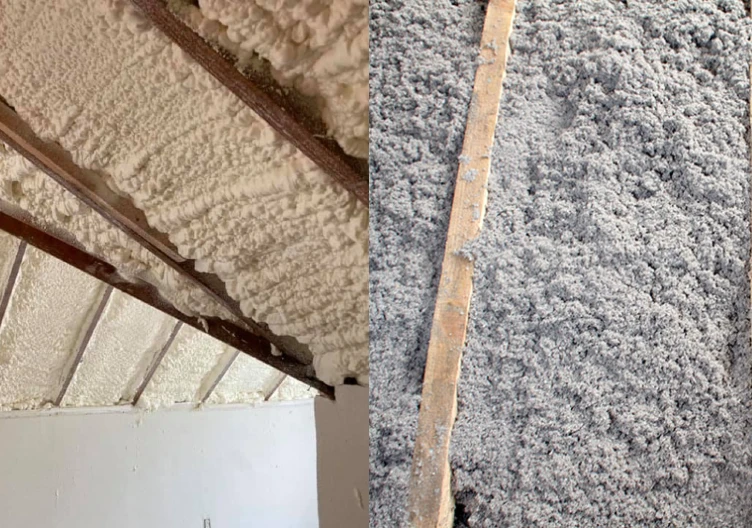
The two primary types of spray foam, open-cell and closed-cell, differ in their chemical formulation, physical structure, and performance characteristics. Understanding these differences is the first step toward choosing the right product for your home and climate.
Open-Cell vs. Closed-Cell Spray Foam: A Detailed Comparison
The table below breaks down the key differences between the two main spray foam insulation types:
| Feature | Open-Cell Spray Foam | Closed-Cell Spray Foam |
|---|---|---|
| R-Value Per Inch | R-3.7 to R-4.3 | R-6.5 to R-7.0 |
| Density | Low (0.5 lbs per cubic foot) | High (1.5 to 2.0 lbs per cubic foot) |
| Vapor Barrier | Vapor permeable | Vapor retarder (Class II) |
| Sound Dampening | Excellent | Good |
| Structural Strength | None | Adds rigidity to walls and roof decks |
| Expansion Rate | Expands up to 100x its volume | Expands 30x to 40x its volume |
| Best Application Areas | Attics, interior walls, sound partitions | Basements, crawl spaces, exterior walls, metal buildings |
| Cost Per Board Foot | Lower | 30% to 50% higher than open-cell |
| Moisture Resistance | Allows moisture to pass through | Resists moisture and water intrusion |
When Open-Cell Spray Foam Makes Sense
Open-cell spray foam is the more budget-friendly option and works particularly well in attics where cavity depth is not a limiting factor. Because it expands significantly during application, it fills irregular spaces thoroughly and provides strong sound dampening. Homes in moderate climates (Climate Zones 3 and 4) benefit greatly from open-cell foam in attic floors and interior walls.
Open-cell foam’s vapor-permeable nature means it allows moisture to diffuse through the material, which can be an advantage in mixed-humidity climates where trapping moisture inside wall cavities could lead to mold or rot. The tradeoff is that you need a separate vapor barrier in some assemblies, and the lower R-value per inch means you need more thickness to hit your target R-value.
When Closed-Cell Spray Foam Is the Better Choice
Closed-cell spray foam is the go-to option when you need maximum thermal resistance in a thin profile. This makes it ideal for basement rim joists, crawl space walls, and exterior wall cavities where stud depth is limited. In cold climates (Climate Zones 5 through 7), closed-cell foam’s higher R-value per inch and built-in vapor retarder properties make it a practical necessity for preventing condensation and thermal bridging.
Beyond insulation, closed-cell foam adds significant structural strength to the assemblies it’s applied to. Studies referenced by Johns Manville show that closed-cell spray foam can increase the racking strength of wall assemblies by up to 45%, which provides additional resistance to wind loads. This dual benefit is particularly valuable in coastal and high-wind areas.
Comparison Chart Suggestion: A side-by-side bar chart comparing R-value per inch, cost per board foot, and annual energy savings percentage for open-cell vs. closed-cell spray foam across three climate zones (hot, mixed, cold).
Medium-Density and High-Density Options
Beyond the standard open-cell and closed-cell categories, spray foam also comes in medium-density formulations that fall between the two extremes. Medium-density closed-cell foam offers R-values around R-5.5 to R-6.0 per inch and is commonly used in commercial buildings and continuous insulation applications on exterior walls. High-density spray foam, sometimes exceeding R-7.5 per inch, is used in specialized applications such as cold storage facilities and roofing systems.
For residential energy efficiency, medium-density closed-cell foam is worth considering for homes in mixed climates where you want better moisture resistance than open-cell but at a slightly lower cost than premium high-density formulations.
Where to Apply Spray Foam in Your Home
Not every area of your home benefits equally from spray foam insulation. Strategic application matters as much as the product you choose.
Attics and Rooflines
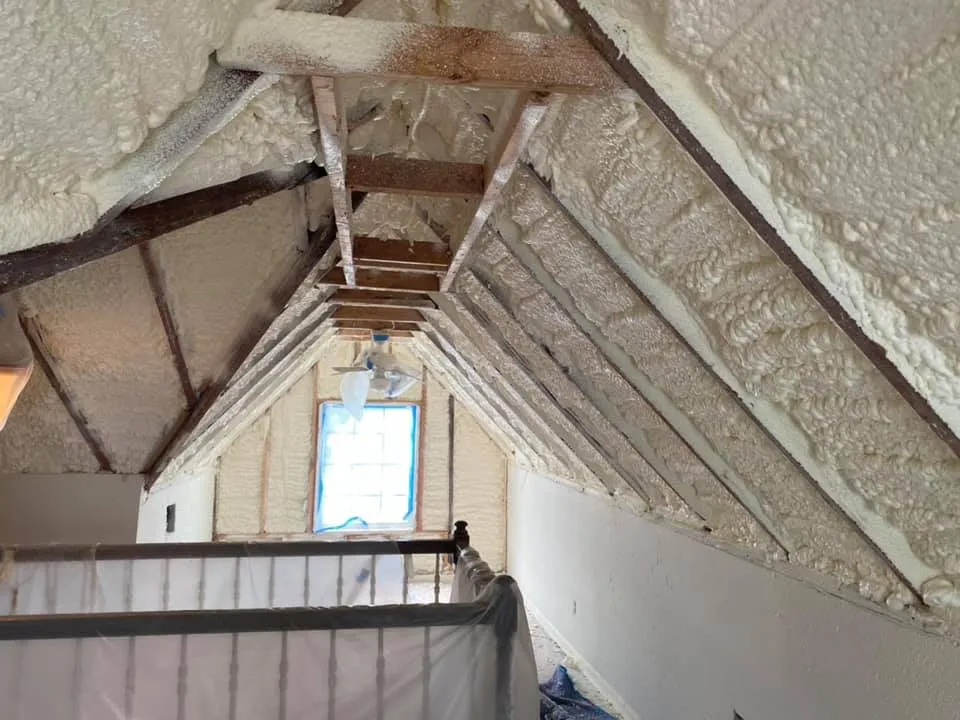
Conditioned attics sealed with spray foam on the roofline (rather than the attic floor) can reduce energy consumption by 15% to 50% according to multiple industry studies cited by EcoPolySeal. Open-cell foam is a popular choice here because attics typically have plenty of depth to accommodate the thicker application needed to reach target R-values.
Basements and Crawl Spaces
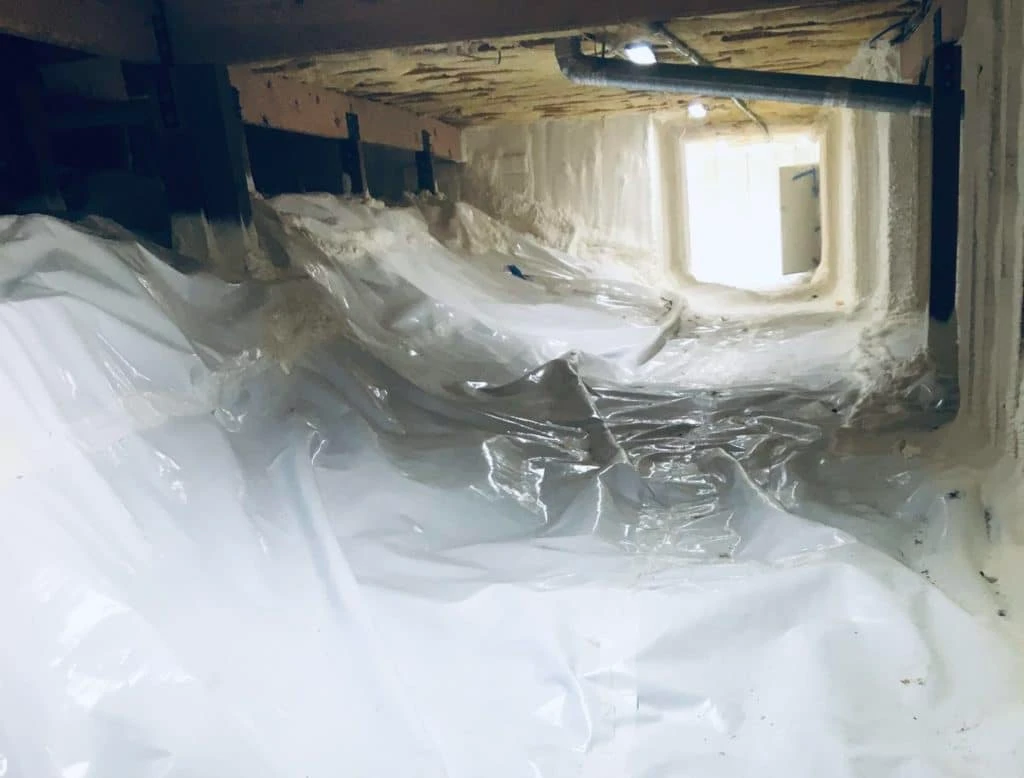
Closed-cell spray foam is almost always the right call for below-grade applications. It provides the moisture resistance needed in basements and crawl spaces while delivering high R-value in the thin rim joist cavities common in these areas.
Exterior Walls
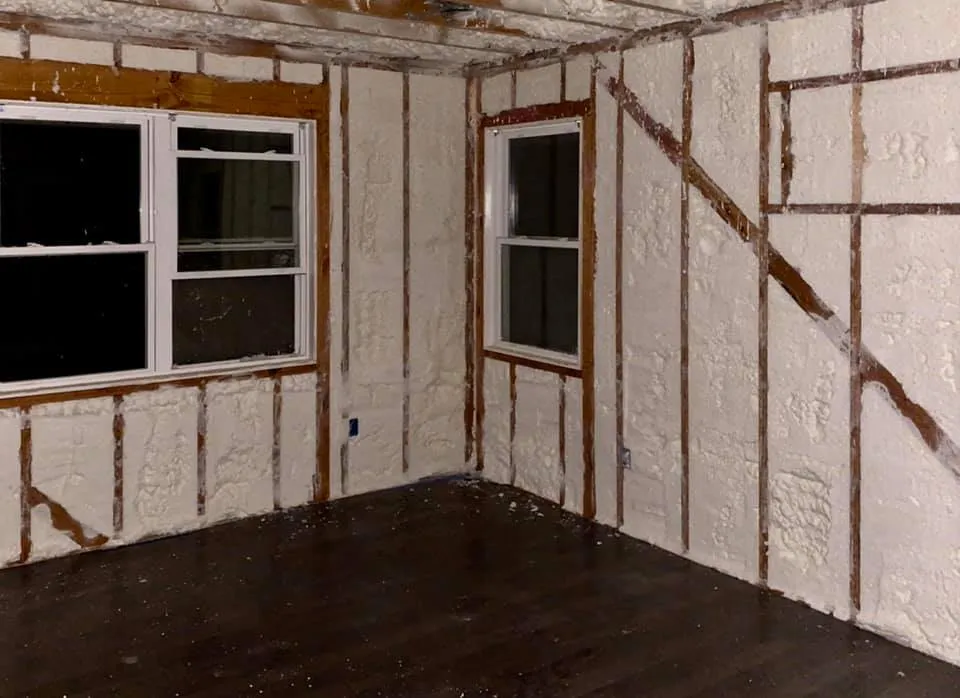
For new construction or major renovations, closed-cell foam in exterior wall cavities provides the best thermal performance and air sealing. In retrofit situations where cavity depth is limited, closed-cell is often the only spray foam option that can meet modern energy code requirements.
Interior Walls and Soundproofing
Open-cell foam excels in interior partition walls where sound reduction is a priority. Home offices, media rooms, and bedrooms benefit from the acoustic dampening properties of low-density foam.
Real-World Scenarios
| Home Type | Climate Zone | Strategy Used | Investment Level | Expected Outcome |
|---|---|---|---|---|
| 1,800 sq ft ranch home, existing construction | Zone 4 (Mixed) | Open-cell in attic, closed-cell in rim joists | $4,500-$7,000 | 25-30% reduction in HVAC costs |
| 2,500 sq ft two-story new build | Zone 5 (Cold) | Closed-cell in all exterior walls and basement | $8,000-$12,000 | 35-45% reduction in heating costs |
| 3,200 sq ft custom home, coastal | Zone 2 (Hot-Humid) | Closed-cell roof deck, open-cell interior walls | $10,000-$15,000 | 40-50% reduction in cooling costs, added wind resistance |
| 1,200 sq ft retrofit, 1950s home | Zone 6 (Very Cold) | Closed-cell in rim joists and crawl space only | $2,500-$4,000 | 15-20% reduction in heating, eliminated draft complaints |
How to Evaluate a Spray Foam Contractor
Choosing the right insulation product matters, but choosing the right installer matters just as much. Spray foam application requires specialized equipment, training, and attention to detail that general contractors rarely possess.
Questions to ask before hiring:
- Are you certified by the Spray Polyurethane Foam Alliance (SPFA)? SPFA certification is the industry standard for professional installers.
- Which manufacturer’s products do you use, and what warranties do they offer?
- Can you provide a detailed breakdown showing R-value calculations for each area being insulated?
- What is your process for protecting surrounding surfaces during application?
- Do you perform blower door testing before and after installation to verify air sealing performance?
Common Mistakes Homeowners Make
- Choosing based on price alone: The cheapest bid often means lower-quality materials, insufficient coverage depth, or inexperienced installers. Focus on total value, including warranty coverage and verified performance.
- Ignoring climate zone requirements: What works in a mild climate may fail completely in an extreme climate. Always match your insulation strategy to your local energy code requirements.
- Skipping the air sealing assessment: Spray foam’s biggest advantage is its air sealing capability. If you do not address air leaks before or during installation, you leave a significant portion of its value on the table.
- Overlooking ventilation needs: Sealing an attic with spray foam changes the ventilation requirements for that space. Your contractor should confirm that HVAC systems are properly sized for the tighter building envelope.
- Not verifying insurance and licensing: Spray foam installation involves chemicals, height work, and specialized equipment. Confirm your contractor carries general liability and workers’ compensation insurance.
Recommendations by Homeowner Profile
| Homeowner Profile | Recommended Approach | Why |
|---|---|---|
| Budget-conscious retrofit owner | Open-cell in accessible attic, closed-cell in basement rim joists | Targets the two highest-impact areas while keeping costs manageable |
| New construction buyer | Full closed-cell exterior package with open-cell attic | Maximizes energy efficiency from day one while controlling overall build costs |
| Coastal or high-wind area resident | Closed-cell on roof deck and exterior walls | Adds structural strength alongside thermal performance |
| Sound-sensitive homeowner (home office, studio) | Open-cell in all interior partitions | Provides the best acoustic dampening at the lowest cost |
| Cold climate homeowner with limited wall depth | Closed-cell in all wall cavities and basement | Delivers maximum R-value within the available cavity space |
Signs You Have Chosen the Right Spray Foam Strategy
- Your contractor provided R-value calculations specific to each area of your home, not generic estimates
- The proposed insulation plan accounts for your climate zone and local energy code requirements
- The installer explained the difference between open-cell and closed-cell foam and recommended the right mix for your situation
- You received a clear, written warranty covering both materials and workmanship
- A blower door test is included to measure the actual reduction in air leakage after installation
- The contractor discussed how your HVAC system may need adjustment to account for the tighter building envelope
Ready to Make Your Home More Energy-Efficient?
Choosing the right insulation solution is one of the most impactful decisions you can make for your home’s comfort and energy costs. At Stellrr, we help homeowners evaluate their options, calculate the right R-values for every zone in their home, and install spray foam insulation with precision and care. Whether you need closed-cell foam for a tight basement crawl space or open-cell coverage for a large attic, our certified installers deliver results backed by industry-leading warranties.
Call us at (512) 710-2839 or email info@stellrr.com to discuss your project. We will walk you through every option so you can make a confident, informed decision.
FAQs
How much does spray foam insulation cost compared to fiberglass?
Spray foam insulation typically costs 30% to 50% more per square foot than fiberglass batts. For a 2,500 square foot home, expect to pay $3,000 to $8,000 more upfront. However, the energy savings of $500 or more per year often offset the difference within 5 to 10 years, depending on your climate and energy rates.
Is closed-cell spray foam worth the extra cost?
In cold climates, basements, crawl spaces, and anywhere moisture resistance is important, closed-cell spray foam is absolutely worth the premium. Its higher R-value per inch, vapor retarder properties, and structural reinforcement make it a better long-term investment for high-performance applications.
Can spray foam insulation cause moisture problems?
When installed correctly, spray foam actually prevents moisture problems by creating an airtight seal. However, closed-cell foam applied in the wrong assembly can trap moisture if a separate drainage plane is not properly detailed. This is why working with an experienced, SPFA-certified installer is so important.
How long does spray foam insulation last?
Spray foam insulation is designed to last the lifetime of your home when properly installed. Unlike fiberglass, which can settle, sag, and lose effectiveness over time, spray foam maintains its shape, R-value, and air sealing properties for decades without degradation.
Does spray foam insulation qualify for tax credits or rebates?
Many federal, state, and utility programs offer tax credits or rebates for energy-efficient home improvements, including spray foam insulation. The Inflation Reduction Act extended and expanded residential energy efficiency tax credits. Check with your local utility provider and a tax professional to confirm what incentives are available in your area.
Sources
- U.S. Department of Energy – Insulation – Federal guidance on insulation types, R-values, and energy efficiency recommendations for residential buildings.
- Johns Manville – Spray Foam: Open-Cell vs. Closed-Cell – Technical comparison of open-cell and closed-cell spray foam insulation including R-values, density, and structural benefits.
- EcoPolySeal – Understanding Spray Foam Insulation R-Value – Energy savings data and R-value performance details for spray foam insulation.
- Spray Polyurethane Foam Alliance (SPFA) – Industry trade association providing installer certification standards and best practices for spray foam application.