
Every building owner and facility manager faces the same challenge: how to control operational costs while maintaining a comfortable, productive environment. The solution often lies hidden behind the walls and above the ceilings. Commercial insulation isn’t just about keeping buildings warm in winter and cool in summer, it’s a fundamental system that impacts everything from energy bills to occupant satisfaction, equipment lifespan to regulatory compliance. Yet many commercial properties operate with inadequate, outdated, or improperly installed insulation, quietly hemorrhaging money and performance potential every single day.
This comprehensive guide represents years of hands-on experience in commercial building performance, distilled into actionable insights you can apply immediately. Whether you’re constructing a new facility, renovating an existing structure, or simply trying to understand why your energy costs keep climbing, you’ll find the answers here. We’ll walk through everything from the basic science of heat transfer to cutting-edge materials and installation techniques. You’ll learn how to evaluate your current insulation, choose the right solutions for specific applications, calculate potential savings, and avoid common pitfalls that can compromise performance. By the end, you’ll have the knowledge to make informed decisions that protect your investment for decades to come.
Understanding Commercial Insulation and Its Role in Building Performance
Commercial insulation serves as the primary barrier against heat flow through a building’s envelope. Unlike residential insulation, which focuses mainly on comfort, commercial insulation must balance multiple performance factors, including energy efficiency, moisture control, sound management, and fire safety. The building envelope, comprising walls, roof, foundation, windows, and doors, acts as a thermal boundary. Insulation within this boundary reduces the rate of heat transfer between the interior and exterior environments.
Heat moves through buildings in three ways: conduction, convection, and radiation. Conduction occurs when heat transfers through solid materials, like heat moving through a metal framing member. Convection involves heat transfer through air movement, such as warm air rising through unsealed cavities. Radiation transfers heat through electromagnetic waves, like sunlight warming a roof surface. Effective commercial insulation addresses all three mechanisms simultaneously.
The performance of insulation is measured by its R-value, resistance to heat flow. Higher R-values indicate better insulating properties. However, R-values alone don’t tell the whole story. Commercial buildings require a holistic approach considering climate, building orientation, occupancy patterns, and mechanical systems. For instance, a warehouse in Minnesota needs different insulation strategies than an office building in Florida.
According to the U.S. Department of Energy, commercial buildings can reduce their heating and cooling costs by up to 40% simply by adding proper insulation and sealing air leaks. This represents one of the most cost-effective energy efficiency investments available, with payback periods often under five years.
Key Takeaways
- Commercial insulation manages heat transfer through conduction, convection, and radiation
- The building envelope requires a comprehensive insulation strategy, not isolated upgrades
- Energy savings potential reaches up to 40% with proper insulation
- R-value is important, but not the sole indicator of insulation performance
Types of Commercial Insulation Materials and Their Applications
The commercial insulation market offers diverse materials, each with distinct properties suited to specific applications. Understanding these differences helps ensure you select the right product for each area of your building.
Fibrous Insulation
Fiberglass and Mineral Wool dominate the commercial insulation market due to their cost-effectiveness and versatility. Fiberglass comes in batts, blankets, and loose-fill forms, making it suitable for walls, attics, and crawl spaces. Mineral wool offers superior fire resistance and sound-dampening properties, ideal for multi-tenant buildings and areas requiring fire-rated assemblies.
Expert Tip: When installing batt insulation, ensure it’s fully expanded without gaps or compression. Even a 2% void area can reduce the overall R-value by 20%.
Foam Insulation
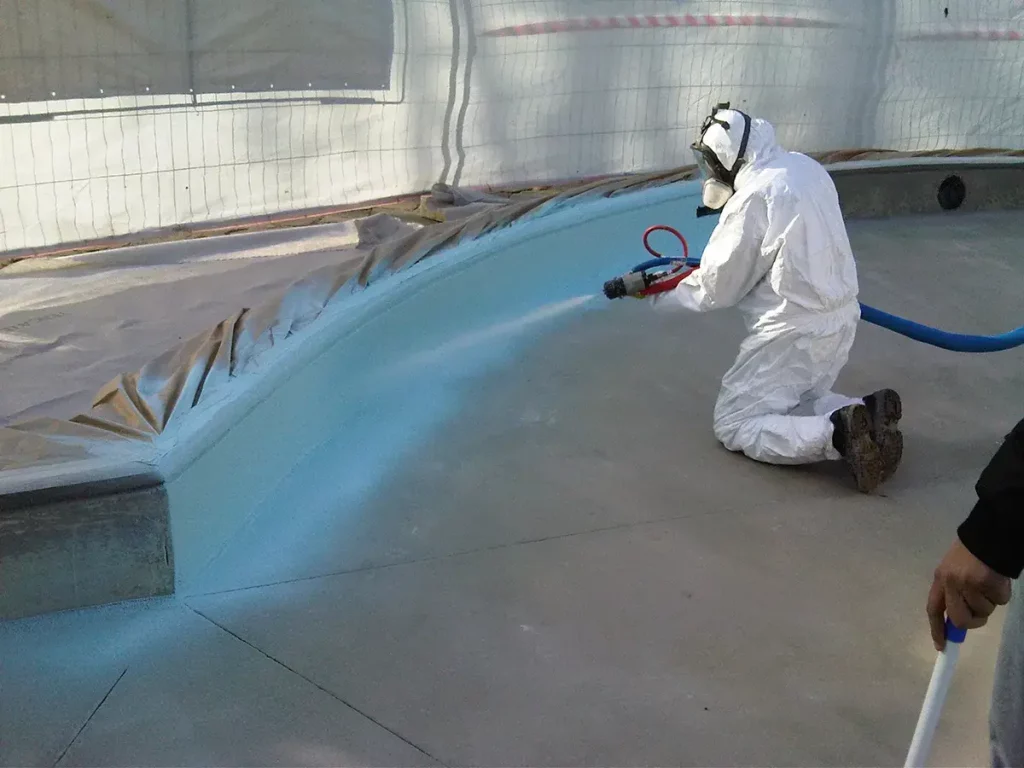
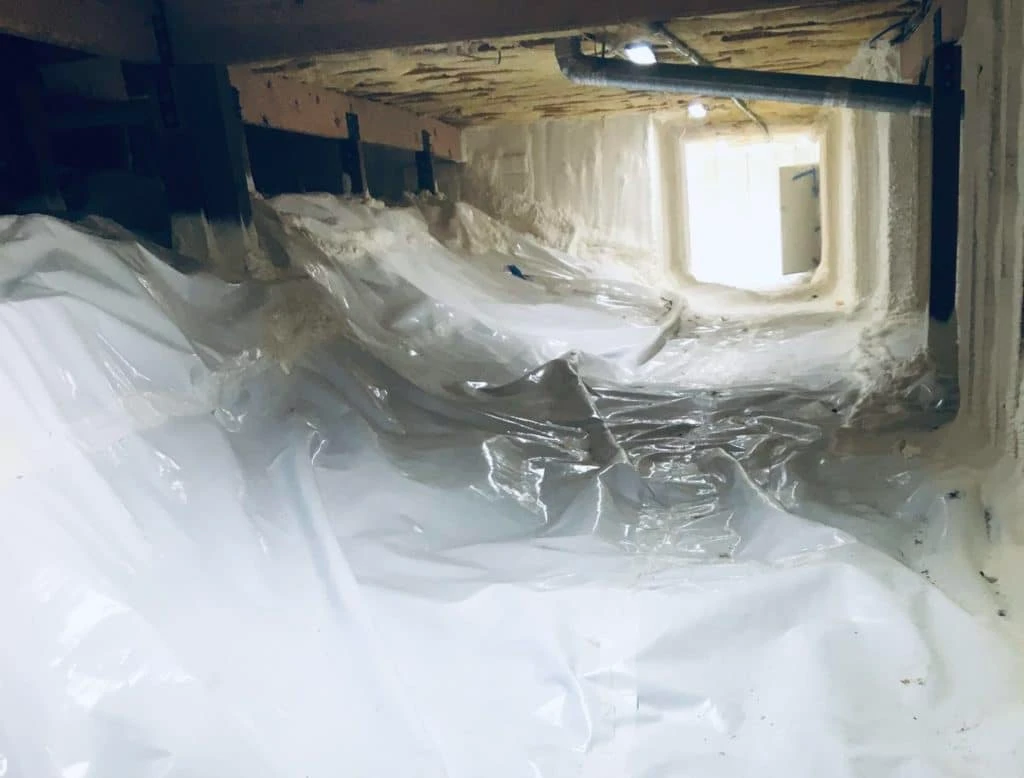
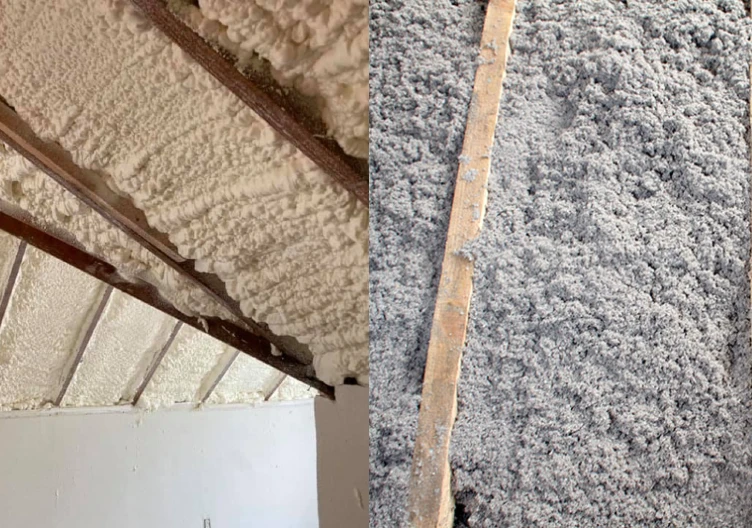
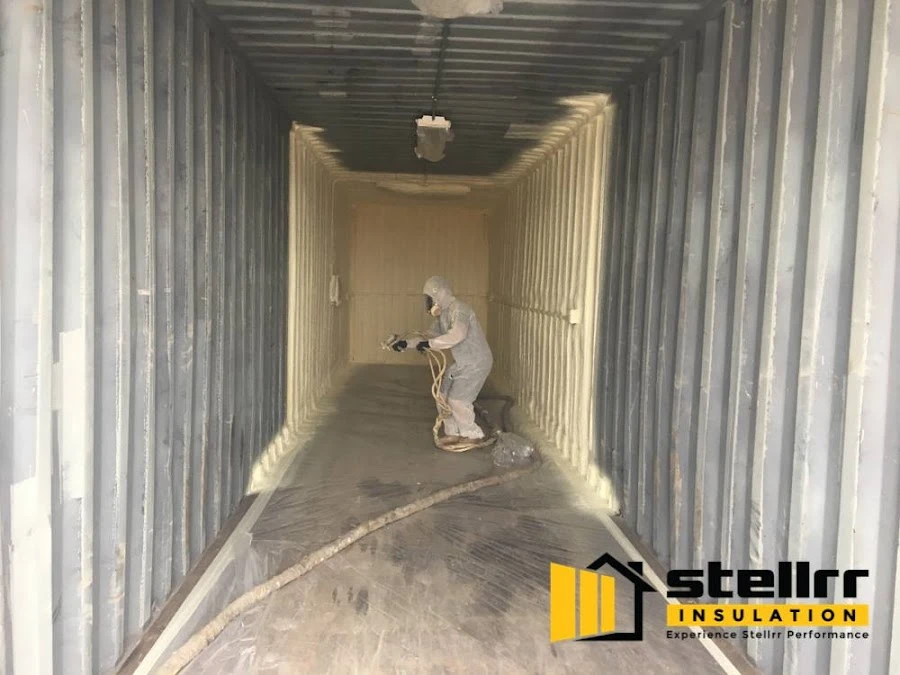
Spray Polyurethane Foam (SPF) provides both insulation and air sealing in one application. Open-cell SPF has lower R-values (around 3.5 per inch) but remains semi-permeable to moisture, making it suitable for interior applications. Closed-cell SPF delivers higher R-values (6.5+ per inch) and acts as a vapor barrier, perfect for exterior applications and roofing.
Rigid Foam Boards, including XPS, EPS, and polyiso, offer high R-values per inch and excellent moisture resistance. They’re commonly used for continuous insulation on exterior walls, below-grade applications, and commercial roofing systems.
Reflective Insulation
Radiant barriers and reflective insulation systems work differently from mass insulation. They don’t absorb heat; they reflect it. These systems shine in hot climates, especially in roof assemblies where they can reduce cooling loads by 10-15%. According to Oak Ridge National Laboratory, reflective roofing systems can reduce peak cooling demand by up to 15%.
Loose-Fill Insulation
Cellulose, fiberglass, and mineral wool can be blown into cavities, making them ideal for retrofit applications and areas with irregular shapes or obstructions. Cellulose, made from recycled paper, offers excellent environmental credentials and good thermal performance at competitive prices.
Table: Commercial Insulation Materials Comparison
| Material Type | R-Value per Inch | Key Advantages | Best Applications |
|---|---|---|---|
| Fiberglass Batts | 3.2-3.8 | Cost-effective, DIY-friendly | Standard walls, attics |
| Mineral Wool | 3.0-3.7 | Fire resistance, soundproofing | Fire walls, sound studios |
| Closed-Cell SPF | 6.0-7.0 | Air barrier, moisture barrier | Exteriors, roofs, and metal buildings |
| Polyiso Board | 5.5-6.5 | High R-value, lightweight | Commercial roofing, walls |
| Cellulose | 3.2-3.8 | Recycled content, dense pack | Retrofits, hard-to-reach areas |
The choice of insulation material significantly impacts not just thermal performance but also moisture management, fire safety, and indoor air quality. This is why working with experienced professionals helps ensure you’re selecting materials that perform well together as a system rather than in isolation.
Critical Areas for Commercial Insulation
Identifying where insulation provides the most value helps prioritize investments for maximum return. Commercial buildings have several key areas that deserve special attention.
Roof and Attic Assemblies
Roofs experience the greatest temperature swings and solar exposure, making them the most critical areas for insulation. Flat roofs, common in commercial buildings, present unique challenges due to moisture accumulation and equipment loads. Proper roof insulation reduces heat gain in summer and heat loss in winter, directly impacting HVAC system requirements.
For commercial roofing, polyiso boards dominate the market, offering high R-values in thin profiles. Spray foam provides excellent performance for complex roof geometries and around penetrations.
Exterior Walls
Exterior walls represent the largest surface area for heat exchange. Continuous insulation, applied uninterrupted across framing members, outperforms cavity insulation alone by preventing thermal bridging through studs. Metal buildings present particular challenges, with metal purlins and girts acting as thermal highways that bypass cavity insulation.
Expert Tip: When retrofitting existing buildings, consider adding exterior continuous insulation rather than simply increasing cavity insulation thickness. This approach preserves interior square footage while providing superior thermal performance.
Foundation and Below-Grade Spaces
Basements and slabs-on-grade often get overlooked, yet they can account for significant heat loss. Rigid foam insulation below slabs or on foundation walls prevents cold from migrating through the ground. In commercial buildings with unconditioned basements, insulating the ceiling above prevents first-floor heat loss.
Mechanical Systems and Ductwork
Insulating HVAC ductwork, pipes, and equipment is crucial for maintaining conditioned air temperatures throughout delivery systems. Uninsulated ducts in unconditioned spaces can lose 10-30% of heating and cooling energy. This is particularly problematic in large commercial buildings with extensive duct runs.
Windows and Doors
While not traditionally considered “insulation,” windows and doors represent thermal weak points in the building envelope. High-performance glazing with low-emissivity coatings and insulated frames significantly reduces heat transfer. Proper air sealing around openings prevents convection losses that undermine even the best wall insulation.
The Commercial Insulation Process: From Assessment to Installation
Implementing effective commercial insulation requires a systematic approach that begins with thorough evaluation and ends with quality installation. Rushing or skipping steps often leads to underperformance that can’t be easily corrected later.
Initial Building Assessment
Before any insulation installation, conduct a comprehensive building assessment. This includes:
- Energy audit to identify priority areas
- Blower door testing to quantify air leakage
- Infrared thermography to locate thermal bridges and missing insulation
- Moisture assessment to prevent future problems
- Review of existing construction documentation
The U.S. Environmental Protection Agency reports that proper building assessments can help identify energy-saving opportunities that might otherwise remain hidden, potentially reducing energy costs by 5-30% through targeted improvements.
Material Selection and System Design
Once you understand your building’s specific needs, select insulation materials that work together as a cohesive system. Consider factors like:
- Climate zone requirements
- Building occupancy patterns
- Interior moisture generation
- Fire code requirements
- Acoustic performance needs
Material selection should account for how different components interact. For example, vapor-impermeable insulation on the wrong side of an assembly can trap moisture and cause serious problems.
Professional Installation
Installation quality determines actual performance more than any other factor. Even the best insulation materials fail when installed incorrectly. Key installation considerations include:
- Complete cavity filling without gaps or voids
- Proper compression of batts and blankets
- Correct thickness to achieve target R-values
- Air sealing at all penetrations and transitions
- Protection from moisture during and after installation
Expert Tip: Always verify installer experience with your chosen insulation system. Spray foam installation, for instance, requires specific training and certification due to health and safety considerations.
Post-Installation Verification
Don’t assume the installation meets specifications. Post-installation verification should include:
- Visual inspection of accessible areas
- Thermal imaging to confirm continuous coverage
- Blower door testing to verify improved air sealing
- Documentation of installed R-values for future reference
This verification step provides evidence of performance improvements and creates a baseline for future maintenance decisions.
Key Takeaways
- Comprehensive assessment must precede any insulation installation
- Material selection requires understanding how components work together
- Installation quality determines actual performance more than product selection
- Post-installation verification confirms project success and provides documentation
Measuring Impact: ROI and Performance Metrics
Investing in commercial insulation requires justification through measurable returns. Understanding how to calculate and demonstrate these returns helps secure funding and validates the effectiveness of your building performance improvements.
Energy Savings Calculations
Energy savings represent the most direct and easily measured benefit of insulation improvements. Before starting any project, establish baseline energy consumption through utility bill analysis over 12-24 months. After installation improvements, compare new consumption patterns to this baseline.
Simple payback period calculation divides the total installation cost by the annual energy savings. However, this method overlooks factors like:
- Reduced HVAC equipment sizing and replacement costs
- Increased equipment lifespan due to reduced cycling
- Potential utility rebates and incentives
- Tax benefits for energy efficiency improvements
- Increased property value
A comprehensive analysis often shows much faster payback than simple calculations suggest. According to Building Green, commercial insulation projects typically see simple payback periods between 3-7 years, but total return on investment can exceed 20% annually when all factors are considered.
Comfort and Productivity Metrics
Energy savings tell only part of the story. Improved comfort directly impacts occupant satisfaction and productivity. While harder to quantify, studies show:
- Office worker productivity increases 0.5-5% with improved thermal comfort
- Call center performance improves 2-7% with better temperature control
- Retail sales increase 1-4% in more comfortable environments
- Tenant retention rates improve in buildings with stable temperatures
These improvements translate directly to financial benefits, though they don’t appear on utility bills. Consider surveying occupants before and after insulation improvements to document these often-overlooked benefits.
Environmental Impact Metrics
Sustainability goals increasingly drive commercial building decisions. Insulation improvements contribute to:
- Reduced carbon emissions
- Lower resource consumption
- Improved building certification scores (LEED, BREEAM, etc.)
- Enhanced corporate sustainability reports
Many organizations now calculate carbon reduction as part of their ESG (Environmental, Social, Governance) reporting, making insulation improvements part of their overall sustainability strategy.
Maintenance and Durability Benefits
Proper insulation and air sealing often reduce maintenance requirements in surprising ways:
- Reduced HVAC equipment cycling extends component life
- Better moisture control prevents mold and structural issues
- Improved temperature stability reduces building material stress
- Lower infiltration reduces dust and contaminant entry
These benefits compound over time, further improving the total return on insulation investments.
Common Challenges and How to Overcome Them
Even well-planned insulation projects encounter challenges. Understanding these potential issues helps you anticipate problems and implement solutions that ensure long-term performance.
Moisture Management
Moisture represents the single greatest threat to insulation performance and building durability. Improperly installed insulation can trap moisture, leading to reduced R-values, mold growth, and structural damage. Different climates require different approaches to moisture management.
In cold climates, interior vapor barriers prevent warm, moist air from condensing within cold insulation assemblies. In hot, humid climates, exterior vapor barriers or vapor-permeable insulation systems prevent exterior moisture from migrating into cool, air-conditioned spaces.
Expert Tip: Always consider your specific climate zone when designing insulation systems. The same approach that works perfectly in Minnesota might cause catastrophic failures in Florida.
Air Sealing Integration
Insulation alone doesn’t stop air movement. Without proper air sealing, even high-R-value insulation can’t prevent convective heat loss. The most effective approach treats insulation and air sealing as integrated systems rather than separate tasks.
Pay special attention to:
- Penetrations for pipes, wires, and ducts
- transitions between different building assemblies
- Rim joists and band joists
- Windows, doors, and other openings
- Kneewalls and attic hatches
Dealing with Irregular Spaces
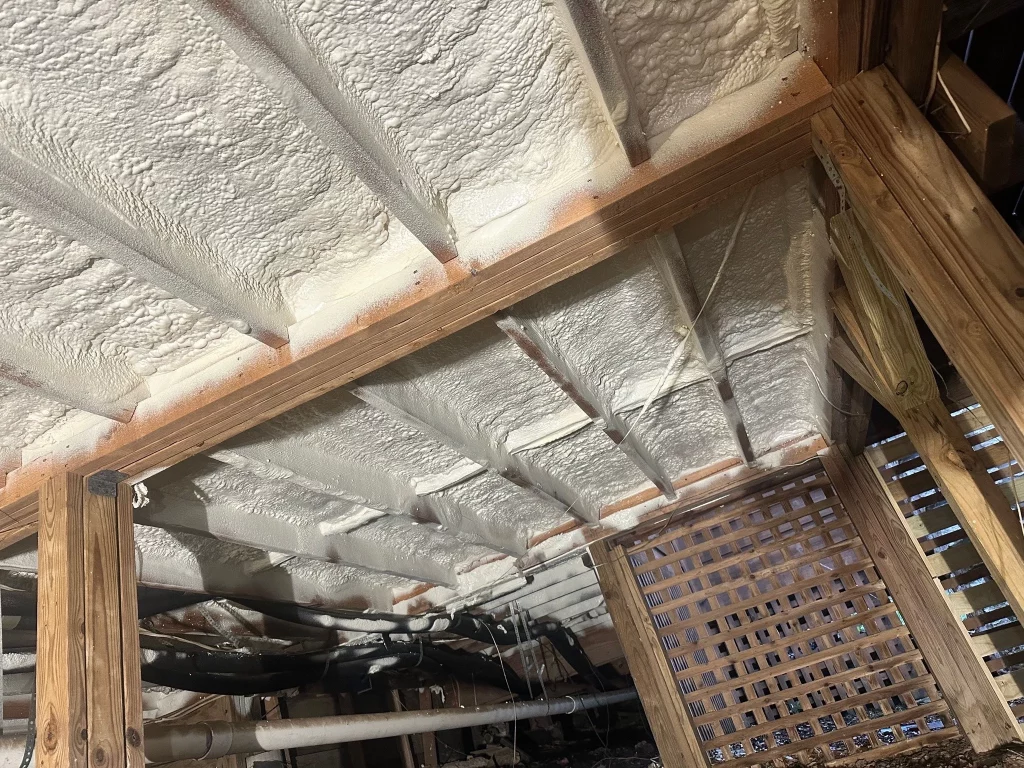
Commercial buildings often present challenging geometry with pipes, conduit, and structural obstructions. Standard batt insulation can’t effectively fill these spaces. Custom solutions might include:
- Two-part spray foam for complete cavity filling
- Dense-pack cellulose for hard-to-reach areas
- Rigid foam board cut to fit around obstructions
- Multiple insulation types working together as a system
Retrofit Challenges
Existing buildings present unique challenges compared to new construction. Access limitations, existing systems, and occupied conditions all complicate insulation retrofits. Successful retrofits often require:
- Phased implementation to minimize disruption
- Less intrusive insulation methods
- Careful coordination with ongoing operations
- Extensive protection of existing finishes and equipment
- Flexible scheduling around business operations
Quality Control Verification
Ensuring installation quality proves challenging without proper oversight. Hidden areas might contain defects that compromise entire assemblies. Implementing quality control measures helps verify performance:
- Third-party inspections of critical areas
- Thermal imaging to identify gaps and voids
- Documentation of installed R-values
- Warranty tracking for insulation materials and installation
These quality measures provide confidence in installation performance and create valuable documentation for future reference.
Future Trends in Commercial Insulation
The commercial insulation industry continues evolving with new materials, technologies, and approaches. Staying informed about these developments helps you make forward-thinking decisions that maximize long-term building performance.
Advanced Materials Development
Material science innovations continue to push insulation performance boundaries. Aerogel insulation, once limited to aerospace applications, now offers R-values of R-10 per inch in flexible blankets suitable for commercial retrofits where space is limited. Vacuum insulated panels (VIPS) provide R-values up to R-50 per inch, though high costs currently limit widespread adoption.
Bio-based insulation materials gain market share as sustainability concerns increase. Materials made from hemp, sheep wool, and mushroom mycelium offer renewable alternatives with competitive performance characteristics. While not yet mainstream in commercial applications, these materials show promise for specific applications where environmental impact drives material selection.
Smart Insulation Systems
The integration of sensors and responsive technologies creates “smart” insulation systems that adapt to changing conditions. Phase change materials (PCMs) incorporated into insulation assemblies absorb heat during peak periods and release it during off-peak times, helping flatten building load profiles and reduce peak demand charges.
Some manufacturers now incorporate RFID technology into insulation products, allowing automated tracking of installed R-values, warranty information, and installation dates. This digital documentation streamlines building management and maintenance planning.
Performance-Based Design
Building codes and standards continue shifting toward performance-based approaches rather than prescriptive requirements. This trend gives designers more flexibility in meeting energy efficiency targets while increasing the importance of accurate modeling and verification.
Energy modeling software becomes increasingly sophisticated, allowing designers to simulate various insulation strategies and predict their impact on overall building performance. These tools help optimize insulation investments by identifying the most cost-effective approaches for specific building types and climates.
Integration with Other Building Systems
Insulation increasingly integrates with other building systems for improved overall performance. Examples include:
- Insulation that incorporates sound-absorbing properties for acoustic control
- Integrated moisture control systems that adapt to environmental conditions
- Combined insulation and fire protection assemblies that simplify construction
- Prefabricated wall and roof panels that incorporate insulation, structure, and exterior finishes
These integrated systems reduce installation complexity while potentially improving overall performance.
Sustainability and Circularity
Growing focus on building material sustainability drives the development of insulation products with:
- Higher recycled content
- Lower embodied carbon
- Design for disassembly and reuse
- Bio-based, rapidly renewable materials
- Non-toxic, low-emission formulations
As McKinsey & Company reports, the construction industry faces increasing pressure to reduce its environmental impact, with insulation representing a significant opportunity for improvement given its widespread use across all building types.
Putting Your Commercial Insulation Strategy into Action
Effective commercial insulation requires more than material selection it demands a comprehensive approach that considers your building’s specific needs, climate conditions, and performance goals. Start with a thorough assessment to identify priority areas and establish baseline performance metrics. Select materials that work together as integrated systems rather than isolated products. Ensure professional installation with rigorous quality control verification to achieve the specified performance. Finally, measure results to document improvements and identify additional opportunities for optimization.
Remember that insulation improvements represent one of the most cost-effective investments available for commercial buildings. Beyond immediate energy savings, proper insulation enhances comfort, increases property value, extends equipment life, and improves occupant satisfaction. These compounding benefits make insulation upgrades particularly attractive for long-term building owners and managers.
Use this guide as a reference throughout your insulation improvement journey. The principles outlined here apply to virtually any commercial building type or climate, helping you make informed decisions that protect your investment and optimize building performance for years to come.
Need Expert Guidance?
Stellrr Insulation & Spray Foam specializes in commercial insulation solutions that maximize building performance while minimizing lifetime costs. Whether you’re planning a new construction project, upgrading an existing facility, or trying to solve persistent comfort or energy issues, our team brings decades of hands-on experience to every project. Contact us at info@stellrr.com or call (512) 710-2839 to schedule a comprehensive building assessment and discover how targeted insulation improvements can transform your property’s performance and profitability.
Frequently Asked Questions About Commercial Insulation
How much insulation do I need for my commercial building?
Required insulation levels depend on your climate zone, building type, and heating/cooling systems. The International Energy Conservation Code (IECC) provides minimum requirements, but most commercial buildings benefit from exceeding these minimums. Start with your local code requirements as a baseline, then consider adding 20-50% more insulation for improved performance and faster payback through energy savings.
What’s the difference between open-cell and closed-cell spray foam?
Open-cell spray foam has lower R-values per inch (3.5) but remains breathable, allowing moisture vapor to pass through. It’s less expensive and better suited for interior applications. Closed-cell foam has higher R-values (6.5+) and acts as a vapor barrier, making it ideal for exterior applications, roofing, and areas requiring structural strength. Closed-cell foam costs approximately 30-50% more than open-cell.
Should I remove old insulation before adding new?
Not necessarily. If existing insulation is dry, clean, and properly installed, you can typically add new insulation on top. However, remove old insulation if it shows signs of moisture damage, mold, pest infestation, or contains hazardous materials like asbestos. Always address moisture problems before adding insulation, as trapping existing moisture can cause serious problems.
How long does commercial insulation last?
Most commercial insulation materials last the lifetime of the building when properly installed and protected from moisture. Fiberglass and mineral wool typically last 50+ years. Spray foam lasts 20-30 years before slight R-value degradation begins. However, insulation performance can degrade due to moisture, compression, pest damage, or improper installation. Regular inspections ensure continued performance.
Will insulation completely eliminate my energy bills?
While significantly reducing energy costs, insulation alone rarely eliminates bills entirely. Most commercial buildings see a 20-40% reduction in heating and cooling costs with proper insulation upgrades. Actual savings depend on climate, building type, existing insulation levels, and utility rates. Maximum savings typically come from combining insulation improvements with other efficiency measures like HVAC upgrades and air sealing.
Sources
- Oak Ridge National Laboratory – Federal research institution providing data on radiant barrier effectiveness and commercial roof performance
- Building Green – Independent publishing company focused on sustainable design with studies on insulation ROI and performance metrics
- U.S. Department of Energy – Government agency providing energy efficiency statistics and recommendations for commercial buildings
- McKinsey & Company – Global management consulting firm providing analysis of construction industry sustainability trends and materials