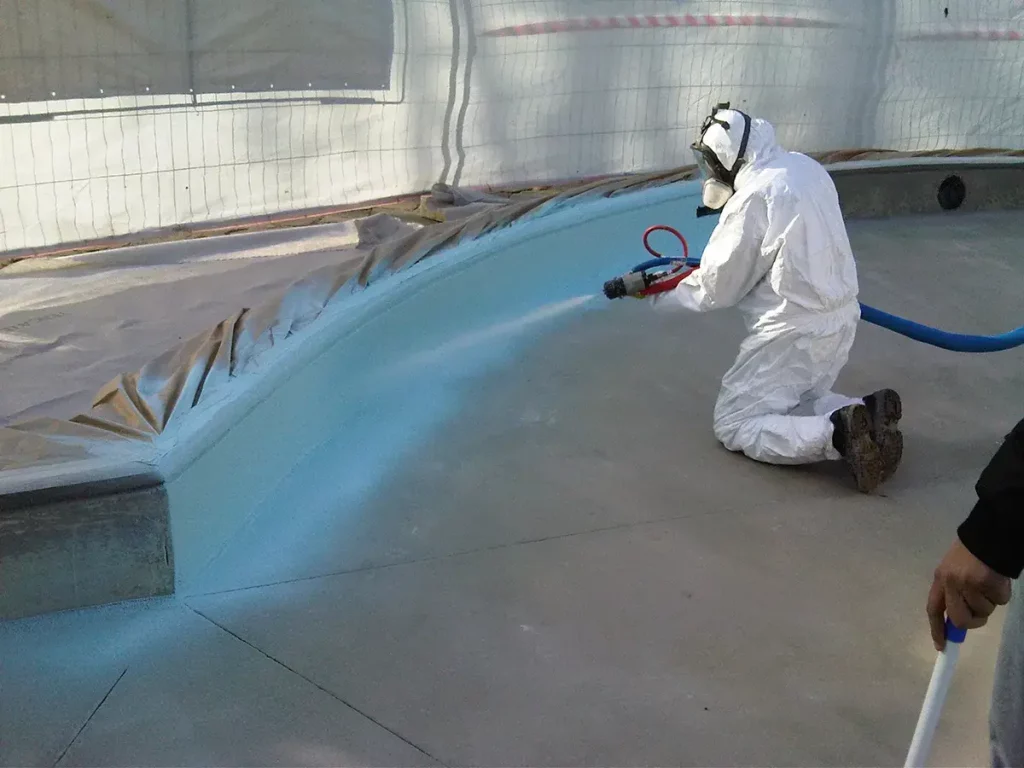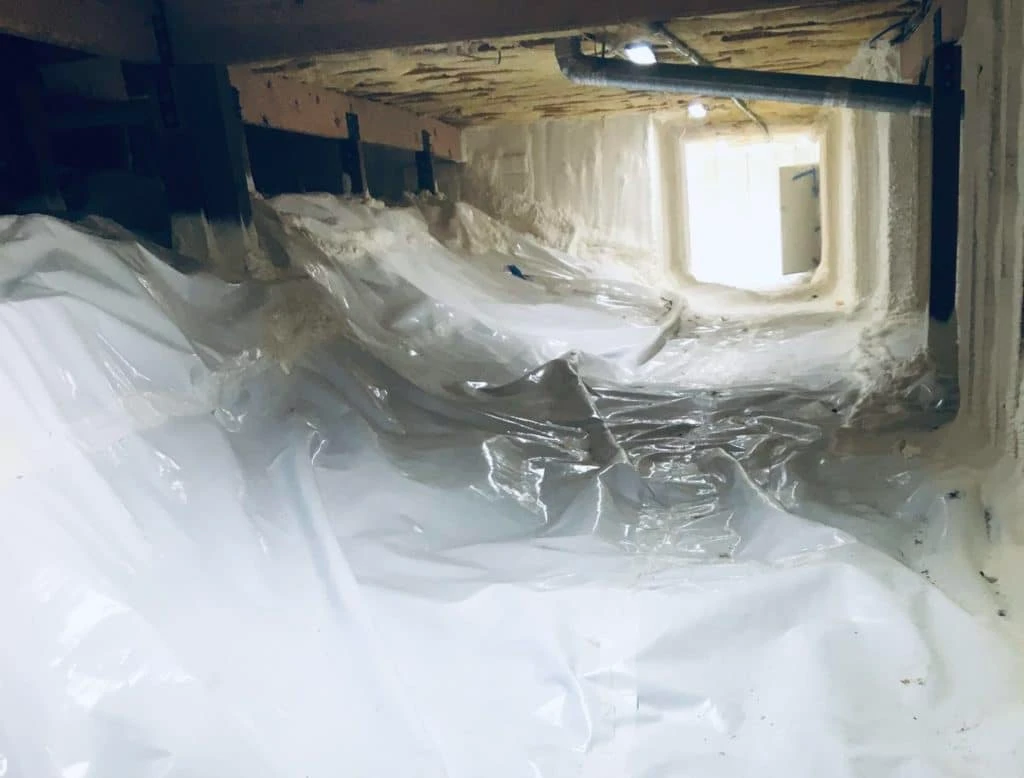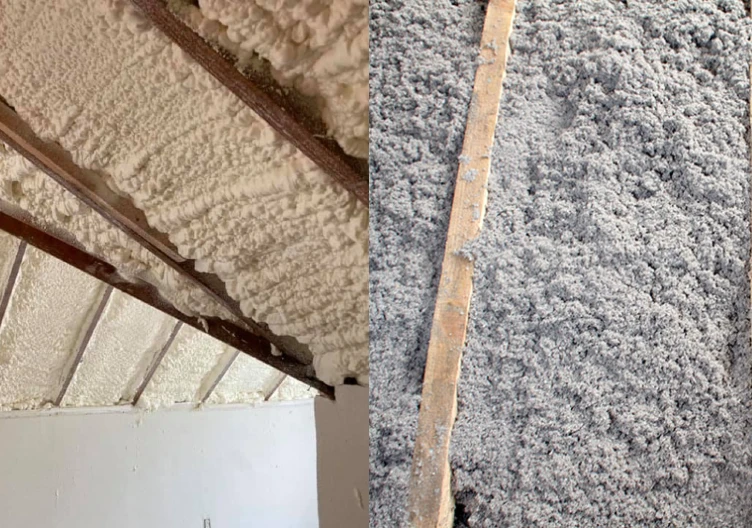
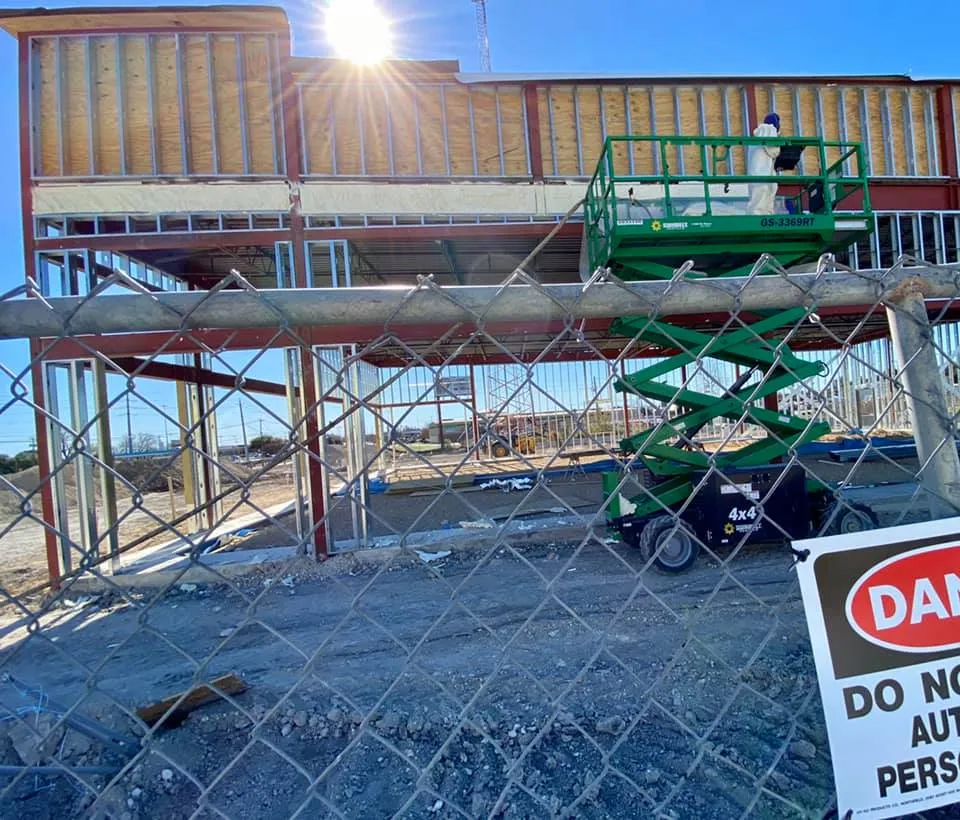
Closed-cell spray polyurethane foam (SPF) strengthens commercial buildings by acting as a powerful adhesive, bonding building components to create a monolithic structural barrier. Unlike traditional insulation materials that merely fill space, closed-cell foam expands and hardens between studs, joists, and sheathing. This bonding process significantly increases a wall’s racking strength, the ability to maintain its shape under horizontal stress like high winds or seismic activity, by up to 300% compared to walls without this reinforcement.
Commercial structures face unique physical demands, from massive roof spans to metal framing susceptible to movement. Installing closed-cell foam effectively turns an assembly of loose parts into a unified system. It transfers loads more evenly across the building envelope, reducing building movement and vibration. This added rigidity protects the structure from long-term fatigue and makes it more resilient against severe weather events, offering protection that goes far beyond simple temperature control.
The Mechanics of Structural Bonding
To understand how insulation can double as a structural reinforcement, you have to look at the chemistry of the material. We are specifically discussing closed-cell foam here. Open-cell foam is soft and pliable; it offers excellent soundproofing but provides zero structural support. Closed-cell foam, however, is rigid and dense (usually 2.0 lbs per cubic foot).
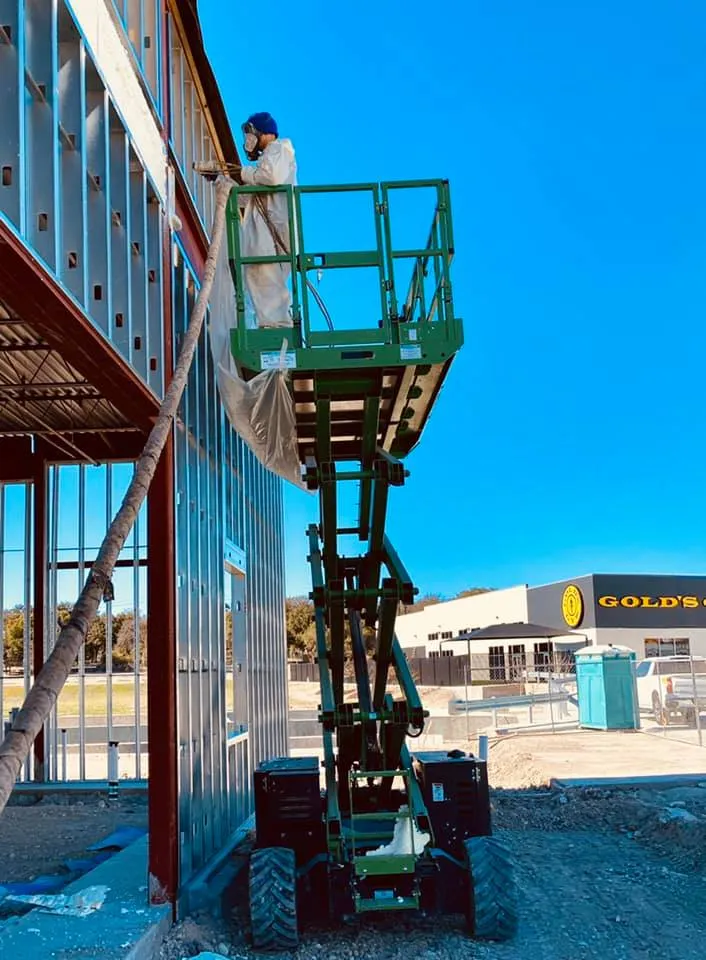
When applied to a wall cavity or roof deck, the chemical mixture undergoes an exothermic reaction. It expands to fill every crack and crevice before curing into a hard, plastic-like solid. This process glues the exterior sheathing to the framing studs. A study by the National Association of Home Builders confirmed that applying closed-cell foam to wall assemblies dramatically increases their resistance to shear forces.
This “gluing” effect is particularly valuable in commercial metal buildings. Metal panels often loosen over time due to thermal expansion and contraction. The rigidity of spray foam locks these panels in place, reducing the “oil canning” effect where metal buckles or makes noise under pressure.
Bonus Tip: Never assume open-cell foam will add strength to your building. If your goal is structural enhancement alongside insulation, you must specify closed-cell (2 lb density) foam in your project requirements.
Wind Uplift and Roof Protection
Commercial flat roofs and low-slope metal roofs are prime targets for wind damage. During a storm, wind moving over the roof creates negative pressure (uplift) that tries to rip the roof deck off the trusses. This is a common point of failure in warehouses and industrial facilities.
Applying spray foam to the underside of the roof deck (the substrate) effectively anchors it to the support structure. It eliminates the air gaps where pressure differentials usually build up. According to technical findings from the National Institute of Standards and Technology, improving the airtightness and bonding of roof assemblies is a primary method for mitigating wind-induced failure.
Furthermore, closed-cell foam is water-resistant. If the roof membrane on the building is breached by flying debris, the foam beneath acts as a secondary water barrier. This prevents water from entering the building envelope and compromising the structural steel or rotting wood components below.
Comparison of Insulation Types on Structural Rigidity
Choosing the right material impacts how well your building handles physical stress. The table below compares standard commercial insulation methods in terms of their contribution to structural stability.
| Feature | Fiberglass Batt | Open-Cell Spray Foam | Closed-Cell Spray Foam |
|---|---|---|---|
| Bonding Ability | None (Friction fit) | Minimal (Adheres but flexible) | High (Adheres and rigid) |
| Racking Strength Increase | 0% | Negligible | 200% – 300% |
| Moisture Resistance | Low (Absorbs water) | Low (Permeable) | High (Class 5 Flood Material) |
| Density | Low | 0.5 lb/cu. Ft. | 2.0 lb/cu. Ft. |
| Impact on Metal Panel Vibration | None | Low | High (Eliminates vibration) |
Impact on Shear Walls and Seismic Safety
Shear walls are the components of your building designed to resist lateral forces. In plain English, they stop the building from leaning over or collapsing when the ground shakes or the wind blows hard. While steel cross-bracing is the primary method, closed-cell foam serves as a supplemental stabilizer.
By filling the wall cavity, the foam prevents the studs from twisting or buckling under load. This allows the wall to perform at its maximum engineered capacity. In areas prone to earthquakes or hurricanes, this added redundancy is a significant asset. FEMA data classifies closed-cell polyurethane foam as a flood-damage-resistant material, noting its ability to withstand direct contact with floodwaters without losing structural form or insulation value. This resistance helps maintain the building’s integrity even after a disaster, whereas other materials would become waterlogged and pull the structure down.
Things to Consider Before Making a Decision
While the structural benefits are clear, there are operational factors you must weigh before greenlighting a project.
- Permanence: Closed-cell foam is rigid to remove. If you plan to renovate or move electrical/plumbing lines in the near future, the rigidity that helps the structure will make renovations labor-intensive.
- Cost vs. Value: Closed-cell foam is more expensive than traditional materials. You need to calculate the ROI based on energy savings and the reduced need for other structural reinforcements, not just the upfront price tag.
- Application Conditions: The chemicals require specific temperature and humidity levels to cure correctly. If misapplied, the foam can pull away from the framing, nullifying the structural benefits.
- Code Compliance: Ensure your local building codes recognize the structural contribution of spray foam if you are counting on it to meet specific wind load requirements.
Bonus Tip: Ask your installer for a “pull test” or adhesion test on a small mockup area. This verifies that the foam acts as intended with your specific building material (concrete, steel, or wood).
Market Data and Resilience
The demand for resilient building materials is rising as severe weather events become more frequent. A report by Grand View Research indicates that the spray polyurethane foam market is growing steadily, driven largely by the need for energy-efficient, structurally resilient commercial infrastructure. Building owners are increasingly viewing insulation as a protective asset rather than just a temperature regulator.
Conclusion
Closed-cell spray foam offers a dual-purpose spray foam solution for commercial properties: it delivers superior thermal performance while simultaneously enhancing structural integrity. Bonding framing members to sheathing and roof decks increases racking strength, reduces building movement, and provides a robust defense against wind and water. This material turns standard construction assemblies into unified, rigid systems capable of withstanding greater environmental stresses.
Property owners and facility managers should evaluate their specific location risks, such as high-wind zones or seismic activity, and consider how this reinforcement can prolong the lifespan of their investment. Prioritize long-term resilience over short-term savings to ensure your commercial building remains safe and operational for decades.
Strengthening Your Commercial Investment
Your building needs to stand up to more than just the temperature; it needs to withstand the elements. Stellrr Insulation & Spray Foam provides expert installation of high-performance closed-cell foam that secures your structure while cutting energy costs. We understand the specific engineering demands of commercial projects. Contact us at (512) 710-2839 or email info@stellrr.com to discuss reinforcing your facility.
Frequently Asked Questions
Does closed-cell foam stop walls from creaking?
Yes. By gluing the building components together and filling gaps, the foam prevents the movement and friction that causes creaking in wood and metal structures.
Can spray foam support a walking load on a roof?
No. While rigid, the foam is typically installed beneath the roof deck. If applied to the top (SPF roofing), it is durable but typically requires a coating to handle foot traffic and UV rays.
How long does the structural bonding last?
The bonding properties of polyurethane foam generally last for the life of the building. It does not degrade, sag, or settle over time like loose-fill insulation.
Is it safe for electrical wiring?
Yes. The foam is chemically inert once cured and does not damage wire insulation. However, wires should be encased in conduit if required by local commercial codes.
Does it add fire resistance to the structure?
Standard spray foam is combustible and must be covered with a thermal barrier (such as drywall) or an intumescent coating to meet fire codes. It does not inherently make the structure fireproof.
Sources
- National Association of Home Builders – Provides research and data on housing construction standards, including the structural benefits of adhesive insulation.
- National Institute of Standards and Technology – A federal agency that publishes technical findings on building science, wind load resistance, and structural safety.
- FEMA – Offers guidelines on flood-resistant building materials and disaster mitigation strategies for commercial and residential structures.