
Commercial properties in Killeen achieve sustainability primarily through spray polyurethane foam’s ability to create an airtight seal, significantly reducing cooling energy use during Texas heatwaves. By acting as both insulation and an air barrier, spray foam cuts HVAC workload by up to 50%, directly lowering carbon emissions and operational costs. This singular upgrade resolves the two biggest energy wasters in commercial structures: air leakage and thermal bridging.
This article details the technical mechanisms behind these savings and how they apply specifically to Central Texas building codes and climate conditions. With years of experience retrofitting local commercial structures, the focus here remains on actionable building science and proven efficiency strategies rather than sales language.
The Building Science Behind Spray Foam and Efficiency
Sustainability in commercial real estate usually starts with energy consumption. In Killeen, where summer temperatures frequently exceed triple digits, the cooling load accounts for the bulk of the energy bill. Traditional insulation materials like fiberglass batts or cellulose resist heat flow but do not stop air movement. This is a significant flaw in commercial applications.
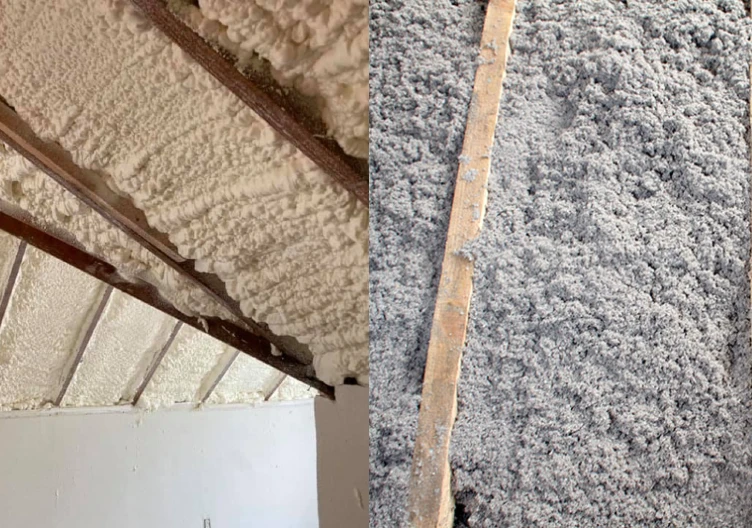
Spray polyurethane foam (SPF) expands upon application, filling cracks, gaps, and voids. This expansion creates a continuous envelope that prevents conditioned air from escaping and hot, humid air from entering. According to the U.S. Department of Energy, air leakage accounts for up to 40% of the energy cost to heat and cool a building. Eliminating this leakage is the most direct path to a smaller carbon footprint.
Reducing the HVAC Load
When the building envelope is secure, HVAC systems do not have to work as hard to maintain a set temperature. This reduces cycle frequency and extends the lifespan of mechanical equipment. A reduced load means the building consumes less electricity, which directly translates to lower greenhouse gas emissions from power plants.
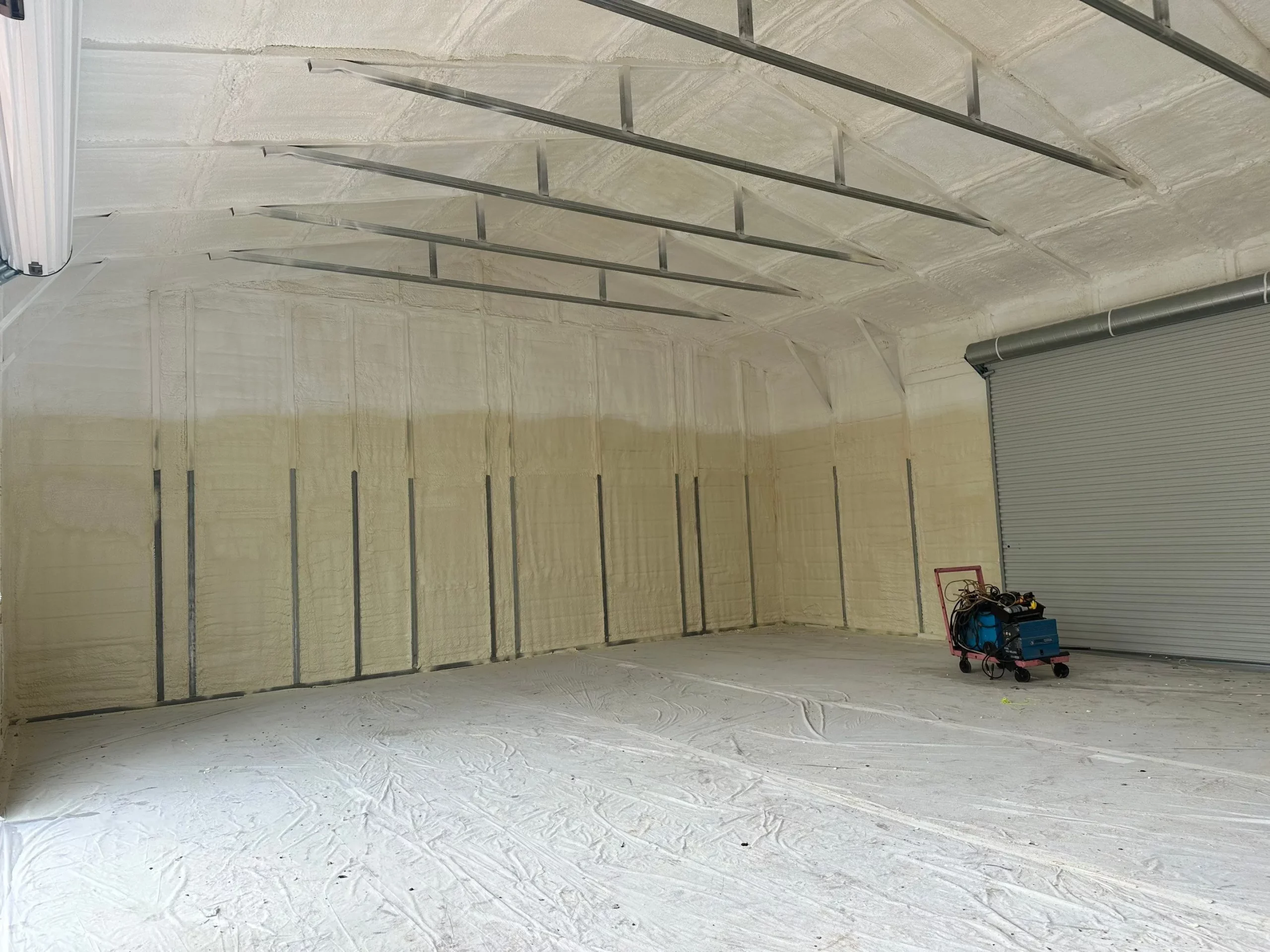
Bonus Tip: If installing a new roof or retrofitting a metal building, consider applying closed-cell foam to the underside of the roof deck. This shifts the thermal boundary to the roofline, keeping mechanical systems and ductwork within the conditioned space, further increasing efficiency.
Addressing Killeen’s Specific Climate Challenges
Central Texas falls into a humid subtropical climate. This presents distinct challenges for commercial buildings, specifically regarding moisture control. High humidity levels can lead to mold growth and structural decay if moisture infiltrates the wall assemblies.
Closed-cell spray foam is impermeable to water and acts as a vapor retarder. This characteristic is vital for Killeen properties. It prevents moisture-laden outdoor air from condensing on cool interior surfaces. Fiberglass insulation, by comparison, can absorb moisture, leading to sagging and a total loss of R-value (thermal resistance).
Comparing Insulation Performance in Hot Climates
The following table compares how different commercial insulation materials perform specifically in the Central Texas environment.
| Feature | Closed-Cell Spray Foam | Fiberglass Batt | Cellulose |
|---|---|---|---|
| Air Barrier | Excellent (Monolithic seal) | Poor (Requires a separate barrier) | Fair (Settles over time) |
| Moisture Resistance | High (Waterproof) | Low (Absorbs water) | Low (Absorbs water) |
| R-Value per Inch | ~R-6.0 to R-7.0 | ~R-3.0 to R-3.5 | ~R-3.2 to R-3.8 |
| Structural Rigidity | Adds structural strength | None | None |
| Lifespan | 80+ years | 15-20 years | 20-30 years |
Data reflects standard industry performance metrics for commercial-grade materials.
Environmental Impact and Material Longevity
True sustainability involves considering the lifecycle of building materials. Materials that require frequent replacement contribute to landfill waste and require more energy for manufacturing and transport.
Spray foam is a permanent solution. Once applied, it does not sag, settle, or degrade over time. A report by the Spray Polyurethane Foam Alliance highlights that SPF insulation often lasts the life of the building, eliminating the need for future re-insulation projects. This longevity reduces the building’s total environmental impact over decades of operation.
Furthermore, many modern spray foam formulations utilize hydrofluoroolefin (HFO) blowing agents. These agents have a Global Warming Potential (GWP) of nearly one, which is 99.9% lower than older formulations. This ensures that the installation process itself aligns with modern environmental standards.
Things to Consider Before Making a Decision
Before committing to a spray foam insulation in Killeen, TX, facility managers must evaluate several factors to ensure the project meets specific business goals.
Building Code Compliance
Commercial buildings in Killeen must comply with the International Energy Conservation Code (IECC) as adopted by the state and the local municipality. This code dictates minimum R-values for roofs and walls. Spray foam achieves these targets with less thickness than other materials, preserving valuable interior square footage.
Open-Cell vs. Closed-Cell
- Closed-Cell: The standard for commercial exteriors, metal buildings, and roofs. It adds structural strength and rejects bulk water.
- Open-Cell: Better suited for interior walls for sound dampening or the underside of roof decks where water resistance is less of a concern. It is less expensive but has a lower R-value per inch.
Return on Investment (ROI)
While the upfront cost of spray foam is higher than that of traditional materials, the operational savings offset this expense. Energy Star data suggests that improving insulation and air sealing can save commercial buildings roughly 10% to 20% on total energy costs across all climates, with higher percentages likely in extreme heat zones like Texas.
Bonus Tip: Check for local utility rebates. Many energy providers in Texas offer incentives for commercial upgrades that permanently reduce peak load demand.
Summary and Next Steps
Making a commercial property sustainable relies on controlling the environment inside the building. Spray foam provides a definitive solution by sealing air leaks, managing moisture, and offering superior thermal resistance. These factors combine to lower energy demand, reduce carbon emissions, and extend the lifespan of the structure.
Assess the current energy bills and identify areas where temperature fluctuations occur most frequently. An energy audit or a professional inspection of the building envelope serves as the logical first step. Addressing these inefficiencies protects the asset and improves the bottom line.
Take Action for Your Property
Stellrr Insulation & Spray Foam assists facility managers and building owners in Killeen with transforming energy-wasting structures into efficient assets. Proper insulation is an investment in the longevity of your commercial property.
For a consultation regarding your specific building requirements, contact the team at (512) 710-2839 or send project details to info@stellrr.com.
Frequently Asked Questions
What is the minimum R-value required for commercial roofs in Killeen?
Under the current energy codes widely used in Texas (IECC 2015 or newer), commercial roof insulation generally requires a minimum of R-25 to R-30, with the insulation entirely above the deck. However, specific requirements vary based on the exact building type and local amendments.
Can spray foam be applied directly to metal building skins?
Yes, closed-cell spray foam is the preferred method for insulating metal buildings. It bonds directly to the metal panel, preventing condensation that causes rust and corrosion while strengthening the panel against wind uplift.
Will spray foam attract pests or rodents?
Spray foam does not provide a food source for rodents or insects. Unlike fiberglass, which pests often use for nesting material, rigid closed-cell foam is difficult to burrow through and creates a barrier against pest entry.
Is the foam flammable?
Spray foam used in commercial construction typically contains fire-retardant additives. However, like most organic building materials, it is combustible. Building codes require that it be covered with a thermal barrier, such as drywall or an intumescent coating, in occupied spaces to ensure fire safety.
Sources
- U.S. Department of Energy – Provides data on energy loss due to air leakage and the benefits of insulation types.
- Spray Polyurethane Foam Alliance – Offers technical reports on the lifecycle and durability of spray foam products.
- Energy Star – details potential energy cost savings for commercial building improvements.