
R-value measures how effectively an insulation material resists the transfer of heat. The higher the number, the better the material slows heat movement through your walls, attic, and floors. If you live in a cold climate like Illinois, understanding R-values directly determines whether your home stays comfortable and affordable to heat or bleeds energy through every building assembly.
The concept is straightforward on paper, but applying it correctly in the field requires knowing how different materials perform per inch, how building assemblies lose heat in real conditions, and what the Department of Energy actually recommends for your climate zone. That is the difference between a well-insulated home and one that still drafts in January.
TLDR / Key Takeaways
- R-value stands for resistance to heat flow, and higher numbers indicate better thermal performance.
- The Department of Energy sets minimum R-value recommendations based on climate zones, ranging from R-13 in warm southern zones to R-49 to R-60 in attics for cold northern zones.
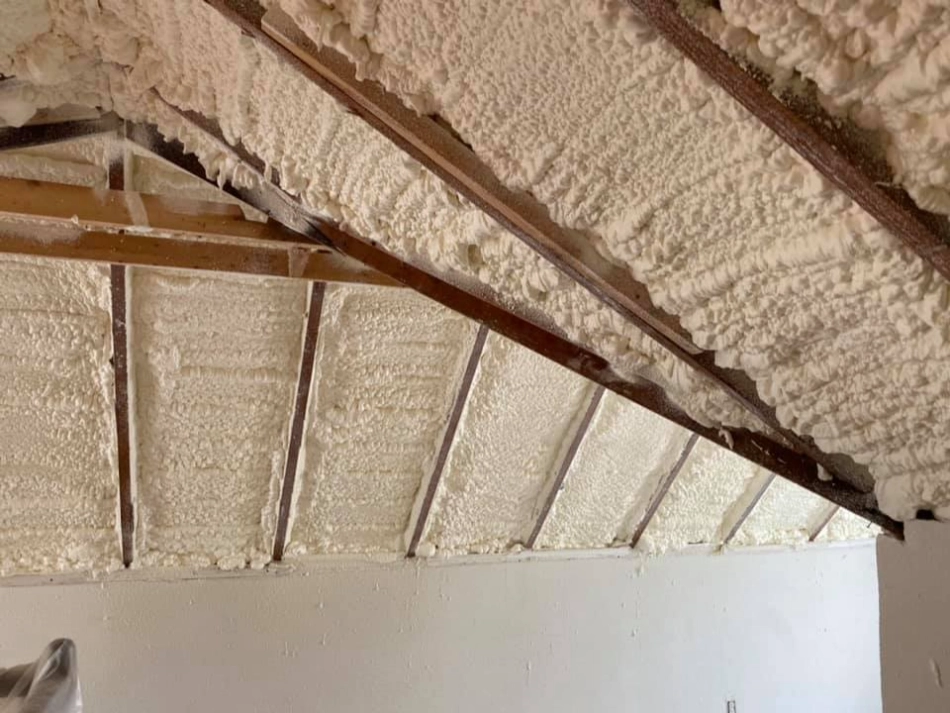
- Not all R-values are equal in practice: spray foam creates an air seal that fiberglass batts cannot match, even at similar labeled ratings.
- Energy Star provides climate-specific R-value tables covering attics, walls, basements, and crawl spaces.
- Installation quality is just as important as the material’s rated R-value. Gaps, compression, and voids can reduce effective performance by 30% or more.
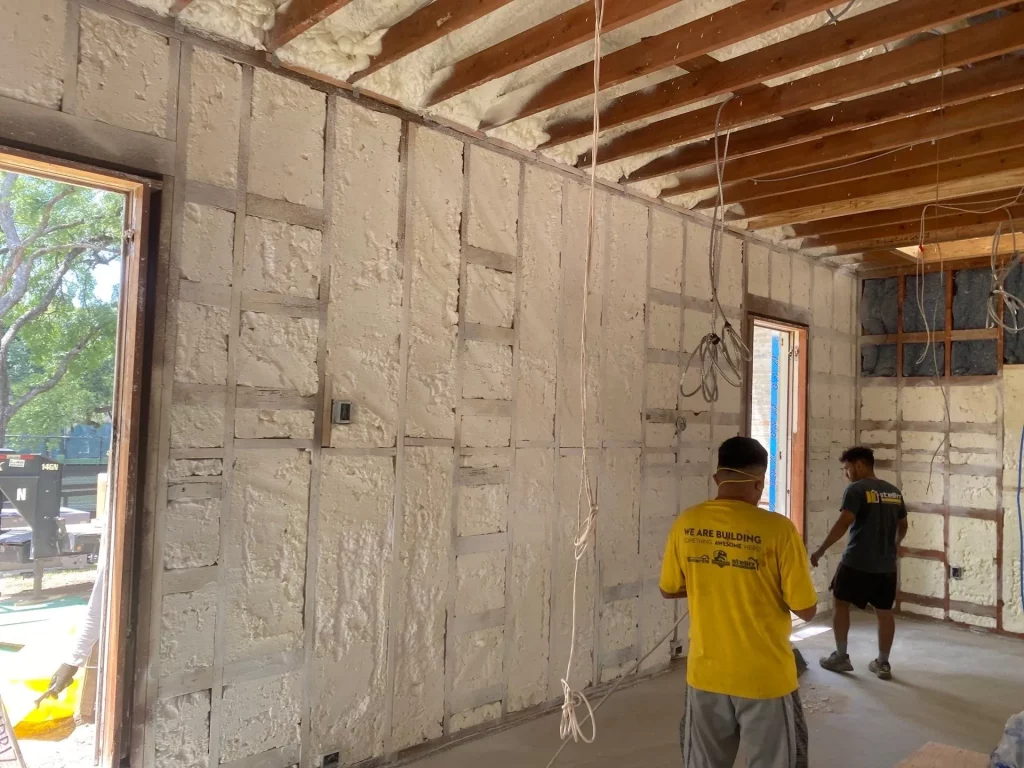
- Closed-cell spray foam delivers R-6 to R-7 per inch and doubles as a vapor retarder, making it a strong choice for cold climate walls and crawl spaces.
- Whole-wall R-value (how the entire assembly performs) often differs significantly from the rated R-value of the insulation material alone.
How R-Value Actually Works
The “R” in R-value stands for resistance. Every insulation material is tested in a lab to determine how much heat passes through a one-inch-thick sample per hour at a specific temperature difference. The result is a number, and that number is the R-value per inch. Multiply that by the total thickness of the installed material and you get the total R-value of that layer.
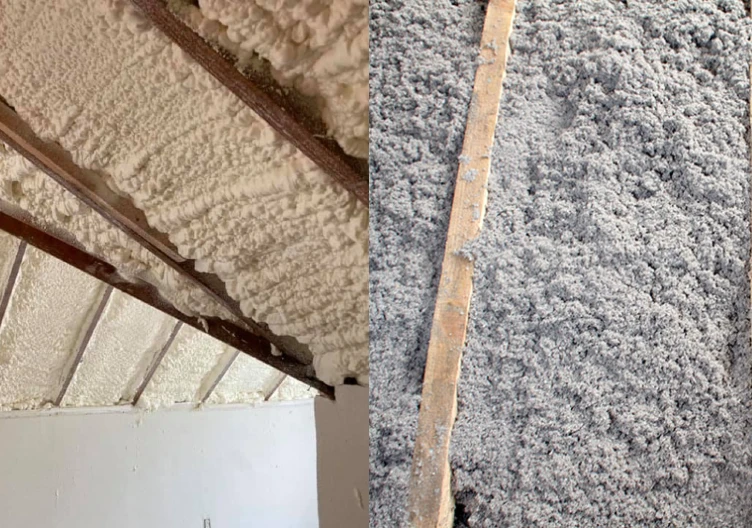
For example, fiberglass batts typically deliver around R-3.2 per inch. A standard 3.5-inch cavity wall filled with fiberglass yields roughly R-13. By contrast, closed-cell spray foam provides R-6.5 to R-7 per inch. That same 3.5-inch wall cavity filled with closed-cell foam reaches R-22 to R-25, nearly double the thermal resistance in the same amount of space.
According to Johns Manville, the rated R-value represents thermal resistance under controlled laboratory conditions, not necessarily the performance you will see inside an actual building. This distinction matters because real-world heat loss involves air movement, moisture, thermal bridging through framing, and installation defects that lab tests do not account for.
R-Value by Insulation Type
Different materials have dramatically different R-values per inch, which means the right choice depends on your available cavity depth, budget, and performance goals.
| Insulation Type | R-Value per Inch | Air Barrier | Moisture Barrier | Best Application |
|---|---|---|---|---|
| Fiberglass Batts | R-2.9 to R-3.8 | No | No | Standard wall cavities, attics with adequate depth |
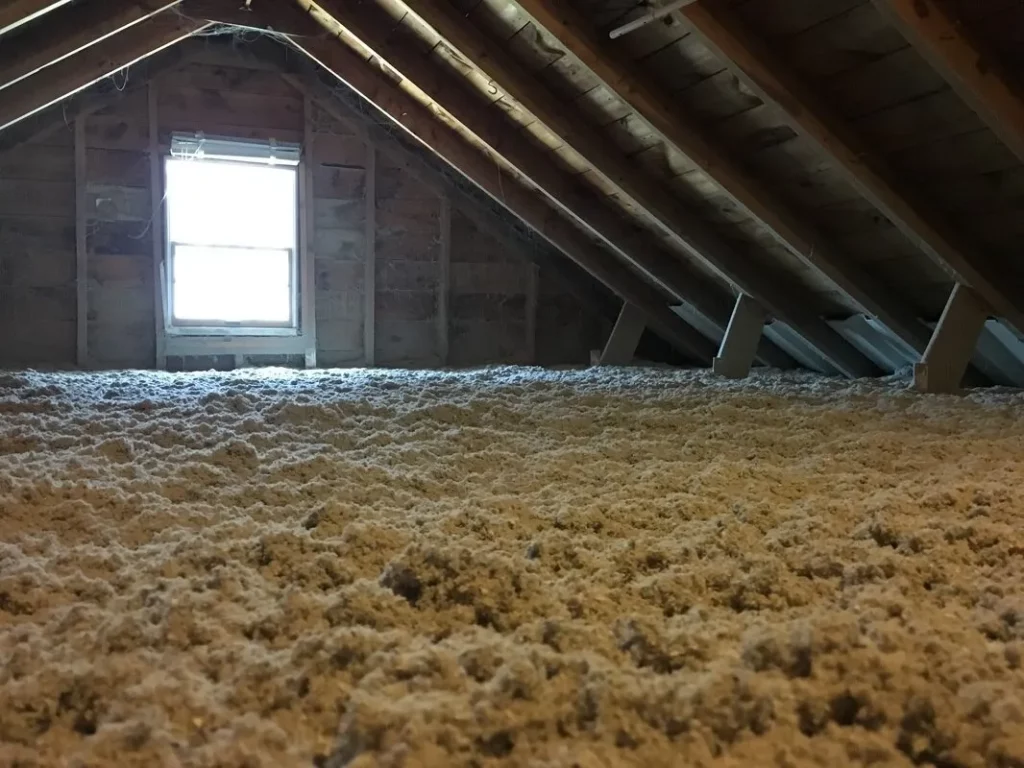
| Blown Cellulose | R-3.1 to R-3.8 | No | No | Attic floors, existing wall cavities (dense-pack) |
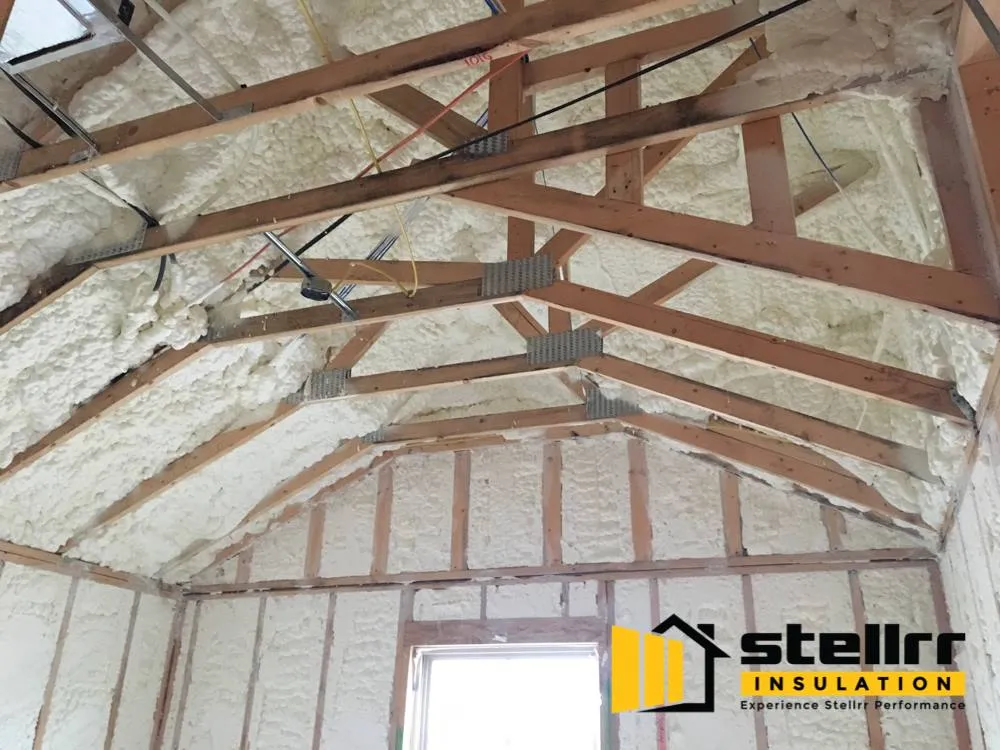
| Open-Cell Spray Foam | R-3.6 to R-3.9 | Yes | No | Wall cavities, rim joists, sound control |
| Closed-Cell Spray Foam | R-6.0 to R-7.0 | Yes | Yes (Class II vapor retarder) | Basements, crawl spaces, thin cavities |
| Rigid Foam Board (XPS) | R-5.0 | No | Yes | Exterior continuous insulation, basement walls |
| Rigid Foam Board (EPS) | R-3.8 to R-4.2 | No | No | Exterior sheathing, under slab |
| Mineral Wool Batts | R-3.3 to R-4.2 | No | No | Fire-rated assemblies, sound control |
This comparison shows why spray foam and rigid foam boards are preferred when cavity space is limited or when you need additional performance benefits like air sealing and moisture control.
Why Rated R-Value Differs from Real-World Performance
The Structural Insulated Panel Association highlights a critical point: whole-wall R-value is typically 20 to 40% lower than the labeled R-value of the insulation material installed in that wall. This happens for several reasons:
Thermal bridging through framing. Wood studs have an R-value of roughly R-1.25 per inch. In a standard 2×4 wall with studs every 16 inches, framing accounts for about 22% of the wall area. Those studs conduct heat far more readily than the insulated cavities between them, dragging down the overall assembly performance.
Air leakage. Fiberglass and cellulose do not stop air movement on their own. If air can pass through or around the insulation, it carries heat with it, bypassing the thermal resistance entirely. Spray foam, by contrast, expands to fill gaps and creates an air seal at the same time it insulates.
Compression and gaps. Compressing fiberglass batts to fit into a narrow cavity or around electrical boxes reduces their effective R-value. Gaps around the edges of batts create direct paths for air and heat to move through.
Temperature dependence. Some materials, particularly polyisocyanurate foam boards, lose R-value as outdoor temperatures drop. A board rated R-6.5 at 75°F may perform closer to R-5.5 at 25°F, which is exactly when you need the most thermal resistance in a cold climate.
Recommended R-Values by Climate Zone
The Energy Star recommended R-values table breaks down minimum insulation levels by climate zone and building component. For cold climate homes in zones 5 and 6, which includes most of Illinois, the targets are significantly higher than for warmer regions.
| Building Component | Zone 3-4 (Mixed) | Zone 5 (Cold) | Zone 6-7 (Very Cold) |
|---|---|---|---|
| Attic (unconditioned) | R-38 to R-49 | R-49 to R-60 | R-49 to R-60 |
| Cathedral Ceiling | R-30 to R-38 | R-38 to R-49 | R-38 to R-60 |
| Wall Cavity | R-13 to R-20 | R-20 to R-23 | R-20 to R-23 |
| Continuous Wall Sheathing | R-5 | R-5 to R-6 | R-5 to R-6 |
| Basement Wall | R-10 to R-15 | R-15 to R-19 | R-15 to R-19 |
| Crawl Space Walls | R-10 to R-15 | R-15 to R-19 | R-15 to R-19 |
| Floor Over Unconditioned Space | R-25 | R-25 to R-30 | R-25 to R-30 |
These numbers represent the minimum for cost-effective energy savings. Going above these minimums in the attic is often the single best investment you can make in a cold climate home, since heat rises and the attic is typically the largest source of energy loss.
Common Mistakes That Reduce R-Value Performance
Even when you select the right R-value on paper, several field errors can undermine the actual results.
Stacking incompatible materials. Placing a vapor-impermeable material like polyethylene sheeting on the warm side of a wall that already has closed-cell spray foam (a Class II vapor retarder) can trap moisture inside the assembly. In cold climates, this trapped moisture condenses against cold exterior sheathing, leading to mold and wood rot.
Ignoring air sealing before adding insulation. Adding R-38 of blown cellulose to an attic without first sealing air leaks at penetrations, ductwork, and top plates means you are insulating over draft pathways. The air still moves, and the cellulose does not stop it.
Using the wrong R-value for the application. Some contractors install R-13 fiberglass in a 2×6 wall cavity, leaving a 2-inch gap. Others cram R-19 batts designed for 5.5-inch cavities into 3.5-inch framing, compressing the material and reducing its effective R-value below what R-13 would have delivered uncompressed.
Not accounting for existing insulation. Layering new insulation over old does not simply add the R-values together. If the existing layer is compressed, moisture-damaged, or has settled, its actual contribution is less than its original rating.
Real-World Scenarios: R-Value in Practice
| Scenario | Home Type | Problem | Solution | Outcome |
|---|---|---|---|---|
| 1960s ranch in Wheaton, IL | 1,500 sq ft single story | R-11 fiberglass in attic with no air sealing, ice dams forming every winter | Air sealed all penetrations, then added R-49 blown cellulose over existing batts | Ice dams eliminated, heating bills reduced by 35% |
| New construction two-story | 2,800 sq ft, 2×6 framing | Builder installed R-19 batts in 5.5″ cavities but no continuous exterior insulation | Added R-5 rigid foam sheathing to exterior before siding | Eliminated thermal bridging, improved whole-wall R-value by approximately 30% |
| 1990s home with finished basement | 2,200 sq ft | Fiberglass batts against concrete basement walls with visible mold at bottom plate | Removed fiberglass, sprayed 2″ closed-cell foam (R-13) directly to foundation wall | Created air and moisture barrier, mold growth stopped, basement comfort improved significantly |
| Older farmhouse remodel | 2,000 sq ft, balloon framing | Open wall cavities allowed air to flow freely from basement to attic | Dense-packed cellulose into all wall cavities, sealed rim joists with open-cell foam | Stopped stack effect draft, evened out temperatures between floors |
These examples show that R-value is only one piece of the puzzle. Air sealing, moisture management, and proper spray foam installation methods all influence whether the rated R-value translates into actual comfort and savings.
Factors That Affect Insulation Performance in Cold Climates
Beyond the material’s rated R-value, several variables determine what actually happens inside your walls and attic during a cold Illinois winter.
Cavity depth and available space. A 2×4 wall limits you to roughly 3.5 inches of cavity insulation. If the target is R-20, fiberglass alone will not get you there. You either need to upgrade to a higher-R material like spray foam, add continuous exterior insulation, or use advanced framing techniques that reduce thermal bridging.
Indoor humidity levels. In cold climates, the interior side of the wall assembly is warm and humid while the exterior side is cold and dry. This drives moisture vapor outward through the wall. If the wall assembly cannot dry to either direction, moisture accumulates. The choice of insulation and vapor retarder must account for this drying potential.
Vapor diffusion direction. During winter, vapor drives from inside to outside. During summer, the reverse can happen. The insulation system needs to allow the wall to dry in at least one direction, which is why closed-cell foam at the correct thickness paired with breathable exterior sheathing is often preferred in cold climate basements and crawl spaces.
Existing building conditions. Older homes may have knob-and-tube wiring, vermiculite insulation (which can contain asbestos), or rotted framing that needs to be addressed before adding new insulation. You cannot simply blow R-60 into an attic that has active moisture problems or structural damage.
Climate zone classification. The International Energy Conservation Code (IECC) assigns climate zones based on 30-year average heating degree days. Zone 5, which covers northern Illinois, requires higher wall and attic R-values than Zone 4. Getting the zone wrong means either under-insulating or over-spending for marginal returns.
Actionable Strategies for Contractors
These steps help ensure the R-value you specify actually delivers the performance your clients expect.
1. Always air seal before insulating. Use caulk, spray foam, and weatherstripping to seal penetrations, top plates, rim joists, and any pathway where air can move between conditioned and unconditioned spaces. This alone can improve effective R-value by 25% or more.
2. Calculate whole-wall R-value, not just material R-value. Use the ASHRAE zone method or online calculators to account for framing, thermal bridging, and other assembly components. Present this realistic number to homeowners rather than the lab-rated material value.
3. Match insulation type to the specific application. Use closed-cell spray foam in basements and crawl spaces where moisture is a concern. Use open-cell foam in wall cavities where sound control and air sealing matter but moisture resistance is less critical. Reserve fiberglass and cellulose for accessible attics and floors where depth is not limited.
4. Avoid compressing insulation. Fit batts snugly without forcing them. If a cavity has obstructions, consider switching to blown-in or spray-applied insulation that conforms to the space without losing R-value.
5. Verify depth and coverage after installation. Use depth markers in blown-in attic insulation and take photos of wall cavities before closing them. Document the installed R-value for code compliance and for the homeowner’s records.
6. Educate homeowners on the difference between rated and effective R-value. A homeowner who understands why spray foam costs more per square foot but delivers better whole-wall performance is more likely to invest in the right solution.
Long-Term ROI: Does Higher R-Value Pay Off?
According to data from the U.S. Department of Energy, upgrading attic insulation from R-11 to R-49 in a cold climate can reduce heating and cooling costs by 10% to 50%, depending on the existing conditions and fuel type. The payback period for attic insulation upgrades typically ranges from 3 to 7 years in northern climates.
For wall insulation upgrades, the math is less dramatic because walls represent less total surface area than the attic and because wall upgrades often require more invasive installation methods. However, adding continuous exterior insulation (R-5 to R-10 rigid foam) during a re-siding project delivers excellent ROI since the labor of removing and reinstalling siding is already budgeted.
The bottom line is that in cold climates, under-insulating costs far more in the long run than over-insulating. Energy prices continue to rise, and homes with higher effective R-values hold their value better and sell faster than comparable homes with minimum code insulation.
Get Your Insulation Right the First Time
Understanding R-values is the foundation of every insulation decision, but turning that knowledge into a properly sealed, insulated, and moisture-managed building assembly takes experience. At Stellrr Insulation & Spray Foam, we help homeowners and contractors specify the right insulation materials, R-values, and installation methods for every climate zone 5 project. Whether you need an attic upgrade, basement encapsulation, or full-home insulation for new construction, our team ensures the rated R-value on the label actually shows up in your energy bills.
Call us at (512) 710-2839 or email info@stellrr.com to get started.
Frequently Asked Questions
Does doubling insulation thickness double the R-value?
Yes, R-values are additive. Two inches of R-6.5 closed-cell foam yield R-13 total. However, real-world performance gains follow a curve of diminishing returns. Going from R-0 to R-13 makes a massive difference in heat loss. Going from R-38 to R-51 in an attic produces a much smaller incremental improvement.
What is the best R-value for an attic in Illinois?
For climate zone 5, which covers most of Illinois, Energy Star recommends R-49 to R-60 for uninsulated attics. Most contractors target R-49 as the cost-effective sweet spot, with R-60 as an option for homeowners who want maximum performance.
Can you have too much R-value in a wall?
In wall cavities, the practical limit is the depth of the framing. A 2×4 cavity can hold roughly 3.5 inches of material. If you need R-20 or more in a wall, the standard approach is to add continuous exterior insulation rather than trying to overstuff the cavity. Over-compressing insulation actually reduces its effective R-value.
How does spray foam R-value compare to fiberglass?
Closed-cell spray foam delivers roughly R-6.5 per inch compared to R-3.2 per inch for fiberglass. More importantly, spray foam creates an air seal and acts as a vapor retarder, which means its real-world performance often exceeds what the R-value alone suggests. Fiberglass relies on a separate air barrier to perform as rated.
Does R-value matter for summer cooling?
Yes. R-value measures resistance to heat flow in both directions. In summer, it prevents outdoor heat from penetrating your walls and attic. Proper attic insulation with adequate R-value is one of the most effective ways to reduce cooling loads and prevent upstairs rooms from becoming uncomfortably hot during summer months.
Sources
- Energy Star – Recommended Home Insulation R-Values – Climate zone-specific R-value recommendations for attics, walls, basements, and crawl spaces.
- U.S. Department of Energy – Types of Insulation – Overview of insulation materials, R-values per inch, installation methods, and performance characteristics.
- Johns Manville – R-Value 101: A Crash Course in Insulation Ratings – Explanation of how R-values are measured in laboratory conditions versus real building assemblies.