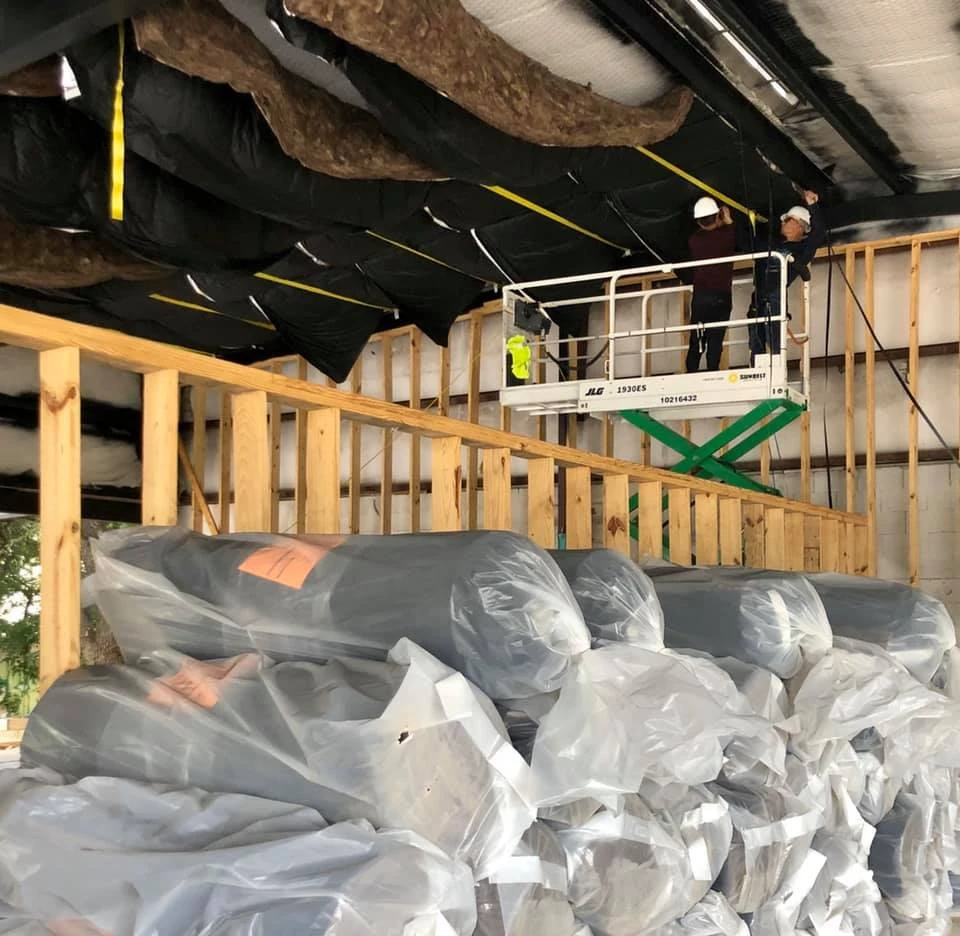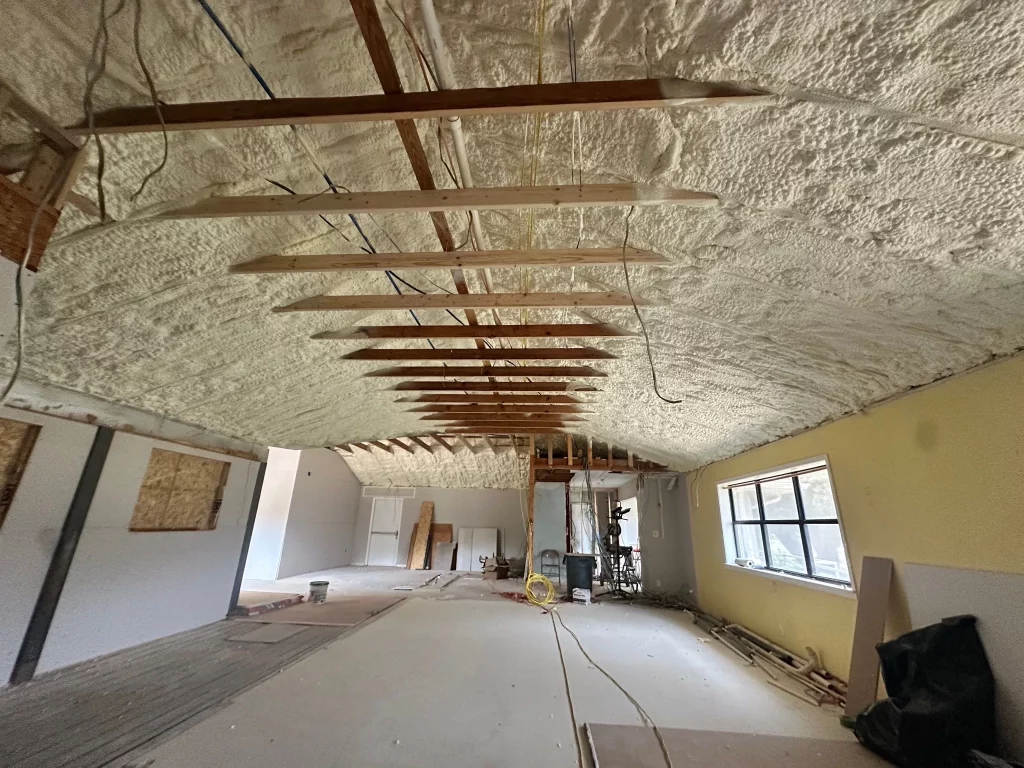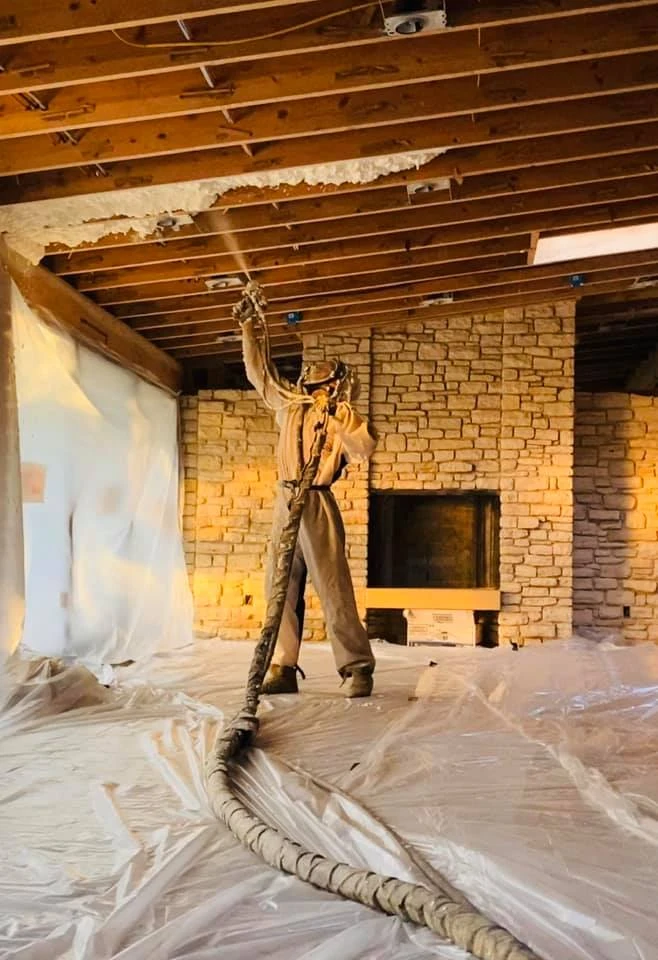

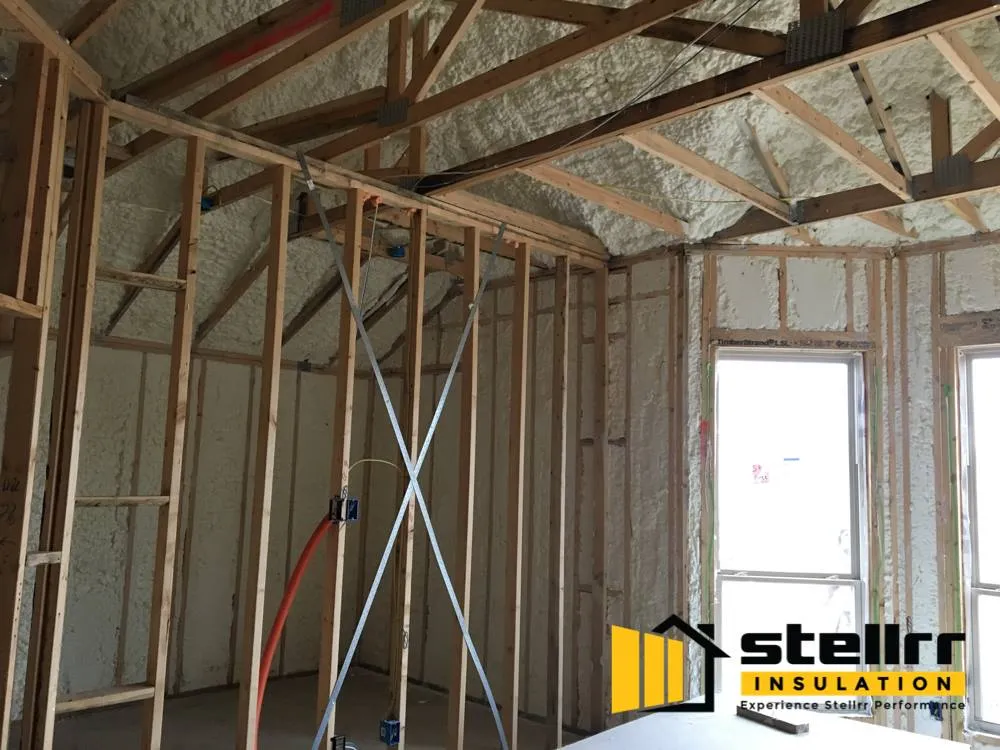
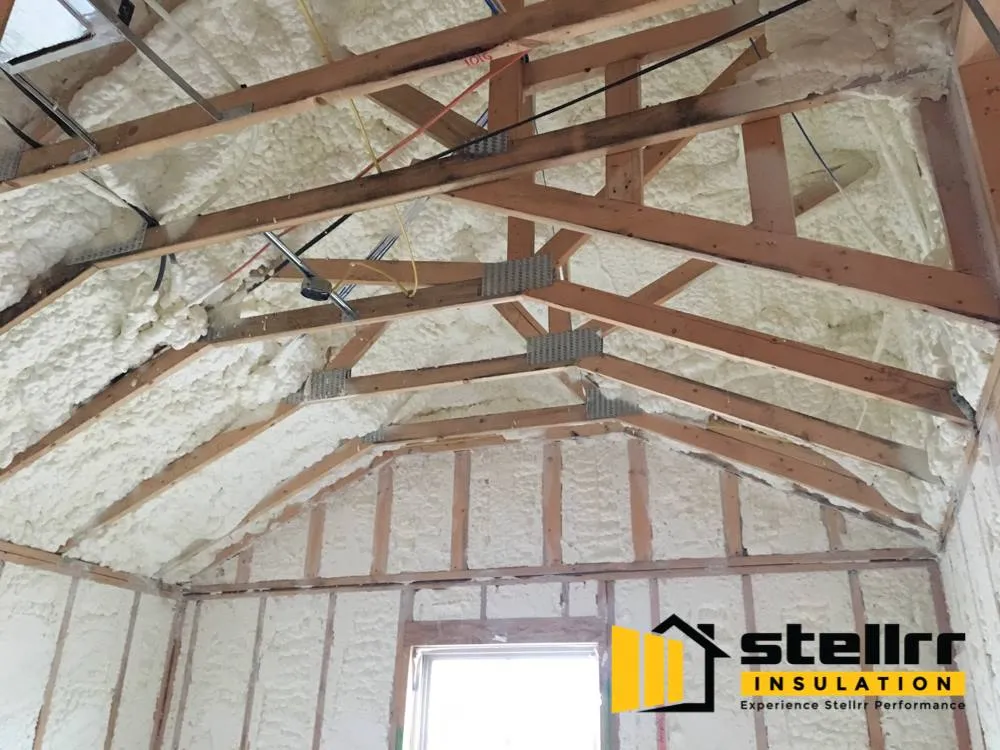
A professionally installed residential spray foam system delivers two primary solutions in a single application: superior thermal resistance and a complete air seal. By expanding to fill every gap, crack, and crevice, this material stops uncontrolled air leakage that accounts for significant energy loss in typical homes. This dual-action performance reduces monthly utility costs, maintains consistent indoor temperatures, and prevents outdoor pollutants from entering the living space. While traditional materials like fiberglass only slow heat transfer, spray foam stops air movement entirely.
Achieving these results requires precise chemical management that only trained technicians can provide. The effectiveness of spray foam depends on the exact ratio of two distinct chemicals mixed at specific temperatures and pressures. When applied correctly by experts, the foam adheres permanently to the building structure, strengthening walls and roofs while eliminating the risk of settling or sagging. This creates a durable thermal envelope that protects the home for decades, offering performance and safety that do-it-yourself kits cannot match. As a leader in this field, Stellrr Insulation & Spray Foam has seen firsthand how a proper installation transforms a home’s comfort and efficiency.
Measurable Energy Efficiency and Cost Reduction
The financial impact of a well-insulated home becomes visible almost immediately on monthly utility bills. The primary driver of high energy costs is not just poor insulation but air leakage. When conditioned air escapes and outdoor air enters, your HVAC system must run longer and work harder to maintain the set temperature.
Data from the Department of Energy indicates that air leakage can account for up to 40% of a home’s energy loss. By sealing these leaks, spray foam dramatically lowers the workload on heating and cooling equipment. A report from Energy Star estimates that homeowners can save an average of 15% on heating and cooling costs by effectively sealing air leaks and upgrading insulation. In many cases involving older, drafty homes, the actual savings can be significantly higher.
These savings effectively pay for the installation over time. Unlike other home upgrades that offer only aesthetic value, spray foam insulation provides a functional return on investment. Reduced strain on your air conditioner and furnace also extends their lifespans, delaying costly replacements.
Complete Air Sealing and Moisture Management
Most homes suffer from the “stack effect,” a phenomenon in which warm air rises and escapes through the attic, creating a vacuum that pulls in cold, unconditioned air through the basement or crawl space. Traditional fiberglass batts act like wool sweaters; they keep you warm, but wind blows right through them. Spray foam acts like a windbreaker.
This air barrier is critical for moisture control. When warm, moist air meets cool surfaces inside wall cavities, condensation forms. This moisture can lead to mold growth and wood rot, compromising the home’s structural integrity. Closed-cell spray foam acts as a vapor barrier, preventing moisture from permeating the walls.
According to Building Science Corporation, controlling air flow is the most critical factor in managing moisture and energy performance. By eliminating the gaps where air travels, a professional installation protects the home from the hidden damage caused by condensation and humidity.
Bonus Tip: If you live in a humid climate, ask about closed-cell foam for your attic roof deck. This application prevents humid outdoor air from entering the attic, creating a semi-conditioned space that is safer for storing belongings.
Comparing Professional Installation vs DIY Kits
Homeowners often consider “froth kits” or DIY spray foam tanks to save money, but the risks usually outweigh the initial savings. Spray foam creates an exothermic reaction (it generates heat) as it cures. If applied too thick or out of ratio, it can smoke, char, or even start a fire.
The chemical mixture is delicate. Professional rigs heat the chemicals to exact temperatures and mix them at high pressure (often over 1,000 psi) to ensure a perfect reaction. DIY kits rely on low-pressure mixing, which usually results in “off-ratio” foam that remains gooey, smells bad, or shrinks away from the studs.
Technical Comparison: Professional System vs. DIY Kits
| Feature | Professional High-Pressure System | DIY Low-Pressure Kits |
|---|---|---|
| Mixing Pressure | 1,000+ PSI (Guarantees proper mix) | < 200 PSI (High risk of poor mix) |
| Temperature Control | Heated lines maintain exact temp | Dependent on ambient air temp |
| Adhesion Quality | Permanent structural bond | Surface bond (prone to peeling) |
| Safety Risks | Controlled by trained pros with a fresh air supply | High exposure risk without proper PPE |
| Yield Consistency | Consistent expansion and density | Often runs out faster than expected |
| Warranty | Manufacturer & labor warranty | No warranty on application results |
A study on foam failures highlights that improper mixing of ratios is the leading cause of lingering odors and failure to cure. A professional crew monitors these ratios digitally, ensuring the foam cures within seconds to a chemically inert state.
Long-Term Structural Integrity and Durability
One often overlooked benefit of closed-cell spray foam is its ability to strengthen the building itself. Because the foam is dense and rigid, it glues the building materials together. This “racking strength” makes walls more resistant to wind loads and structural movement.
In contrast to cellulose or fiberglass, which settle over time and leave gaps at the top of wall cavities, spray foam maintains its shape and performance indefinitely. It does not sag, compress, or provide nesting material for rodents. This durability ensures that the R-value (thermal resistance) you pay for today remains the same ten or twenty years from now.
Market data support the value of this durability. A report from Remodeling Magazine suggests that insulation upgrades consistently offer a strong return on investment at resale, as buyers increasingly prioritize energy-efficient, low-maintenance homes.
Things to Consider Before Making a Decision
Before scheduling an installation, evaluate the specific needs of your property. The choice between open-cell and closed-cell foam is the most significant decision you will make.
Open-Cell Foam:
- Less expensive.
- Expands more (100x), making it great for filling irregular gaps.
- Excellent sound-dampening properties.
- Not a vapor barrier (requires a separate vapor retarder in some climates).
- Best for interior walls and unvented attics in moderate climates.
Closed-Cell Foam:
- Higher cost.
- Higher R-value per inch (approx R-7 vs R-3.5).
- Acts as a vapor barrier and water resistor.
- Adds structural strength.
- Best for basements, crawl spaces, and exterior walls in extreme climates.
Consulting with a professional helps determine which type suits your local climate zone and building code requirements.
Summary and Final Advice
A professionally installed residential spray foam system offers a comprehensive solution to energy loss, discomfort, and poor indoor air quality. By creating a continuous barrier that insulates and seals simultaneously, this method outperforms traditional materials and provides lasting value. The structural benefits, combined with moisture control and durability, make it a prudent investment for any homeowner looking to improve their living environment.
Evaluate your long-term goals for the property. If you plan to stay in your home for years, the energy savings and equipment longevity will pay back the initial investment. Focus on the attic and basement first, as these areas contribute most to the “stack effect.” Always choose a contractor who prioritizes safety, carries proper insurance, and uses high-pressure equipment to guarantee a stable, effective product.
Contact Stellrr Insulation & Spray Foam
Ready to permanently fix uncomfortable rooms and high energy bills? The team at Stellrr Insulation & Spray Foam is here to help you design the right solution for your home. We provide honest assessments and precision installation services to verify you get the performance you expect.
Call us today at (512) 710-2839 or email info@stellrr.com to schedule your consultation. Let us help you build a more energy-efficient and comfortable future.
Frequently Asked Questions
What is the difference between R-value and air sealing?
R-value measures resistance to heat flow through a material, while air sealing prevents the physical movement of air through gaps. You can have high R-value insulation like thick fiberglass, but if air leaks through it, the heat still escapes. Spray foam provides both high R-value and air sealing in one step.
Can spray foam insulation be installed in an existing home?
Yes, it can be installed in attics, crawl spaces, and basements of existing homes. For finished walls, injection foam or removing drywall is required to access the stud cavities. Most retrofits focus on the attic and rim joist, where energy loss is highest, and access is easiest.
How long does the installation process take?
Most residential projects, such as attic or crawl space encapsulation, are completed in 1 to 2 days. Larger projects or whole-home insulations may take longer depending on the complexity and the amount of preparation work required.
Is spray foam insulation safe for my family and pets?
Yes, once the foam has fully cured, it is non-toxic and safe. The primary safety concern exists only during the application process when the chemicals are liquid and reactive. Professional teams follow strict reentry protocols to verify the air is safe before you return.
Sources
- Department of Energy – Information on how insulation works and statistics on home energy loss.
- Energy Star – Methodology and data regarding estimated energy savings from air sealing and insulation.
- Building Science Corporation – Technical digest explaining the physics of air flow control and moisture management in buildings.
- Remodeling Magazine – Cost vs. Value report analyzing the return on investment for various home improvement projects.