
Reducing sound transmission effectively requires a three-pronged approach: increasing the mass of partitions, decoupling structural elements to break vibration paths, and sealing all air gaps through which sound can travel. The most immediate and practical solution is to increase wall density by installing sound-dampening insulation, such as mineral wool or open-cell spray foam, in the wall cavities. You must also address “flanking paths” by sealing gaps around outlets, ducts, and door frames with acoustic sealant, as even a 1% opening in a barrier can reduce its sound-blocking capability by 50%.
Noise pollution in office environments is not just a minor annoyance; it destroys focus and privacy. Whether you are dealing with thin walls in a commercial lease or designing a new layout, understanding how sound moves is the first step to stopping it, this guide details practical, structural, and retrofit strategies to keep conversations private and workspaces quiet, based on extensive field experience in commercial acoustics.
Understanding How Sound Travels
Before ripping open walls, you need to understand the two ways noise moves between offices.
Airborne Noise travels through the air. This includes conversations, ringing phones, and music. If air can pass through a crack, sound will follow. This is why a heavy door with a gap at the bottom fails to block hallway noise.
Structure-borne Noise occurs when an object impacts a building element, creating vibrations that travel through the structure. Footsteps on a hard floor or a slamming door are common examples. The vibration moves through the studs and drywall, turning the wall itself into a speaker on the other side.
The Metrics That Matter
You will see two acronyms frequently when selecting materials.
- STC (Sound Transmission Class): This measures how well a building partition blocks airborne sound. A standard hollow wall has an STC of about 33. You can hear loud speech clearly through it. An STC of 45 blocks loud speech enough that it is not understood. An STC of 60 offers excellent soundproofing.
- NRC (Noise Reduction Coefficient): This measures a material’s sound-absorption. This is relevant for reducing echo inside a room but does less to stop sound from leaving the room.
Structural Solutions for Walls
The walls are usually the primary culprit in office noise transfer. If you can modify the structure, these are the most effective interventions.
Internal Wall Insulation
Empty wall cavities act like a drum, amplifying sound frequencies. Filling these cavities creates friction for sound waves, reducing their energy.
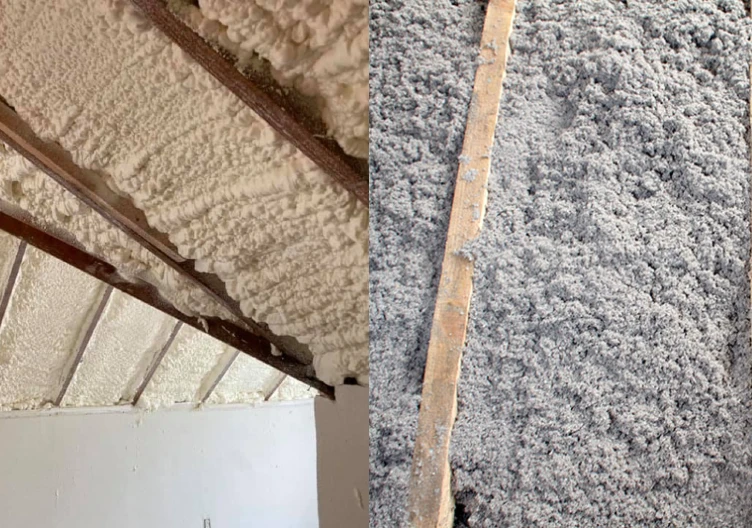
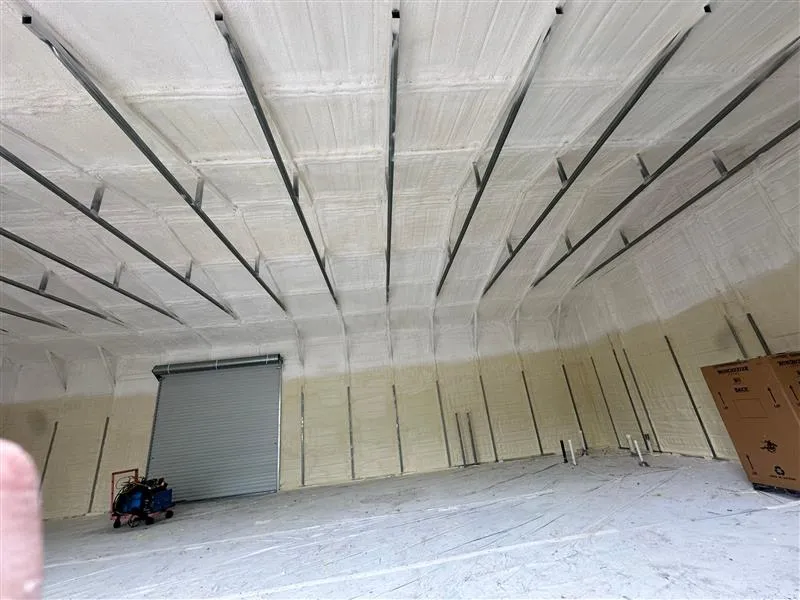
Installing fiberglass or mineral wool batts is a standard practice. However, for superior performance, open-cell spray foam provides distinct advantages. It expands to fill every crevice, helping deaden the wall and reducing air infiltration. A report from Sustainability Workshop indicates that sealing air leaks is a fundamental requirement for effective acoustic isolation.
Adding Mass and Damping
If the wall is already built, adding mass helps. You can install a second layer of 5/8-inch drywall over the existing layer. For the best results, apply a damping compound between the layers. This viscoelastic “glue” converts sound energy into small amounts of heat, stopping the vibration from passing through to the second layer of drywall.
Decoupling Techniques
Sound bridges occur when drywall is screwed directly into the studs. The sound hits the drywall, travels through the screw to the stud, and exits the other side.
Resilient Channels: Metal rails that screw into studs. The drywall then attaches to the channels, not the studs. This “floats” the wall and breaks the path of vibration.
Staggered Studs: In new construction, using a wider plate (2×6) with alternating 2×4 studs ensures the drywall on one side never touches the same stud as the drywall on the other side.
Addressing Flanking Paths
You can build a concrete bunker, but if there is a hole in it, sound will get in. Flanking paths are the sneaky routes sound takes to bypass your insulated walls.
The Ceiling Plenum
In many commercial buildings, walls stop at the drop ceiling grid, leaving a wide-open space (plenum) above. Sound jumps over the wall and down into the next office.
- Ceiling Tiles: Upgrade to tiles with a high Ceiling Attenuation Class (CAC). Standard tiles block very little noise.
- Plenum Barriers: Install a barrier of loaded vinyl or rigid insulation board vertically from the top of the wall to the roof deck above.
Doors and Windows
A solid wall is useless if you have a hollow-core door.
- Switch to Solid Core: Replace hollow doors with solid wood or metal doors.
- Install Drop Seals: Gaps under doors are a significant source of leaks. An automatic door bottom drops a rubber seal when the door closes and lifts it when the door opens, preventing drag.
- Perimeter Seals: Apply gaskets around the door frame to stop sound from leaking around the edges.
Bonus Tip: Check your electrical outlets. If outlets in two different rooms are installed in the same stud bay, back-to-back, they create a direct sound tunnel. Use acoustic putty pads to wrap the back of the electrical boxes to seal this pathway.
Things to Consider Before Making a Decision
Before spending your budget on insulation materials, pause to evaluate the specific constraints of your workspace.
- Lease vs. Own: If you lease the office, you may be restricted from opening walls or altering the structure. In this case, you must focus on surface-level treatments like sealing gaps, upgrading doors, or adding external acoustic panels, though these are less effective than structural changes.
- Frequency of Noise: Low-frequency noise (machinery, bass) is much harder to stop than high-frequency noise (human speech). Heavy mass is required to stop low frequencies. If your problem is simply speech privacy, standard insulation and sealing may suffice.
- HVAC Layout: Ductwork often runs directly between offices. If you can hear voices through the vents, lining the ducts with acoustic liner or installing sound baffles is necessary.
Comparison of Sound Reduction Methods
The following table breaks down common improvements by their impact on sound blocking (STC), relative to the effort and cost involved.
| Method | Estimated Cost | Installation Difficulty | Primary Benefit | Best Application |
|---|---|---|---|---|
| Acoustic Caulk & Sealing | Low | Low | Stops air leaks | First step for all offices |
| Solid Core Door Upgrade | Medium | Medium | Blocks hallway noise | Private offices & conference rooms |
| Wall Cavity Insulation | Medium | High (if retrofit) | Absorbs cavity resonance | New construction or major renovation |
| Double Drywall + Green Glue | Medium-High | Medium | Adds mass & damping | Existing walls need better STC |
| Sound Masking System | Medium | Low | Masks speech distractions | Open office areas |
Bonus Tip: If you have a glass partition or window causing issues, look into acoustic glazing or adding a second pane of laminated glass with an air gap. This effectively decouples the window assembly.
Market Data: The Cost of Noise
ignoring sound issues has a tangible financial impact. A study conducted by Udemy for Business found that nearly 75% of employees feel distracted at work, with noise being a primary factor. When employees are constantly interrupted by conversations from the next office, their ability to perform deep work vanishes. This results in higher error rates and lower overall output.
Conclusion
Reducing sound transmission is a game of weak links. You can have the thickest walls in the world, but a quarter-inch gap under the door will render them ineffective. Start by identifying the type of noise you are dealing with and locating the flanking paths. Seal the gaps first, as this is the most cost-effective step. If problems persist, consider adding density and insulation to the walls and upgrading your doors.
Evaluate your long-term goals. If you own the building, investing in structural decoupling and high-quality commercial spray foam insulation adds permanent value. If you are leasing, focus on sealing and masking to improve the environment without violating your contract.
Improving Your Office Acoustics
If your team struggles to focus due to noise bleeding through walls, it is time to address the structure itself. Stellrr Insulation & Spray Foam focuses on diagnosing the root cause of sound transmission and implementing structural solutions that last. Whether you need to retrofit existing walls with high-performance insulation or seal complex flanking paths in a commercial build-out, the right materials make the difference.
Contact us to discuss your project requirements.
Email: info@stellrr.com
Phone: (512) 710-2839
Frequently Asked Questions
What is the difference between soundproofing and sound absorption?
Soundproofing prevents sound from entering or leaving a space (blocking). Sound absorption reduces echo and reverberation in a space, improving audio clarity. You need mass for soundproofing and soft materials for absorption.
Can spray foam insulation help with soundproofing?
Yes. Open-cell spray foam is particularly effective for sound damping. It fills every gap in the wall cavity, stopping airborne noise leaks that fiberglass batts might miss. It also creates a semi-rigid barrier that absorbs sound energy.
How much does it cost to soundproof an office?
Costs vary wildly based on methods. Simple air sealing might cost a few hundred dollars. Structural changes involving new insulation, drywall, and doors can range from $50 to $100 per square foot, depending on labor rates and material grades.
What is a “sound leak”?
A sound leak is any physical gap through which air can pass. Common spots include under doors, around electrical outlets, through ventilation ducts, and at the top of walls where they meet the ceiling deck.
Why is the office still noisy after insulating the walls?
This is almost always due to flanking paths. Check the ceiling plenum, the HVAC ducts, and the door seals. According to data published by the General Services Administration (GSA), even high-performance walls fail if the intersection between the wall and the exterior facade or ceiling grid is not detailed and sealed correctly.
Sources
- The General Services Administration (GSA) – Offers federal standards and guidelines for acoustic performance in office buildings and public facilities.
- Udemy for Business – A research report analyzing workplace distractions and the impact of noise on employee productivity.