Residential spray foam insulation reduces monthly utility bills by creating a comprehensive thermal and air barrier that traditional insulation materials cannot match. By expanding to fill every crack, gap, and crevice, spray foam stops conditioned air from escaping and prevents unconditioned outdoor air from entering. This creates a sealed building envelope that relieves stress on heating and cooling systems, resulting in energy cost reductions that typically range from 15% to 50% depending on the home’s original efficiency levels.
Understanding the mechanics of these savings requires looking beyond simple R-value numbers. While traditional materials like fiberglass slow down heat transfer, they do not stop air movement. Stellrr Insulation & Spray Foam approaches insulation with the understanding that air leakage is often the primary driver of high energy bills. Controlling airflow stabilizes indoor temperatures, allowing HVAC systems to run for shorter cycles and maintain comfort with significantly less electricity or gas consumption.
The Science of Air Sealing and Thermal Resistance
Most homeowners assume that insulation is strictly about trapping heat, but thermal resistance (R-value) is only half the equation. The other half is air sealing. Heat travels in three ways: conduction, convection, and radiation. Traditional batt insulation effectively addresses conduction, heat transfer through a solid material, but fails to stop convection, heat transfer through air currents.
When a home has air leaks, it experiences the “stack effect.” In winter, warm air rises and escapes through the attic (exfiltration), creating a vacuum that sucks cold air in through the basement or lower floors (infiltration). This constant cycle forces the furnace to continuously heat new cold air. According to the Department of Energy, reducing these air leaks is one of the most cost-effective ways to cut heating and cooling costs and improve durability.
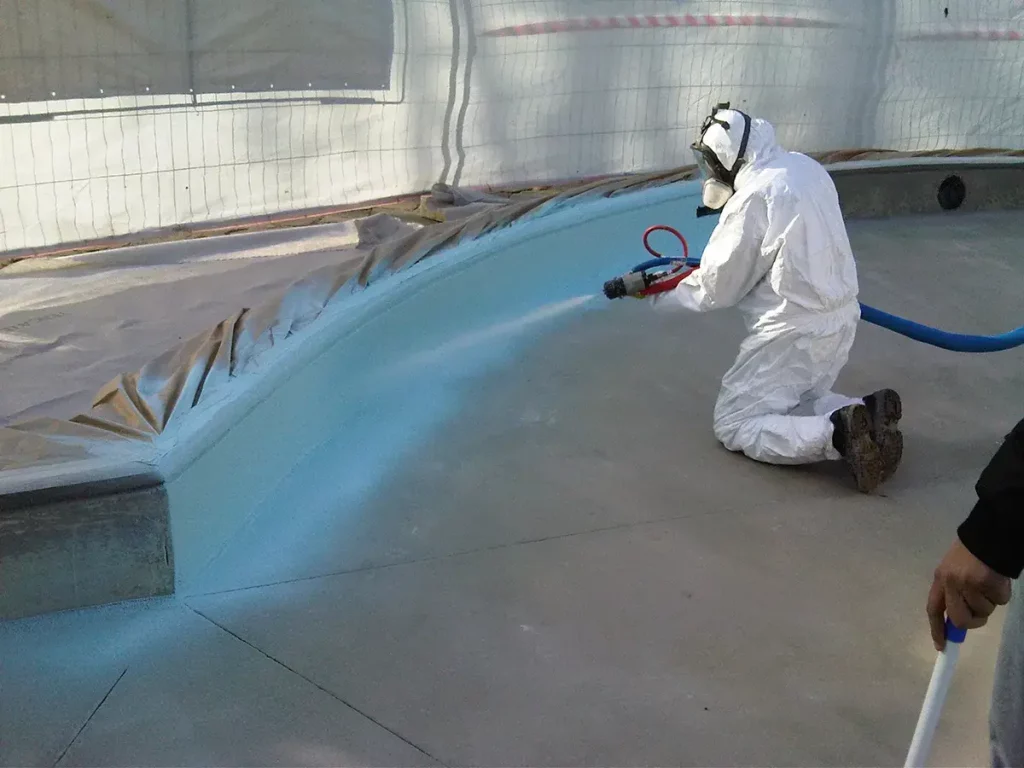
Spray foam addresses both conduction and convection simultaneously. When applied, the chemical mixture expands up to 100 times its original volume. It adheres directly to the substrate studs, roof decks, or rim joists and hardens into a durable barrier. This eliminates the gaps where air typically bypasses fiberglass batts.
Comparing Insulation Performance
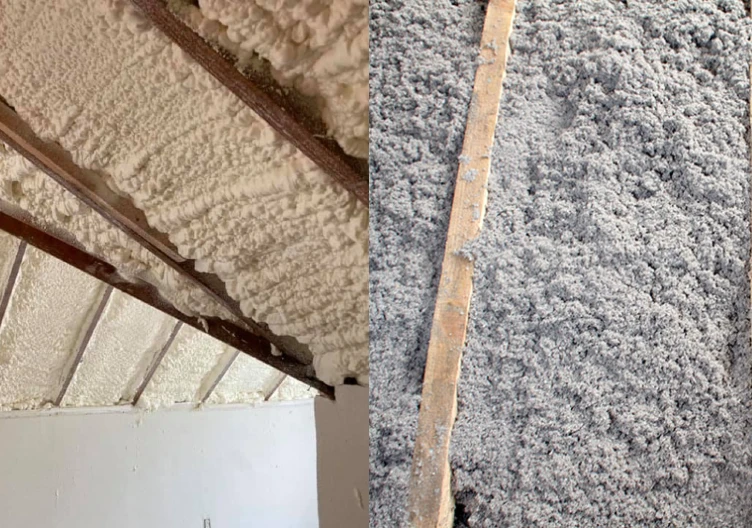
To understand why spray foam outperforms other materials in terms of cost savings, one must examine the technical specifications of common insulation types. The following table outlines how different materials handle heat and air.
| Feature | Open-Cell Spray Foam | Closed-Cell Spray Foam | Fiberglass Batts | Cellulose (Blown-In) |
|---|---|---|---|---|
| R-Value per Inch | 3.5 – 3.7 | 6.0 – 7.0 | 3.1 – 3.4 | 3.2 – 3.8 |
| Air Barrier | Yes | Yes | No | Partial (settles over time) |
| Moisture Barrier | No (Permeable) | Yes (Impermeable) | No | No (Absorbs moisture) |
| Lifespan | 80+ Years | 80+ Years | 15-20 Years | 20-30 Years |
| Sagging/Settling | None | None | Common over time | Common over time |
Impact on HVAC Sizing and Equipment Lifespan
A significant financial benefit often overlooked is the relationship between insulation and HVAC equipment. When a home is leaky and poorly insulated, the HVAC system must be oversized to compensate for the thermal loss. It works harder, runs longer, and cycles on and off more frequently to maintain the set temperature. This excessive workload leads to premature equipment failure and higher maintenance costs.
By tightening the building envelope with spray foam, the heating and cooling load decreases significantly. This often means that when it is time to replace an AC unit or furnace, a smaller, less expensive unit will suffice. Data from Energy Star suggests that sealing air leaks and adding insulation can save homeowners an average of 15% on heating and cooling costs. However, field experience with spray foam often yields higher savings due to its superior sealing.
Bonus Tip: If you plan to install spray foam, have your HVAC contractor perform a “Manual J” load calculation afterward. You may find that your current system is now oversized, which can cause humidity issues if not adjusted, as the unit will cool the house too quickly without running long enough to dehumidify the air.

Things to Consider Before Making a Decision
Spray foam is a significant investment compared to traditional insulation materials. Homeowners should evaluate specific factors to ensure the upfront cost translates to long-term savings.
Duration of Home Ownership: The return on investment (ROI) for spray foam typically takes 3 to 5 years, driven solely by energy savings. If the plan is to move within a year, the monthly savings may not cover the installation cost, although the increased home value remains a factor.
Attic Configuration: Homes with complex rooflines or numerous penetrations (vents, pipes, recessed lights) benefit most from spray foam. Cutting fiberglass batts to fit around these obstacles usually results in gaps and compression, ruining the insulation’s effectiveness. Spray foam flows around these obstructions, sealing them perfectly without extra labor. Building Science Corporation.
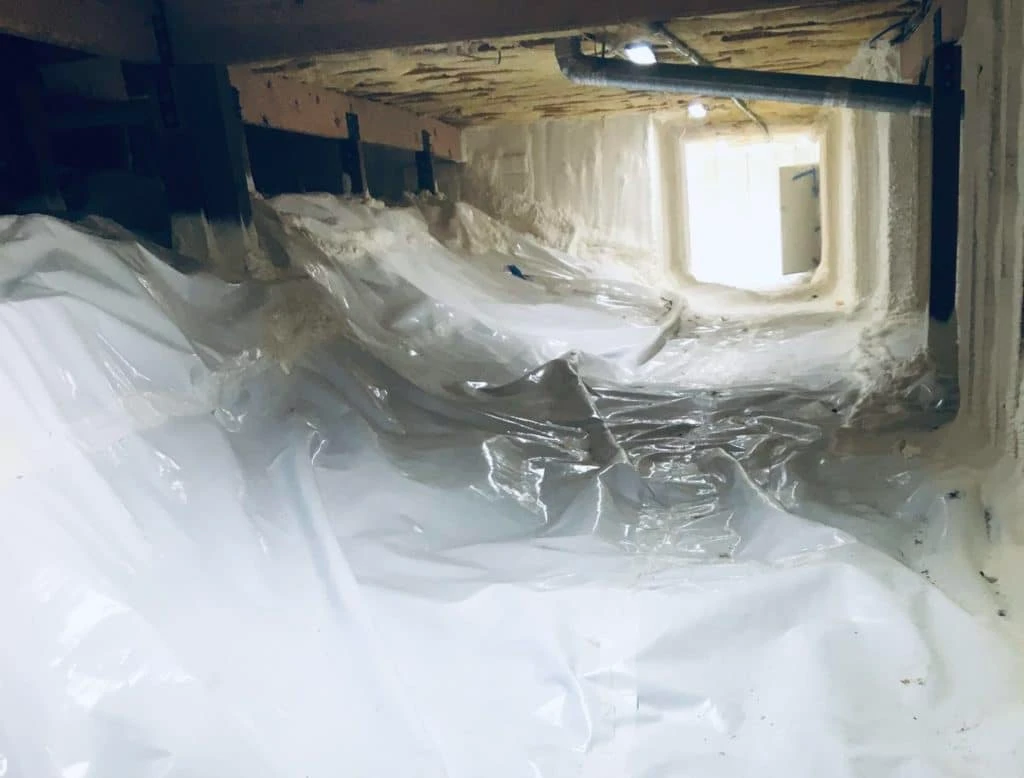
Moisture Management In humid climates, controlling moisture is as important as controlling heat. Closed-cell spray foam acts as a vapor barrier, preventing humid outdoor air from entering the attic and condensing on HVAC ducts. This protects the home from mold growth and structural rot, avoiding costly future repairs.
Fundamental World Factors Affecting Your Bill
The exact dollar amount saved varies based on several factors beyond the insulation material alone.
Energy Rates Areas with high electricity or natural gas rates see a faster payback period. As utility prices climb, the value of the energy saved increases proportionally.
Home Geometry Two-story homes often suffer more from the stack effect than ranch-style homes. Sealing the “lid” (attic) and the “rim joist” (between floors) in a multi-story home yields dramatic reductions in energy waste.
Ductwork Location If HVAC ducts run through an unconditioned vented attic, they can lose a massive amount of energy. In summer, 140-degree attic heat cooks the cool air inside the ducts. By applying spray foam to the underside of the roof deck, the attic becomes a “semi-conditioned” space. The ducts now stay within a few degrees of the living space temperature, delivering air at the intended temperature without loss.
Conclusion
Lowering utility bills with spray foam is not magic; it is physics. By eliminating air leakage and providing consistent thermal resistance, spray foam stops the waste that forces HVAC systems to overwork. The result is a home that holds temperature longer, stays comfortable in extreme weather, and costs significantly less to operate. Homeowners should consider the total cost of ownership, including equipment longevity and monthly energy costs, rather than just the upfront installation cost.
Ready to Stop Energy Waste
If high energy bills are a constant frustration, it may be time to investigate the condition of your current insulation. A professional assessment can identify where your home is losing the most energy. For residents in our service area, Stellrr Insulation & Spray Foam is available to discuss your specific needs. You can reach the team at (512) 710-2839 or send an inquiry to info@stellrr.com.
Frequently Asked Questions
Will my house be too airtight?
A home cannot be too tight, but it can be under-ventilated. Building science dictates “build it tight, ventilate it right.” If a house is extremely airtight, fresh air intake (mechanical ventilation) ensures high indoor air quality without relying on random, dirty air leaks from the attic or crawlspace.
How much noise reduction will I notice?
Open-cell spray foam is an excellent sound dampener. It reduces airborne noise from traffic, neighbors, and weather events. While it is primarily an energy-saving product, the acoustic comfort is a noticeable secondary benefit that adds to the home’s value.
Can spray foam be applied to existing walls
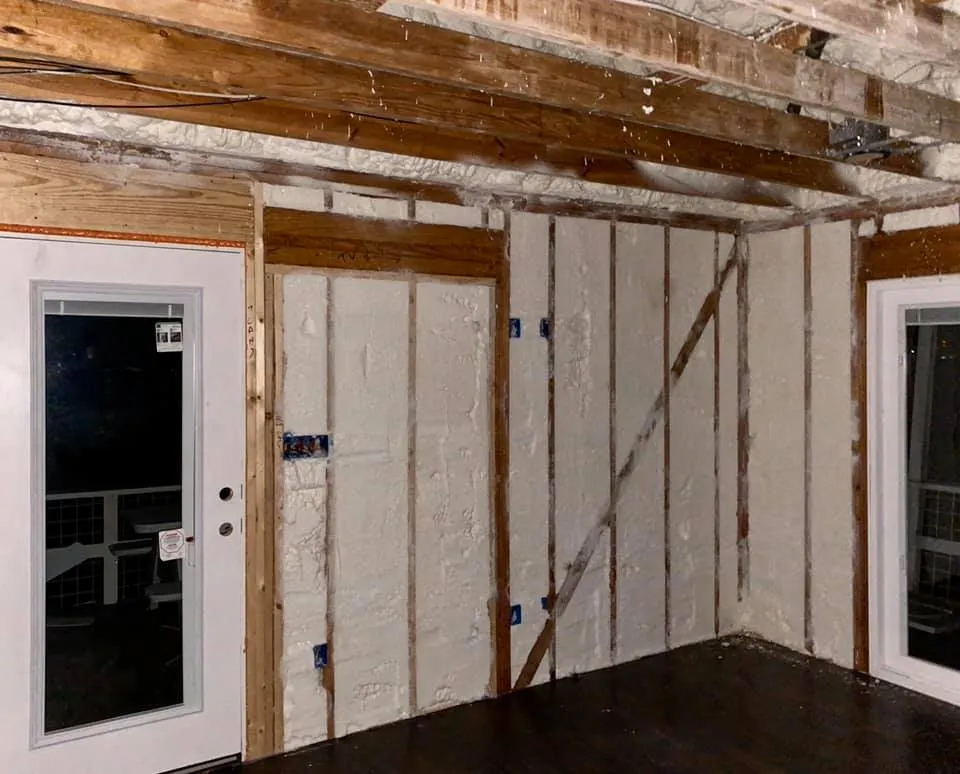
It depends on the construction; for existing walls with drywall, injection foam (a different product) or “drill-and-fill” techniques are used. However, spray foam is most easily applied to open cavities in attics, crawlspaces, rim joists, or during major renovations when drywall is removed.
What is the difference between open and closed cell foam
Open-cell foam is lighter, expands more, and is moisture-permeable, making it ideal for roof decks in many climates. Closed-cell foam is dense, rigid, waterproof, and adds structural strength. Closed-cell has a higher R-value per inch but is more expensive.
Sources
- Department of Energy – Official government resource explaining the importance of air sealing for energy efficiency.
- Energy Star – Methodology and data regarding estimated savings from sealing and insulating homes.
- Building Science Corporation – Technical digest explaining airflow control, the stack effect, and building envelope physics.