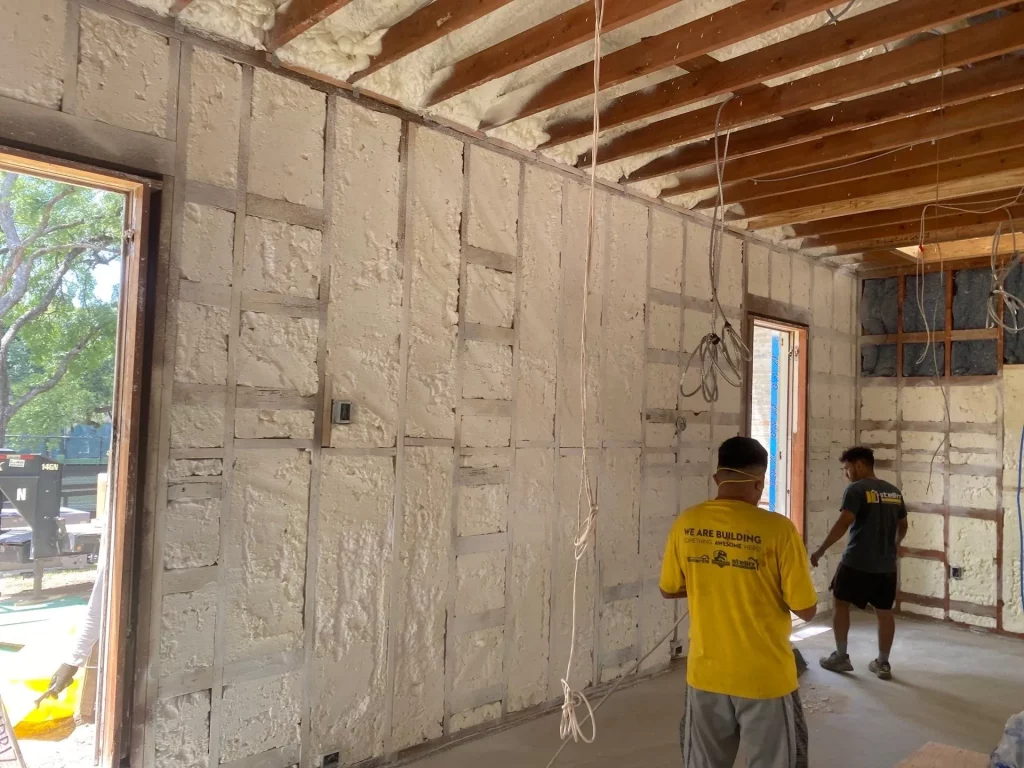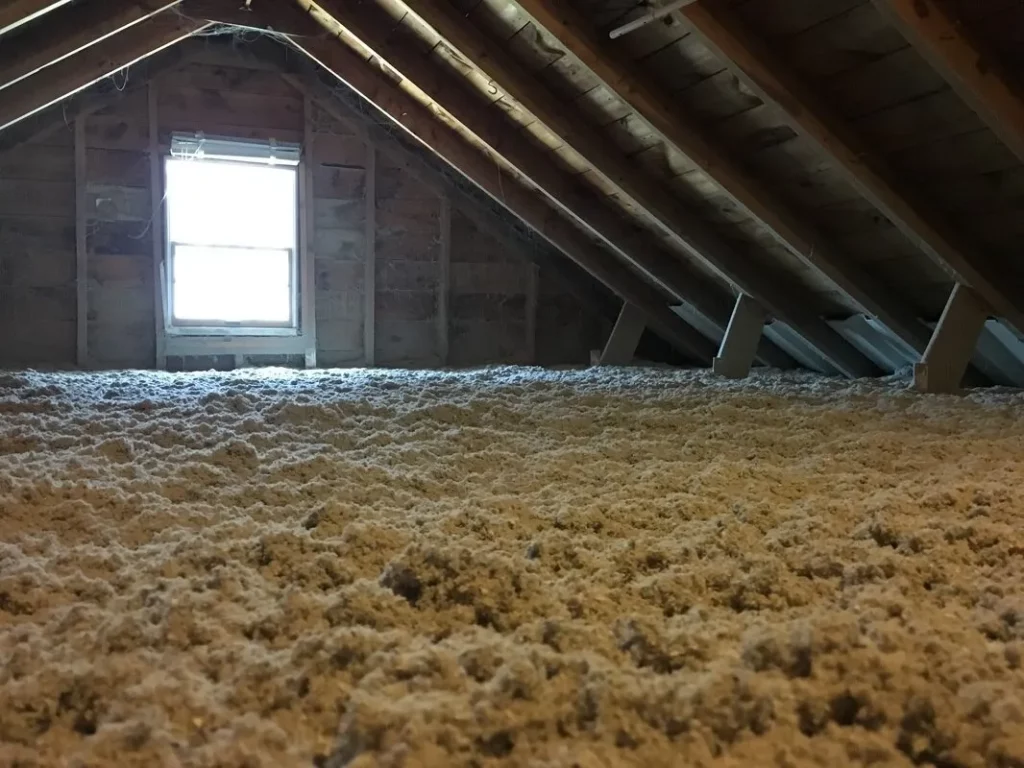

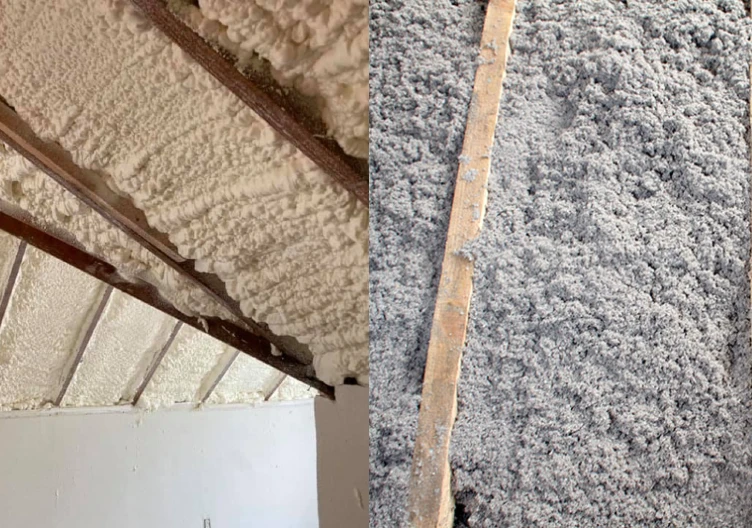
Spray foam insulation delivers significantly higher R-value per inch and airtight sealing that outperforms cellulose in New Braunfels’ hot, humid climate, but it comes at a higher upfront cost. Cellulose insulation offers strong thermal resistance at a lower price point and is made from recycled materials, making it an attractive option for budget-conscious projects. For New Braunfels homeowners and contractors working in Climate Zone 2A, the choice comes down to whether you prioritize long-term energy efficiency and moisture control (spray foam) or lower initial material costs and eco-friendly composition (cellulose).
Both materials meet Texas building code requirements, but they perform differently under the specific heat and humidity conditions found in the New Braunfels area. Understanding those differences determines whether your investment pays off in five years or fifteen.
TLDR / Key Takeaways
- USA Spray Me – Spray Foam vs Blown-In Insulation reports that Closed-cell spray foam delivers R-6 to R-7 per inch, compared to cellulose at R-3.5 to R-3.8 per inch, making spray foam roughly twice as effective per inch of thickness.
- Spray foam insulation costs between $1.00 and $4.50 per square foot installed, while cellulose runs $1.25 to $2.25 per square foot, making cellulose the more budget-friendly option up front.
- New Braunfels falls within Rmax – Building Code Insulation Requirements Texas (hot and humid), which demands insulation that resists moisture infiltration, a clear advantage for closed-cell spray foam.
- Spray foam acts as both an insulator and an air barrier in a single application, eliminating the need for separate air-sealing steps during construction.
- Cellulose insulation is made from 80-85% recycled paper and treated with borates for fire and pest resistance, offering strong environmental appeal.
- Spray foam lasts 30 years or more with minimal performance loss; cellulose typically lasts 20 to 30 years but can settle over time, reducing its effective R-value.
- For new construction in New Braunfels, spray foam in wall cavities and attic flat surfaces delivers the strongest long-term ROI; cellulose works well for attics and retrofit projects where budget is tighter.
R-Value and Thermal Performance in a Hot-Humid Climate
R-value measures how well a material resists heat transfer. In New Braunfels, summer temperatures regularly exceed 95 degrees Fahrenheit with humidity levels that make heat feel even more oppressive. Your insulation needs to do two things well: block conductive heat transfer and stop humid air from penetrating the building envelope.
Spray foam, particularly closed-cell, handles both demands in a single application. At R-6 to R-7 per inch, a 3.5-inch application in a standard 2×4 wall cavity achieves R-21 to R-24.5, which exceeds the IECC minimum for Climate Zone 2A wall assemblies. Open-cell spray foam sits around R-3.5 to R-3.7 per inch, roughly matching cellulose, but still provides superior air sealing.
Cellulose insulation delivers R-3.5 to R-3.8 per inch when properly installed, which means achieving the same R-value requires roughly twice the thickness compared to closed-cell spray foam. In an attic with sufficient depth, this is rarely a problem. In wall cavities, the limited space makes it harder for cellulose to match spray foam’s total thermal resistance.
The critical difference is not just R-value per inch but how each material handles air movement. Spray foam expands to fill gaps, cracks, and penetrations, creating a continuous air barrier. Cellulose, whether blown-in or dense-packed, relies on the existing wall cavity to hold it in place and does not seal air leaks on its own.
| Performance Factor | Closed-Cell Spray Foam | Open-Cell Spray Foam | Cellulose (Blown-In) |
|---|---|---|---|
| R-Value per Inch | R-6 to R-7 | R-3.5 to R-3.7 | R-3.5 to R-3.8 |
| Air Barrier | Yes (vapor retarder) | Yes (not vapor retarder) | No |
| Moisture Resistance | High | Moderate | Low (absorbs moisture) |
| Lifespan | 30+ years | 25-30 years | 20-30 years (may settle) |
| Best Application | Walls, crawl spaces, rim joists | Attics, sound walls | Attics, existing wall cavities |
Moisture and Humidity Considerations for New Braunfels
New Braunfels sits between San Antonio and Austin along the Guadalupe River, and the UpCodes – Texas IECC 2015 Chapter 3 General Requirements, a hot-humid designation. This classification is not a label, it is a code requirement that directly affects insulation selection.
Moisture management is arguably the most important performance factor in this climate zone. When humid outdoor air enters wall cavities or attic spaces and meets cooler surfaces, condensation forms. Over time, that moisture leads to mold growth, wood rot, and structural damage that costs far more to repair than any insulation upgrade.
Closed-cell spray foam has a built-in vapor retarder with a permeance rating below 1.0 perm, which means it actively blocks moisture vapor from passing through. This characteristic makes it the preferred choice for crawl spaces, rim joists, and basement walls in New Braunfels homes where ground moisture and humid air are constant threats.
Cellulose insulation, by contrast, is hygroscopic. It can absorb moisture from the air without showing visible signs of wetness. In a hot-humid climate, this means cellulose in wall cavities can hold moisture against wood framing for extended periods, creating conditions favorable to mold. Proper vapor barriers and ventilation help mitigate this risk, but the material itself offers no moisture resistance.
Open-cell spray foam sits between the two options. It provides excellent air sealing but allows moisture vapor to pass through, making it acceptable for vented attic assemblies where moisture can escape but unsuitable for below-grade or crawl space applications in humid climates.
Cost Comparison: Upfront Investment vs Long-Term Value
The cost difference between spray foam and cellulose is the single biggest factor most contractors and homeowners weigh during the decision process. According to Angi – How Much Does Spray Foam Insulation Cost, spray foam insulation in New Braunfels, TX ranges from $1.00 to $4.50 per square foot installed, with closed-cell at the higher end and open-cell at the lower end. Cellulose insulation costs $1.25 to $2.25 per square foot installed.
For a 2,000-square-foot home in New Braunfels, the attic alone might require 1,500 square feet of insulation coverage:
| Insulation Type | Cost per Sq Ft | 1,500 Sq Ft Attic Cost | Achievable R-Value |
|---|---|---|---|
| Closed-Cell Spray Foam (2″) | $3.50-$4.50 | $5,250-$6,750 | R-12 to R-14 |
| Open-Cell Spray Foam (5.5″) | $1.50-$2.00 | $2,250-$3,000 | R-19 to R-20 |
| Cellulose Blown-In (10″) | $1.25-$2.25 | $1,875-$3,375 | R-35 to R-38 |
The numbers show cellulose is more cost-effective for achieving high R-values in open spaces like attics. However, the comparison shifts when you factor in air sealing. Spray foam eliminates the labor and materials required for caulking, weatherstripping, and rigid air barrier installation that cellulose projects still need. When you account for those additional steps, the real-world cost gap narrows considerably.
From a long-term value perspective, homes insulated with spray foam consistently show lower energy bills. The Department of Energy estimates that air sealing and insulation upgrades can reduce heating and cooling costs by 15% on average, and spray foam delivers both in one application. In New Braunfels, where air conditioning runs for six to seven months per year, those savings compound quickly.
Fire Resistance and Safety
Cellulose insulation is treated with borate-based fire retardants during manufacturing. This treatment gives it a Class 1 fire rating, meaning it resists ignition and can actually slow the spread of flames. For contractors working on projects where fire code compliance is a priority, cellulose provides documented, code-recognized fire resistance.
Spray foam also meets fire code requirements when installed with an approved thermal barrier (typically 0.5-inch drywall) covering the foam. The foam itself is combustible and will burn if exposed to direct flame, but the required thermal barrier prevents that exposure in standard residential applications. Closed-cell spray foam does not require additional fire retardant treatment because the code relies on the covering material, not the insulation itself.
For New Braunfels contractors building to the 2015 IECC (currently adopted in most of Texas), both materials meet code when installed correctly. The difference is that cellulose offers inherent fire resistance without depending on a covering layer, while spray foam requires that the thermal barrier be properly installed and inspected.
Sound Control and Indoor Comfort
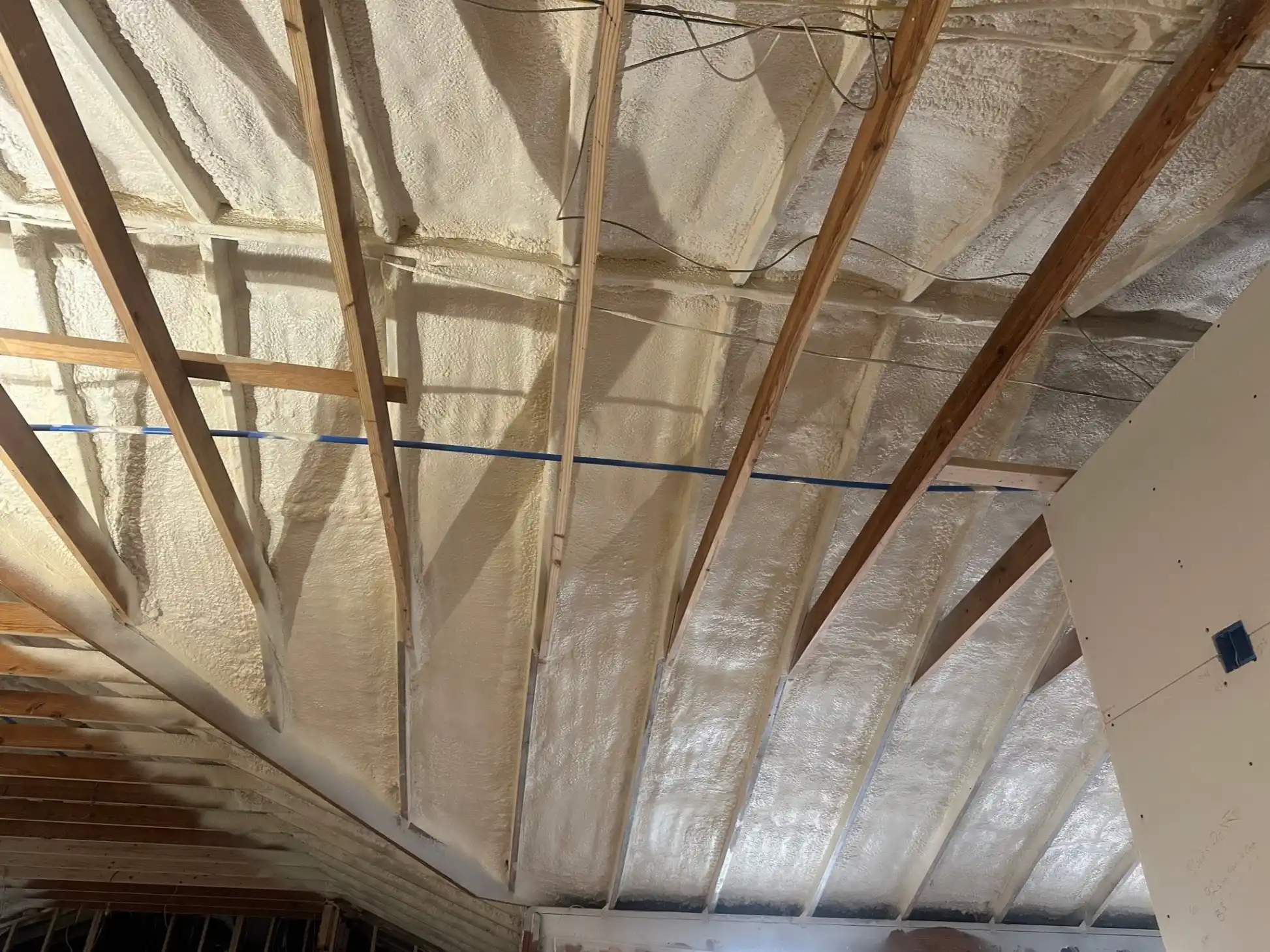
Beyond thermal performance, insulation affects noise transmission between rooms and from the exterior. Open-cell spray foam in New Braunfels, TX excels in sound dampening because its low density and open-cell structure absorb acoustic energy effectively. It is a common choice for shared walls, home theaters, and second-floor assemblies in multi-story homes.
Cellulose also provides strong sound dampening due to its dense, fibrous composition. Blown-in cellulose at standard attic depths reduces exterior noise transmission noticeably, which matters in growing neighborhoods around New Braunfels where new construction is constant.
Closed-cell spray foam is the weakest acoustic performer among the three. Its rigid, high-density structure reflects more sound than it absorbs. In homes where both thermal and acoustic performance matter, a common strategy is to use closed-cell spray foam in exterior walls and crawl spaces for thermal efficiency and moisture control, then use open-cell or cellulose in interior partitions for sound isolation.
Real-World Scenarios for New Braunfels Projects
| Scenario | Property Type | Recommended Option | Estimated Cost |
|---|---|---|---|
| New build, 2,400 sq ft home with vented attic | Single-family residential | Open-cell spray foam in attic flat, cellulose in walls | $6,000-$8,500 |
| Retrofit insulation in 1990s-era home, hot upstairs | Existing single-family | Closed-cell spray foam on attic roof deck (unvented assembly) | $8,000-$12,000 |
| Crawl space encapsulation under Hill Country home | Custom home with pier-and-beam foundation | Closed-cell spray foam on crawl space walls and rim joist | $2,500-$4,000 |
| New construction apartment complex, 12 units | Multifamily | Cellulose in walls and attics for cost efficiency | $18,000-$28,000 |
| Renovated barn-to-home conversion | Custom renovation | Closed-cell spray foam on metal roof, cellulose in walls | $5,500-$9,000 |
Factors That Influence the Decision
- Budget constraints: Cellulose costs 30-50% less than closed-cell spray foam per R-value achieved, making it the practical choice for large projects with tight margins.
- New construction vs. retrofit: Spray foam is easier to integrate during new construction when wall cavities are open; cellulose is easier to retrofit into existing wall cavities through small drill holes.
- Moisture risk level: Homes with crawl spaces, basements, or a history of moisture problems benefit most from closed-cell spray foam’s vapor-retarding properties.
- Space limitations: In thin-wall cavities (2×4 framing), closed-cell spray foam achieves a higher total R-value than cellulose can fit into the same space.
- Code compliance requirements: Both materials meet Texas building codes when properly installed, but spray foam requires certified installers and thermal barrier inspections.
- Timeline and scheduling: Cellulose installation is faster and requires less specialized equipment; spray foam requires trained crews, proper ventilation during installation, and curing time.
- Environmental priorities: Cellulose is made from 80-85% recycled content; spray foam is a petroleum-based product, though its longer lifespan and higher efficiency offset some of that environmental cost over time.
Who Spray Foam Is Best For
- New construction projects in New Braunfels, where walls and cavities are open and accessible
- Homes with crawl spaces or basements require moisture-resistant insulation
- Property owners prioritizing maximum energy efficiency and willing to invest more upfront
- Buildings with limited cavity depth where a high R-value per inch is essential
- Projects combining insulation and air sealing into a single scope of work
Who Spray Foam Is NOT Best For
- Budget-conscious remodels where upfront cost is the primary constraint
- DIY projects, since spray foam requires professional equipment and training
- Existing homes with knob-and-tube wiring that must remain accessible
- Projects where environmental sustainability and recycled content are top priorities
- Attics in vented assemblies, where cost-effective blown-in cellulose can achieve equal or better R-values at lower cost
Get a Professional Insulation Assessment for Your New Braunfels Project
Choosing between spray foam and cellulose insulation depends on your specific building, budget, and long-term goals. Stellrr provides detailed insulation assessments for contractors and homeowners throughout New Braunfels and the greater San Antonio-Austin corridor. We evaluate your building envelope, identify air leakage points, and recommend the insulation strategy that delivers the strongest return on your investment.
Call us at (512) 710-2839 or email info@stellrr.com to discuss your project. The right insulation decision today means lower energy bills, fewer warranty callbacks, and more comfortable homes for decades to come.
Frequently Asked Questions
Is spray foam insulation worth the extra cost in New Braunfels?
For most new construction projects, yes. The combination of air sealing, moisture resistance, and high R-value per inch delivers energy savings that offset the higher upfront cost within 5 to 10 years, especially in a cooling-dominated climate like Climate Zone 2A.
Can cellulose insulation handle New Braunfels humidity?
Cellulose can perform well in humid climates when installed with proper vapor barriers and adequate ventilation. However, it does not resist moisture on its own and can absorb humidity over time, making it less ideal for crawl spaces, basements, or unvented assemblies.
Which insulation type is better for attic applications in Texas?
It depends on the attic design. For vented attics, blown-in cellulose is cost-effective and achieves high R-values easily. For unvented attic assemblies (foam applied directly to the roof deck), closed-cell or open-cell spray foam is required to create the conditioned attic space.
How long does spray foam insulation last compared to cellulose?
Nealon Insulation – Cellulose vs Spray Foam estimates that Closed-cell spray foam lasts 30 years or more with minimal degradation. Open-cell spray foam lasts 25 to 30 years. Cellulose lasts 20 to 30 years but can settle over time, which reduces its effective R-value if not installed at sufficient initial depth.
Does spray foam insulation require special permitting in Texas?
Spray foam insulation must be installed by a certified applicator and requires an ignition barrier or thermal barrier as specified by the International Residential Code. Your local municipality may have additional requirements, but the material itself does not require separate permitting beyond standard insulation inspections.
Sources
- Rmax – Building Code Insulation Requirements Texas – Texas climate zone classifications and IECC insulation requirements by region, including Zone 2A hot-humid designations relevant to New Braunfels.
- UpCodes – Texas IECC 2015 Chapter 3 General Requirements – Official climate zone, moisture regime, and warm-humid designations by Texas county.
- USA Spray Me – Spray Foam vs Blown-In Insulation – Side-by-side cost per square foot and R-value comparison between spray foam and blown-in insulation types.