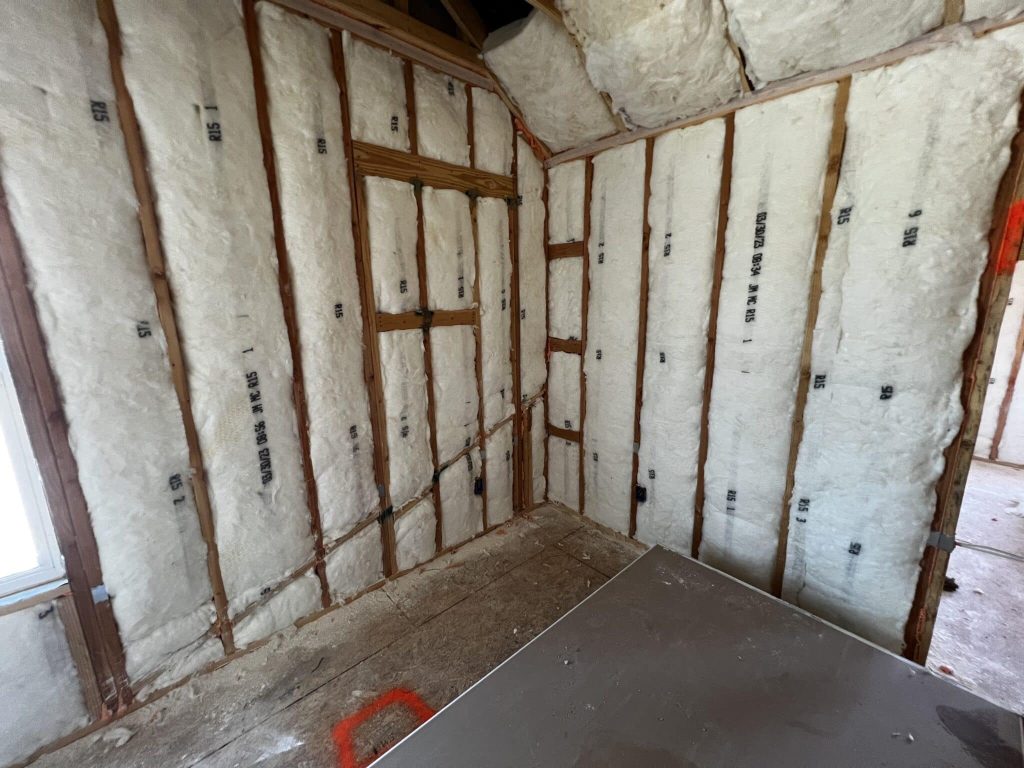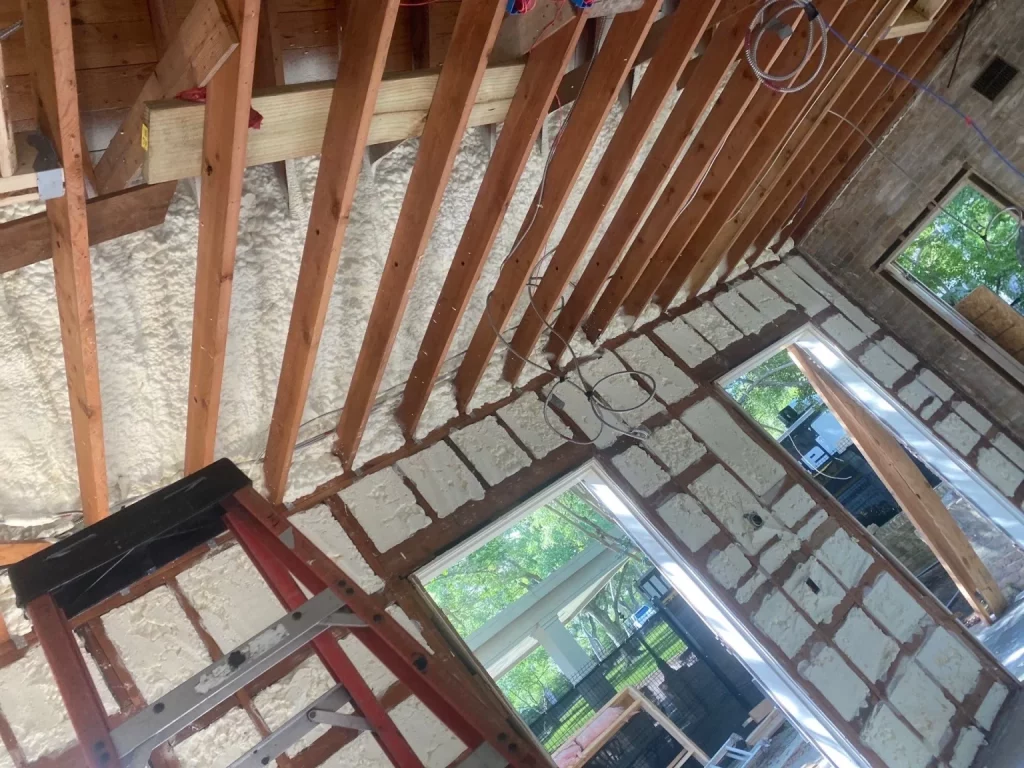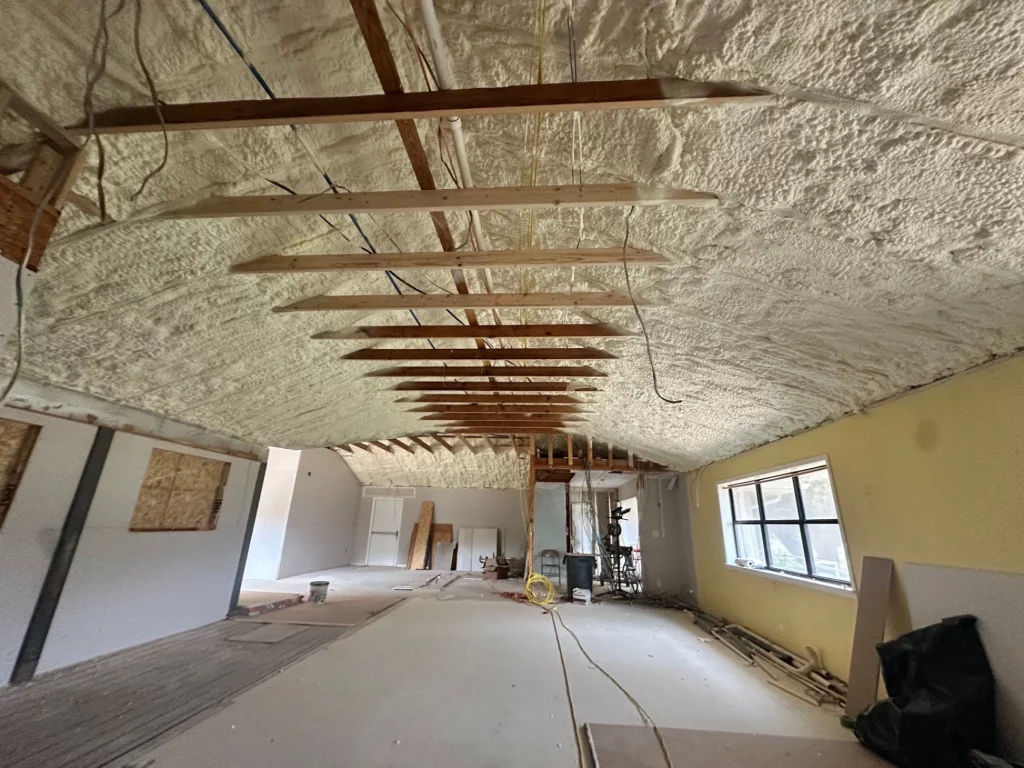
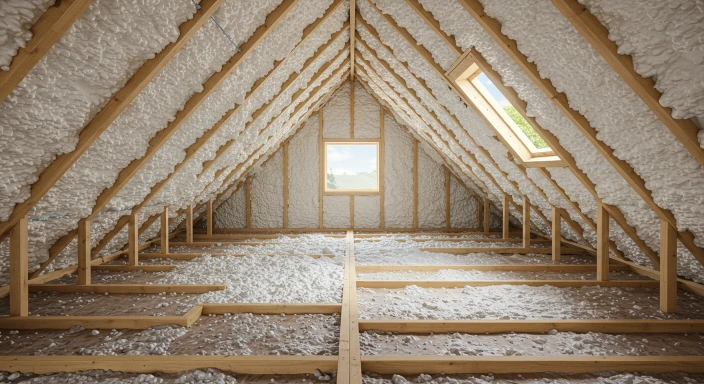
Open-cell spray foam can be a solid choice for attic insulation in Lost Creek, TX, particularly when applied to the underside of the roof deck to create an unvented, conditioned attic. It offers excellent air sealing, sound dampening, and thermal performance at an R-value of roughly 3.6 per inch. However, because open-cell foam is vapor-permeable, humidity management becomes a serious consideration in our warm-humid Central Texas climate. The right choice between open cell and closed cell spray foam depends on your attic configuration, whether your HVAC equipment and ductwork are located in the attic, and how well moisture is controlled within the assembly.
TLDR / Key Takeaways
- Open cell spray foam delivers approximately R-3.6 per inch and requires a thicker application to meet code-minimum R-values compared to closed cell foam.
- Lost Creek falls within IECC Climate Zone 2A, which requires a minimum ceiling R-value of R-38 for new construction and significant remodels.
- Open cell foam creates an effective air barrier when applied to the underside of the roof deck, making it well suited for unvented, conditioned attics where HVAC equipment is housed.
- Because open cell foam is vapor-permeable, moisture from the attic air can pass through the foam into the roof sheathing during daily temperature cycles, which requires proactive humidity control strategies.
- Closed cell foam acts as both an air barrier and a vapor retarder, making it the more moisture-resistant option at the cost of a higher per-inch material expense.
- An unvented conditioned attic with spray foam brings HVAC ducts and equipment inside the thermal envelope, reducing energy losses common in traditional vented attics.
- Proper installation by a trained applicator, along with verified airtightness and moisture control measures, determines whether open cell spray foam performs well long term.
How Open Cell Spray Foam Works in Attics
Open cell spray foam is a two-component polyurethane insulation that expands dramatically during application, sometimes up to 100 times its initial volume. The cells within the foam rupture as it expands, creating a soft, sponge-like material that fills gaps, voids, and irregular framing cavities far more completely than batts or blown insulation.
When applied to the underside of the roof deck in an attic, open cell foam seals the assembly against air infiltration while providing continuous thermal insulation. This approach converts a traditional vented attic into an unvented, conditioned space. According to the Building America Solution Center, unvented conditioned attics have been used successfully since the mid-1990s and can provide a tempered space for HVAC equipment, reduce conductive thermal losses, and improve overall building durability.
The key difference between open cell and closed cell spray foam lies in vapor permeability. Open cell foam allows moisture vapor to pass through, while closed cell foam acts as a vapor retarder. In a hot-humid climate like Lost Creek, this distinction matters significantly for long-term roof sheathing health.
Lost Creek Climate and Code Requirements
Lost Creek is located in Travis County, Texas, which the IECC classifies as Climate Zone 2A, a warm-humid region. Under the 2015 IECC prescriptive path, Zone 2A homes require a minimum ceiling insulation R-value of R-38.
The TX Energy Code also specifies maximum air leakage rates of 5 air changes per hour at 50 Pascals (ACH50) for Climate Zone 2. Open cell spray foam helps meet both the thermal and airtightness requirements when applied to the roof deck, provided the installation achieves continuous coverage with no gaps or voids.
In our Central Texas climate, summer temperatures routinely exceed 100 degrees Fahrenheit and outdoor humidity stays elevated for months. An unvented attic with spray foam keeps ductwork and air handlers within the conditioned envelope, which reduces the temperature differential those systems must overcome during peak cooling demand.
Open Cell vs. Closed Cell Spray Foam for Attics
The choice between open cell and closed cell spray foam involves trade-offs in thermal performance, moisture resistance, structural rigidity, and application thickness. The table below compares the two as they relate to attic insulation in warm-humid climates.
| Property | Open Cell Spray Foam | Closed Cell Spray Foam |
|---|---|---|
| R-value per inch | ~R-3.6 to R-3.9 | ~R-6.0 to R-7.0 |
| Vapor permeability | Vapor-permeable (breathable) | Vapor retarder (Class II) |
| Expansion rate | Very high (up to 100x) | Moderate |
| Density | Low (approximately 0.5 lb/ft³) | High (approximately 2.0 lb/ft³) |
| Air sealing | Effective air barrier | Effective air barrier and vapor control layer |
| Sound dampening | Excellent | Good |
| Best attic application | Roof deck in conditioned attics | Roof deck where moisture control is a priority |
| Thickness needed for R-38 | ~10 inches | ~5.5 to 6 inches |
For homeowners in Lost Creek with adequate rafter depth, open cell foam can achieve the required R-38 with roughly 10 inches of application. Closed cell foam would need only about 6 inches for the same R-value, but comes with higher material density and reduced vapor permeability.
Pros of Open Cell Spray Foam in Lost Creek Attics
Superior air sealing and coverage. Open cell foam expands rapidly and fills every gap, crack, and framing irregularity in the attic. This creates a continuous air barrier that traditional insulation materials cannot match. When the air control layer and thermal control layer are both moved to the underside of the roof deck, the building enclosure performs more consistently, especially in homes with complex ceiling geometries and numerous penetrations.
Conditioned attic for HVAC equipment. Many homes in Lost Creek have air handlers and extensive ductwork running through the attic. A vented attic in our climate exposes this equipment to extreme heat, forcing the HVAC system to work harder. Converting the attic to a conditioned space brings ducts and equipment inside the thermal envelope, which reduces energy losses from conductive heat gain and duct air leakage.
Sound dampening. The low density and open-cell structure of the foam absorbs sound transmission effectively. This can reduce noise from rain, hail, aircraft, and outdoor activity, which is a noticeable benefit in neighborhoods near Lost Creek’s hill country terrain.
Cost-effective at higher R-values. Because open cell foam costs less per board foot than closed cell foam, reaching high total R-values can be more economical when rafter cavity depth allows for sufficient thickness.
Cons and Risks of Open Cell Spray Foam in Attics
Moisture vulnerability in humid climates. This is the single most significant concern. Because open cell foam is vapor-permeable, moisture moves through it in both directions. Research documented by Green Building Advisor shows that in spray foam attics, especially with open cell products, moisture can cycle into and out of the roof sheathing on a daily basis. During hot daylight hours, solar heat drives moisture out of the OSB decking through the foam and into the attic air. At night, moisture moves back through the foam and reabsorbs into the sheathing. Over time, if this cycle persists with high enough humidity, the wood moisture content can reach levels that support mold growth or structural degradation.
Requires active humidity management. The Building America Solution Center states that wherever unvented conditioned attics are constructed, a means of moisture removal from the attic is necessary. Options include a small exhaust fan at the attic ridge, balanced ventilation through an HRV or ERV, a standalone dehumidifier, or direct conditioning of the attic with HVAC supply and return air. Without one of these strategies, humidity in a sealed attic can exceed 70% relative humidity for extended periods.
Thicker application required. To meet the Zone 2A R-38 requirement, open cell foam needs approximately 10 inches of depth. Rafters in many older Lost Creek homes may be 2×6 or 2×8, which only provide 5.5 to 7.25 inches of cavity depth. In these cases, the foam cannot achieve code-minimum R-values within the rafter bays alone, and additional measures like overshooting the rafters or adding rigid foam above the roof deck may be needed.
Not suitable for all attic floor applications. The Building America Solution Center guide on attic floor spray foam notes that open cell foam’s rapid expansion can make it difficult to apply a continuous, uninterrupted layer on the attic floor. Closed cell foam is preferred when insulating at the ceiling plane because it can be applied in a thinner, more controlled layer that doubles as an air barrier.
When Open Cell Spray Foam Makes Sense
Open cell spray foam is generally the better fit under these conditions in the Lost Creek area:
- HVAC equipment and ductwork are in the attic. Bringing the attic inside the thermal envelope with open cell foam delivers meaningful energy savings by protecting ducts from extreme attic temperatures.
- Rafters are deep enough to accommodate 10+ inches of foam. Newer construction with raised heel trusses or 2×12 rafters provides the cavity depth needed for open cell foam to reach R-38 or higher.
- The home has a balanced ventilation or dehumidification strategy in place. Proper moisture control is non-negotiable with open cell foam in a humid climate.
- Sound reduction is a priority. Homes near busy roads or in areas with frequent hail will benefit from the acoustic properties of open cell foam.
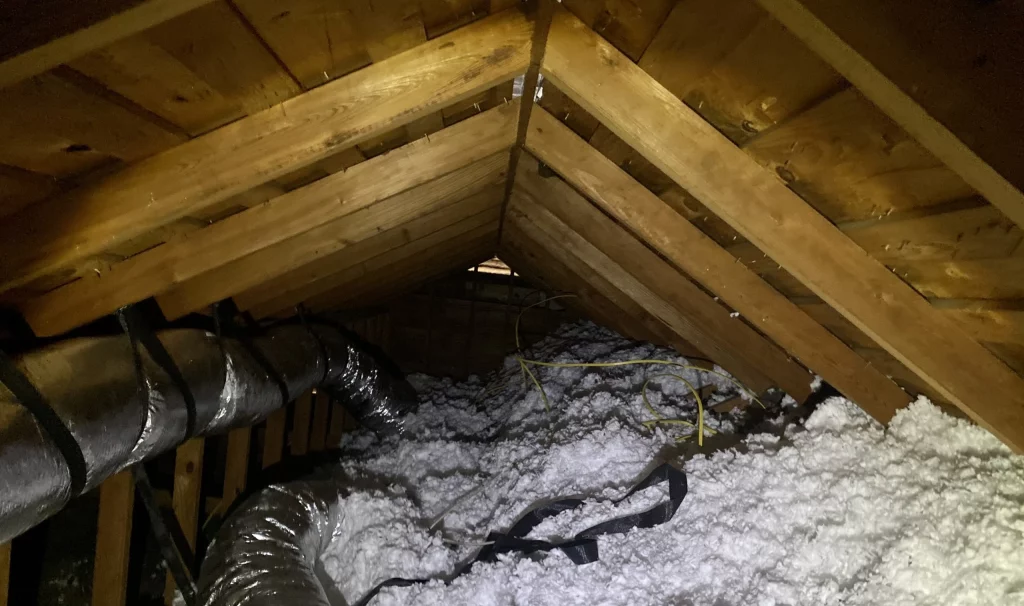
When Closed Cell Spray Foam May Be the Better Option
Consider closed cell foam in these scenarios:
- Shallow rafter cavities. If your attic has 2×6 or 2×8 rafters, closed cell foam can achieve higher R-values in less depth, making it the practical choice within limited cavity space.
- Known roof leak history or moisture concerns. Closed cell foam’s vapor-retarding properties add a layer of protection against moisture intrusion from roof leaks or high interior humidity.
- Structural reinforcement is desired. Closed cell foam adds rigidity to the roof assembly, which can be beneficial in homes with older or lighter framing.
Signs of a Proper Installation
A quality open cell spray foam installation in a Lost Creek attic should exhibit these characteristics:
- Consistent depth across all surfaces with no visible gaps, voids, or thin spots, especially at framing intersections and eave areas
- Complete coverage of the roof deck, gable ends, and soffit areas to form a continuous air barrier
- Attic floor penetrations sealed, including around flues, wiring, plumbing stacks, and duct chases
- A moisture management strategy in place, whether that is an exhaust fan, dehumidifier, ERV/HRV, or HVAC supply air routed to the attic
- Post-installation documentation including foam depth measurements, R-value calculations, and photos of the completed application
- Clear communication from the installer about ongoing maintenance needs, ventilation requirements, and what to watch for over time
Get a Professional Assessment for Your Lost Creek Attic
Deciding between open-cell and closed-cell spray foam for your attic requires a thorough evaluation of your home’s specific conditions, including rafter depth, HVAC configuration, existing ventilation, and moisture history. Our team at Stellrr Insulation & Spray Foam assesses each attic individually and recommends the insulation approach that matches your home’s needs and your long-term comfort goals. We serve homeowners throughout Lost Creek and the surrounding Central Texas area with detailed inspections and honest recommendations. Reach out to us at info@stellrr.com or call 512-520-0044 to discuss your project.
Request a Free Quote | Schedule an Attic Assessment
Frequently Asked Questions
How thick does open cell spray foam need to be in a Lost Creek attic?
To meet the IECC R-38 minimum for Climate Zone 2A, open cell spray foam at approximately R-3.6 per inch requires roughly 10 to 11 inches of installed depth.
Does open cell spray foam require attic ventilation?
When open cell foam is applied to the underside of the roof deck, the attic becomes an unvented conditioned space, and traditional soffit and ridge vents should be sealed. However, active moisture control such as an exhaust fan, ERV, or dehumidifier is necessary.
Can open cell spray foam cause mold in the attic?
If humidity in the sealed attic is not actively managed, moisture cycling through the vapor-permeable foam can elevate sheathing moisture content and create conditions for mold growth. Proper dehumidification or ventilation prevents this.
Is open cell spray foam better than fiberglass batts for attic insulation?
Open cell spray foam provides far superior air sealing and eliminates gaps and voids common with fiberglass batts. For attics where HVAC equipment is located, spray foam at the roof deck also protects ductwork from extreme temperatures.
How long does open cell spray foam last in an attic?
Properly installed open cell spray foam is a permanent insulation material that does not settle, sag, or degrade over time, provided the roof assembly stays dry and free from ongoing leaks.
Sources
- Building America Solution Center – Unvented Conditioned Attic with Spray Foam Insulation Below Roof Deck – DOE-funded resource covering installation methods, moisture risks, and code compliance for spray foam in unvented attic assemblies across all climate zones.
- Building America Solution Center – Spray Foam Insulation Applied to Existing Attic Floor – Technical guidance on using spray foam at the attic floor plane, including differences between open cell and closed cell products and ventilation requirements.
- Green Building Advisor – Controlling Humidity in an Attic with Spray Foam Insulation – Building science analysis of humidity data from spray foam attics, including the moisture cycling effect of open cell foam on roof sheathing.
- IECC Compliance Guide for Homes in Texas – Climate zone map for Texas counties and IECC 2015 prescriptive R-value requirements for ceilings, walls, and floors by zone.
- TX Energy Code – Envelope Requirements – Summary of Texas energy code insulation and air leakage requirements organized by IECC climate zone.