A spray foam moisture barrier works by creating a continuous, airtight seal that blocks moisture vapor from penetrating your building envelope, while also delivering high thermal resistance in a single application. In Lost Creek, Texas, where hot and humid conditions create a persistent exterior-to-interior moisture drive for much of the year, this dual function makes spray foam insulation installation particularly effective at preventing condensation, mold growth, and structural rot inside walls, attics, crawlspaces, and foundations. Not all spray foam performs this way equally, though. Closed-cell spray foam at the right thickness acts as a vapor retarder on its own, while open-cell spray foam allows vapor to pass through and requires separate moisture control strategies. The right approach depends on your specific application, climate exposure, and building assembly.
TLDR / Key Takeaways
- Closed-cell spray foam applied at 1.5 inches or thicker achieves a perm rating below 1.0, meeting the definition of a Class I vapor retarder and acting as a built-in moisture barrier with no additional materials needed.
- Open-cell spray foam is vapor permeable (5 to 10 perms at 5 inches thick) and absorbs liquid water, making it unsuitable as a standalone moisture control layer in humid climates like Lost Creek, TX.
- The U.S. Department of Energy identifies air sealing and moisture control as two of the three most important factors in home energy efficiency, alongside insulation R-value.
- In hot-humid climates, building science research rates closed-cell spray foam as “preferred” for wall cavities, crawlspaces, foundations, and roof assemblies due to its vapor-impermeable properties.
- Spray foam also adds structural rigidity to wall and roof assemblies, with documented benefits for wind-storm resistance in hurricane-prone regions.
- The EPA classifies spray polyurethane foam as a highly effective insulation and air sealant when applied by trained professionals using proper safety protocols.
How Spray Foam Works as a Moisture Barrier
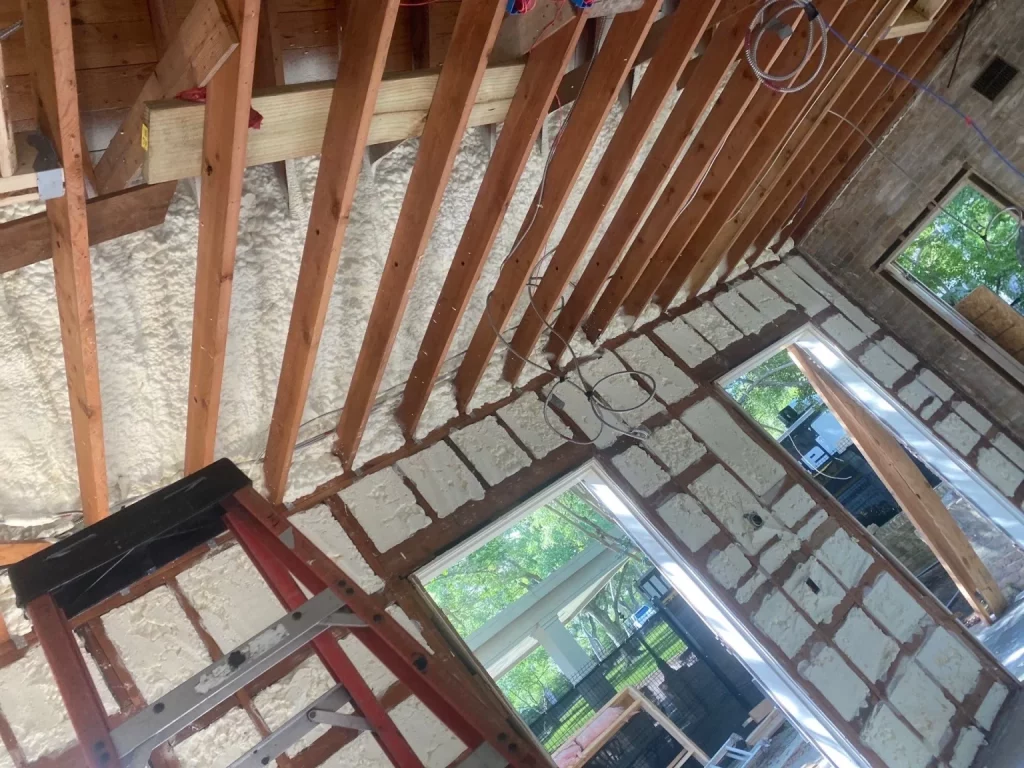
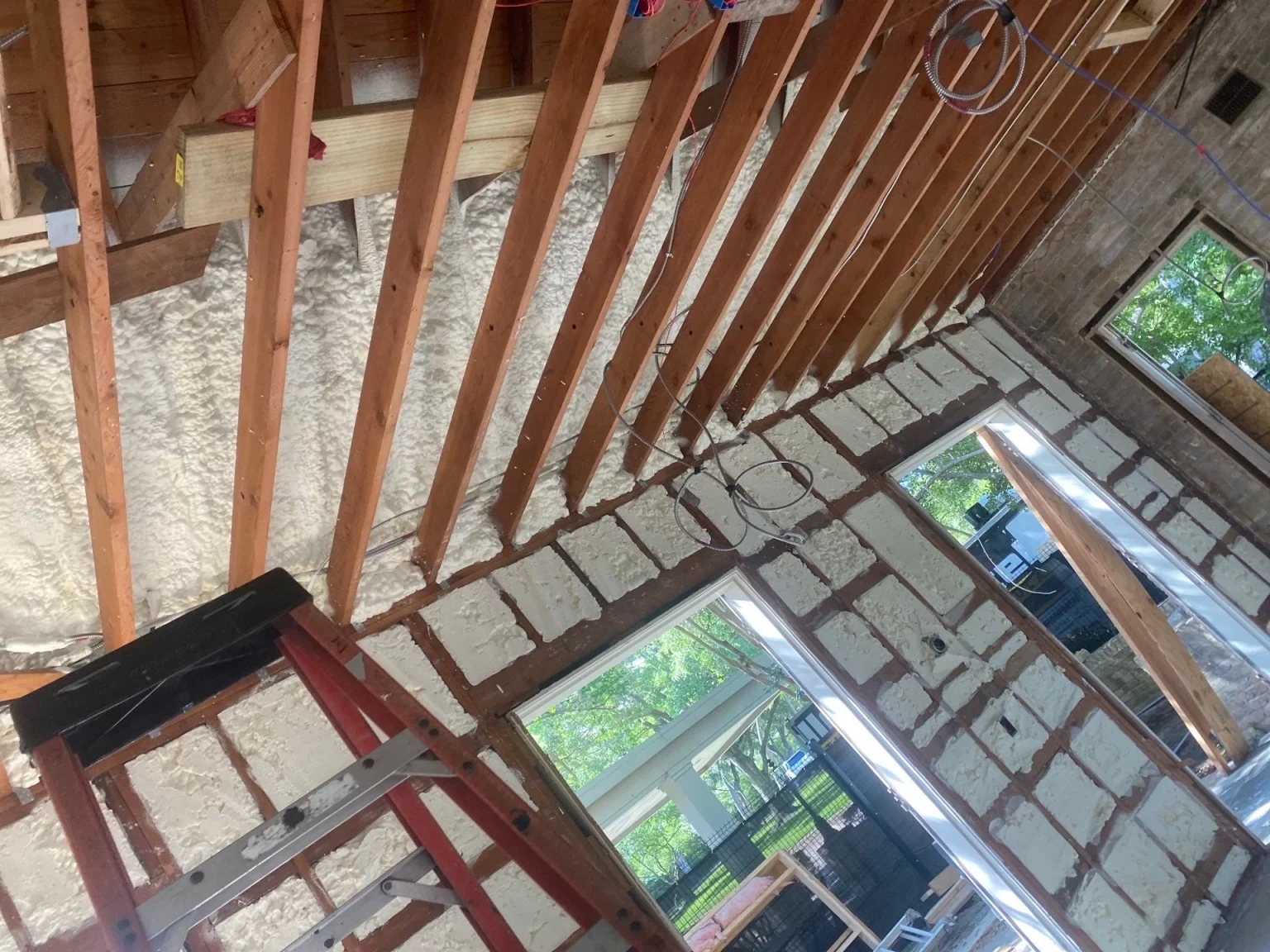
Spray polyurethane foam (SPF) is a two-component material, mixed from isocyanate and polyol resin, that expands 30 to 60 times its liquid volume when sprayed into place. Source: Wikipedia. This rapid expansion allows it to fill every crack, gap, and void in a wall cavity, crawlspace, or attic, creating a monolithic layer that adheres directly to the substrate.
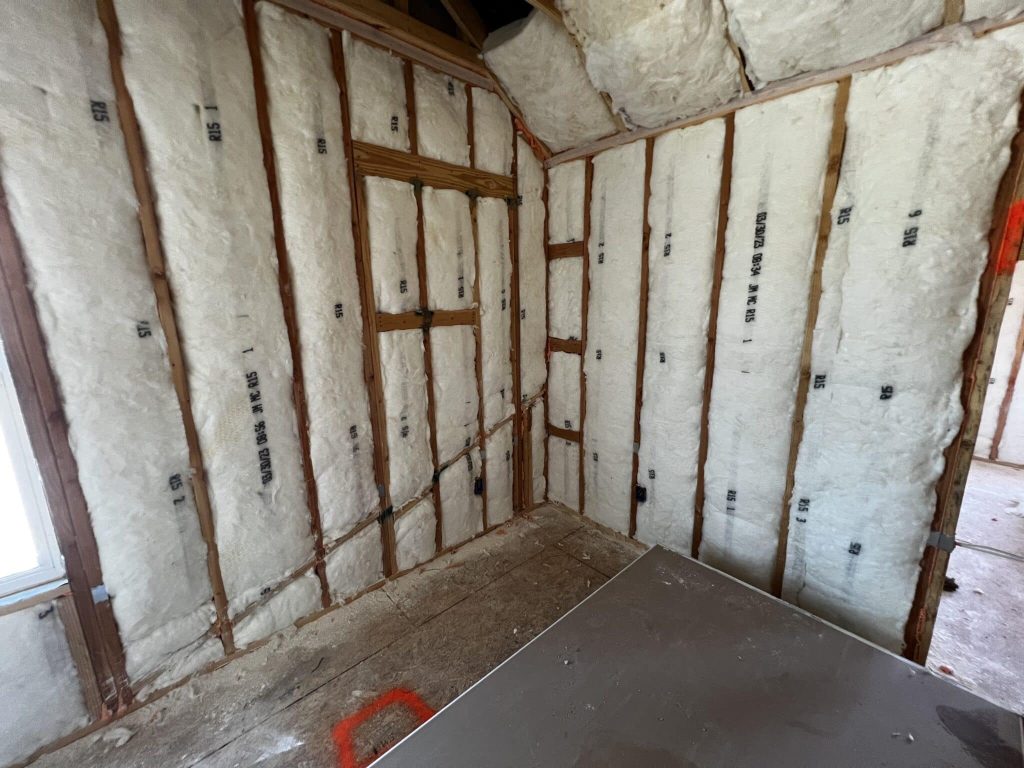
That continuous application is what sets spray foam apart from batts, rolls, and loose-fill insulation. Traditional materials leave small gaps around framing members, electrical boxes, and plumbing penetrations. Those gaps allow both air and water vapor to move freely through the building envelope. Spray foam eliminates those pathways, which is why the Department of Energy notes that foam insulation can eliminate the need for separate caulking, housewrap, and vapor barrier installation steps.
Closed-Cell vs. Open-Cell: The Moisture Distinction
The moisture barrier function depends entirely on which type of spray foam you choose and how thick it is applied.
| Property | Closed-Cell Spray Foam | Open-Cell Spray Foam |
|---|---|---|
| Density | ~2.0 lbs per cubic foot | ~0.5 lbs per cubic foot |
| R-Value per Inch | R-6.1 (aged) | R-3.6 (aged) |
| Vapor Permeance | Less than 1.0 perm at 2 inches (Class I vapor retarder) | 5 to 10 perms at 5 inches (vapor permeable) |
| Water Absorption | Hydrophobic, does not absorb water | Can absorb up to one-third of its volume in water |
| Air Permeability | Air-impermeable | Air-impermeable at typical thicknesses |
| Best For | Basements, crawlspaces, exterior walls, and roofs in humid climates | Interior walls, sound-dampening, cavities with separate vapor control |
The data above comes from the DOE Building America spray foam guide, which provides the most detailed federal comparison of these two product classifications.
Closed-cell foam maintains over 90% closed cells, trapping insulating gases inside each cell. This structure makes the material both air-impermeable and vapor-impermeable at thicknesses of 1.5 to 2 inches. It cannot be compressed by hand, adds measurable structural strength to wall and roof assemblies, and will not absorb liquid water even when exposed to direct moisture contact.
Open-cell foam has a sponge-like texture with interconnected, unfilled cells. While it still seals against air infiltration effectively, vapor passes through it relatively freely. The material can also soak up and hold significant amounts of water, which makes it a poor choice for any application where bulk water or persistent humidity is a concern.
Why Lost Creek, TX Needs Moisture-Ready Insulation
The Austin-Lost Creek area falls within a hot-humid climate zone where exterior moisture is a dominant factor in building durability. During the cooling season, warm, humid air outside pushes moisture vapor inward through exterior walls and roof assemblies. When that vapor reaches a surface below its dew point temperature, condensation forms inside the wall cavity or attic, creating conditions that support mold, mildew, and wood rot.
The DOE Building America guide specifically addresses this climate type and recommends closed-cell spray foam as the “preferred” insulation for frame wall cavities in hot-humid regions. The reasoning is straightforward: closed-cell foam applied against the exterior sheathing creates a redundant moisture control layer. Even if a drainage plane fails or a leak occurs in the siding, the vapor-impermeable foam prevents water vapor from saturating the cavity and reaching interior finishes.
In crawlspaces and below-grade spaces, the moisture challenge intensifies. Ground moisture constantly evaporates into the crawlspace air, and without a proper vapor barrier, that humid air infiltrates the floor assembly above. The Building America guide rates open-cell spray foam as “not acceptable” for foundations and below-grade applications, while closed-cell spray foam is rated “preferred” because it can tolerate direct contact with moisture without absorbing water.
Where Spray Foam Moisture Barriers Matter Most
Not every location in your home needs the same level of moisture protection. Here is a breakdown of where spray foam moisture barriers provide the most value in a Lost Creek home.
Crawlspaces and Basements
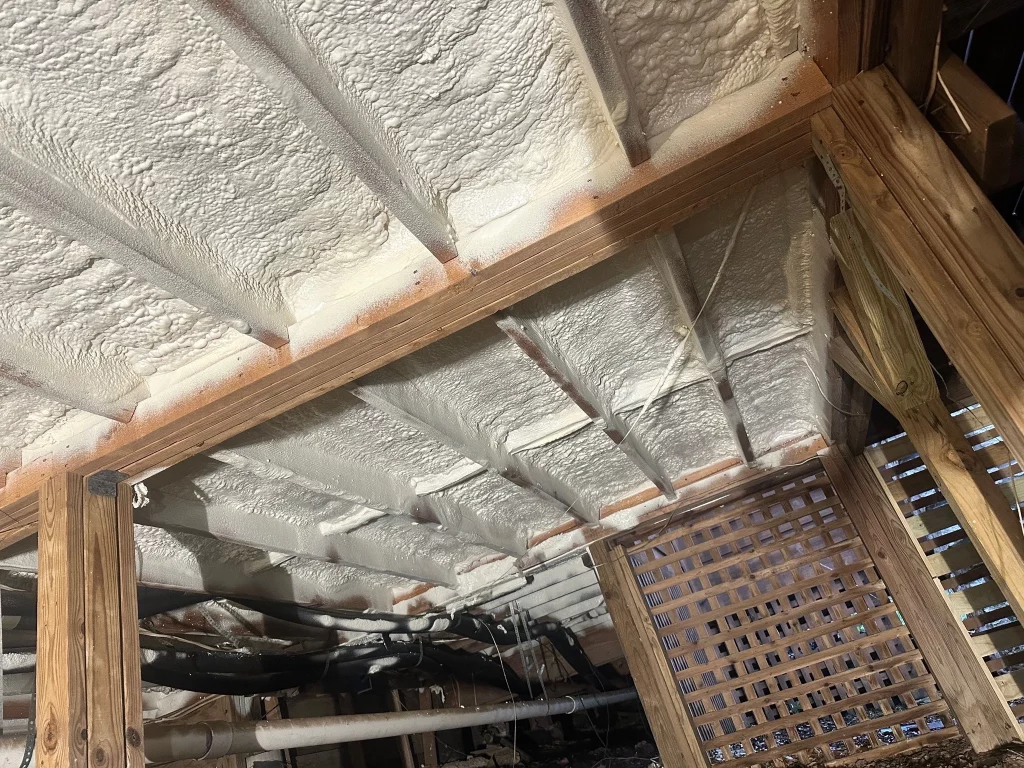
Ground moisture makes these areas the highest-risk zones for water vapor intrusion. Closed-cell spray foam applied directly to foundation walls and the underside of the floor assembly creates a continuous moisture barrier that prevents humid air from reaching wood framing, insulation, and floor finishes. The foam also seals air leaks around rim joists, plumbing penetrations, and electrical conduits that are nearly impossible to seal with other methods.
Exterior Wall Cavities
In a hot-humid climate, the vapor drive moves from outside to inside during the cooling season. Closed-cell spray foam on the interior side of exterior sheathing blocks that vapor movement before it enters the cavity. The DOE guide notes that interior vapor retarders should be avoided when using closed-cell spray foam in hot-humid walls, because a double vapor-retarder condition could trap any moisture that does get past the exterior.
Attics and Roof Assemblies
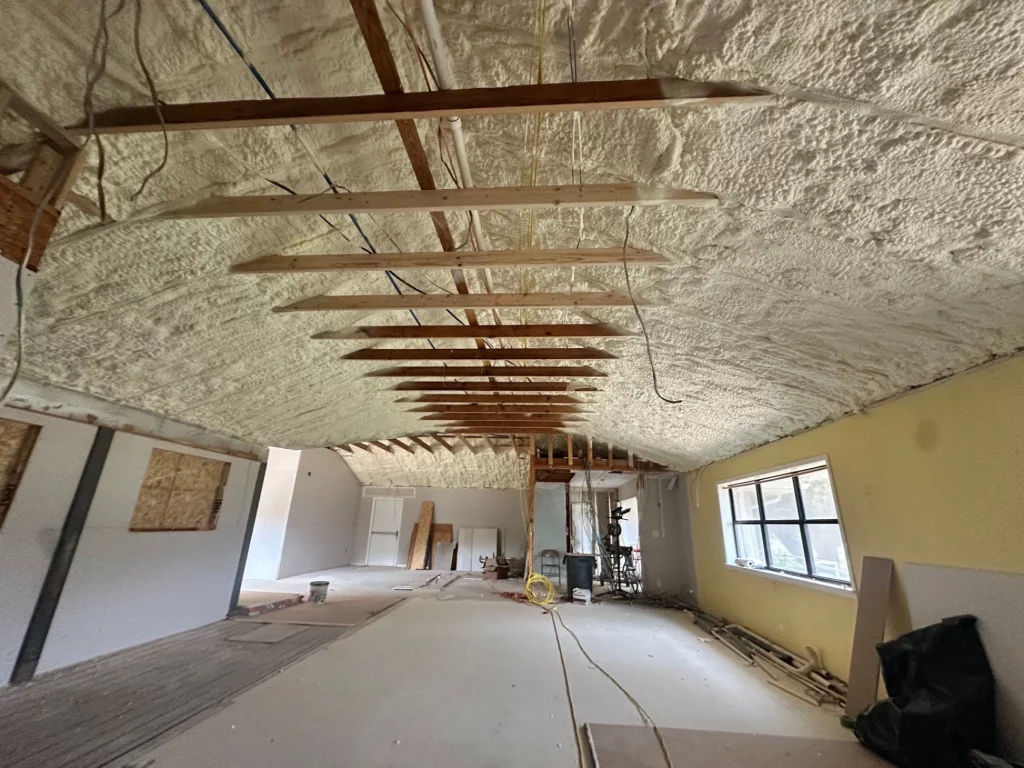
Spray foam applied to the underside of roof decking in unvented attics moves the insulation and air barrier plane to the roof line, which keeps ductwork and HVAC equipment inside the conditioned space. In hot-humid climates, this approach prevents humid attic air from infiltrating ceiling penetrations and reaching conditioned spaces below. Closed-cell foam is rated “preferred” for this application across all climate zones.
Rim Joists and Band Joists
Perimeter band joists, where floor framing meets exterior walls, are notoriously difficult to insulate with traditional materials. These areas tend to have multiple penetrations for wiring, plumbing, and structural connections. Spray foam fills these irregular spaces, sealing both air and moisture pathways in a single application.
Signs You Have Chosen the Right Moisture Barrier Approach
When evaluating whether a spray foam installation will deliver the moisture protection your Lost Creek home needs, look for these indicators:
- The installer specifies closed-cell foam for below-grade and crawlspace applications, rather than open-cell, which the DOE guide marks as unsuitable for moisture-exposed environments.
- The proposal includes sufficient thickness to achieve vapor retarder classification, meaning at least 1.5 to 2 inches of closed-cell foam in wall and roof assemblies.
- The contractor accounts for your specific climate zone and assembly type, rather than applying a one-size-fits-all approach. Hot-humid climates have different vapor drive directions and moisture loading than cold or dry climates.
- Air sealing is treated as part of the insulation system, not as a separate add-on. Spray foam provides both thermal resistance and air sealing in one step, which the DOE identifies as directly connected to home energy efficiency and moisture control.
- The contractor discusses ventilation and re-entry protocols, reflecting the safety standards the EPA recommends for SPF installation, including occupant protection during and after application.
Common Mistakes to Avoid
- Using open-cell foam in crawlspaces or against foundation walls. The material absorbs water and cannot function as a moisture barrier in these locations.
- Skipping the thickness requirement. A thin flash coat of closed-cell foam (under 1 inch) provides air sealing but not vapor control. The perm rating at that thickness may still be 4 to 6 perms, well above the Class I threshold.
- Adding an interior vapor retarder with closed-cell spray foam in hot-humid walls. This creates a double vapor barrier that can trap moisture inside the assembly and cause hidden damage.
- Ignoring drainage planes. Even with spray foam as a moisture barrier, exterior drainage planes and bulk water management systems must still be properly installed. Spray foam is a redundant defense, not a replacement for proper flashing and water management.
- Assuming all spray foam is the same. The two product classifications perform very differently in moisture environments. Choosing the wrong type for your application can lead to building envelope failure.
Ready to Protect Your Lost Creek Home from Moisture Damage
Stellrr Insulation & Spray Foam provides expert spray foam insulation installation tailored to the specific demands of Lost Creek, TX homes and buildings. Our team evaluates each space individually, selecting the right foam type and application thickness to deliver reliable moisture protection, air sealing, and thermal performance in one step. Whether you need a crawlspace encapsulated, a new build insulated, or an existing wall cavity retrofitted, we handle it with precision. Reach out to us at info@stellrr.com or call 512-520-0044 to get started.
Frequently Asked Questions
How thick does closed-cell spray foam need to be for moisture barrier performance?
Closed-cell spray foam needs to reach at least 1.5 to 2 inches of thickness to achieve a perm rating below 1.0, which qualifies it as a Class I vapor retarder. Anything thinner provides air sealing but will still allow some moisture vapor to pass through.
Can open-cell spray foam be used as a moisture barrier in a humid climate like Lost Creek?
No. Open-cell spray foam is vapor permeable with a perm rating of 5 to 10 at the typical installed thickness, and it can absorb liquid water. It should not be relied on as a standalone moisture control layer in hot-humid climates or below-grade applications.
Is a separate vapor barrier needed when using spray foam insulation?
When closed-cell spray foam is applied at the proper thickness, it functions as a vapor retarder on its own, and no separate polyethylene or kraft-faced barrier is required. In fact, adding an interior vapor retarder over closed-cell foam in hot-humid climates can create a double vapor barrier and trap moisture inside the assembly.
How does spray foam handle moisture in crawlspaces differently than a plastic vapor barrier?
Spray foam applied directly to crawlspace walls and the floor framing above creates a continuous sealed surface that adheres to the substrate, sealing air leaks and blocking vapor simultaneously. A plastic vapor barrier laid on the ground only addresses soil moisture evaporation and does not seal the walls or framing penetrations.
Is spray foam insulation safe for occupied homes during installation?
The EPA advises that spray polyurethane foam should be installed by trained professionals using proper respiratory protection and ventilation protocols. Occupants may need to vacate during and for a period after application, depending on the product and scope of work. Once fully cured, the material is inert and non-toxic.
Sources
- Department of Energy – Types of Insulation – Comprehensive federal guide covering spray foam insulation types, installation methods, and performance characteristics, including moisture resistance and R-value comparisons.
- Department of Energy – Insulation Overview – DOE resource explaining the relationship between insulation, air sealing, and moisture control in home energy efficiency.
- Wikipedia – Spray Foam – Encyclopedic reference on spray polyurethane foam covering types, properties, thermal resistance, and building applications.
- DOE Building America – Which Spray Foam Is Right For You? – Detailed federal research report comparing open-cell and closed-cell spray foam properties, perm ratings, and climate-specific application recommendations, including hot-humid climates.
- EPA – Spray Polyurethane Foam Insulation and How to Use It More Safely – EPA safety guidance covering SPF chemical components, health considerations, and professional installation requirements.