Poor wall insulation is one of the most overlooked causes of noise problems in homes and buildings. When walls lack proper insulation, airborne sound travels freely through empty wall cavities, allowing conversation, television audio, and outdoor noise to pass between rooms and from outside. Standard uninsulated interior walls with half-inch drywall on both sides of wood studs typically achieve a Sound Transmission Class (STC) rating of only about 33, meaning loud speech is audible and fairly understandable through the wall. The fix involves adding the right insulation material, sealing air gaps, and in many cases, upgrading the wall assembly with techniques like resilient channels or double-stud construction to significantly raise STC performance.
TLDR / Key Takeaways
- Uninsulated interior walls typically rate STC 33, allowing loud speech to pass through clearly and with minimal privacy.
- Adding fiberglass or mineral fiber insulation inside wall cavities can improve STC ratings by 5 to 10 points, depending on framing type.
- The International Building Code requires a minimum STC 50 rating for separation between dwelling units.
- Sound leakage through even tiny gaps (as little as 0.1% of the wall area) can reduce a wall’s effectiveness from 40 dB to 30 dB transmission loss.
- Dense, fibrous materials like mineral fiber insulation provide better sound absorption than standard fiberglass due to higher density.
- Decoupling techniques such as resilient channels, staggered studs, and double-stud walls can push STC ratings above 55.
- The World Health Organization identifies noise as a public health issue linked to sleep disturbance, cardiovascular risk, and cognitive impairment.
Why Poor Wall Insulation Lets Noise Through
Sound travels through buildings in two primary ways: airborne transmission and structure-borne transmission. Airborne sound moves through the air and passes through wall cavities, gaps around electrical outlets, and unsealed penetrations. Structure-borne sound vibrates through the framing, drywall, and other solid building materials. Poor wall insulation affects both paths.
When a wall cavity is empty, it acts as a resonant chamber that allows sound energy to bounce back and forth. This resonance actually amplifies certain frequencies and makes it easier for sound to transfer from one side to the other. According to the National Institute of Standards and Technology (NIST) Handbook 119, a wall without insulation performs like a sounding board, where the entire wall surface vibrates and radiates noise into the adjacent room.
The problem gets worse when there are gaps and cracks. NIST research shows that even a 0.1% opening in a partition can reduce transmission loss from 40 dB to 30 dB. Common leakage points include unsealed electrical boxes, gaps at the floor and ceiling perimeter, back-to-back cabinets, and openings around plumbing and duct penetrations.
Understanding STC Ratings for Wall Assemblies
The Sound Transmission Class (STC) is the standard rating system used in the United States to measure how well a wall, floor, or ceiling assembly blocks airborne sound. Developed under ASTM E413, the STC number roughly corresponds to the decibel reduction in noise a partition provides. Higher numbers mean better sound isolation.
| STC Rating | What You Hear Through the Wall | Typical Assembly |
|---|---|---|
| 25 | Normal speech is easily understood | Quarter-inch wood panels on 2×4 studs |
| 33 | Loud speech audible and fairly understandable | Half-inch drywall, both sides, wood studs, no insulation |
| 39 | Loud speech audible but not intelligible | Half-inch drywall, both sides, wood studs, fiberglass insulation |
| 45 | Loud speech is barely audible | Double drywall layer, wood studs, batt insulation |
| 50 | Loud sounds faintly heard | Staggered wood studs, double drywall, and insulation |
| 55 | Very good isolation | Double stud walls, double drywall, double insulation |
| 63 | Excellent isolation | Double studs with resilient channels, full insulation |
As shown in the table, simply adding fiberglass insulation to an otherwise empty wall cavity raises the STC from 33 to 39, according to Wikipedia’s compilation of STC data. This is a noticeable improvement that moves loud speech from “fairly understandable” to “audible but not intelligible.”
How Different Insulation Materials Compare for Noise Control
Not all insulation materials perform equally when it comes to blocking sound. The key factors are density, fiber structure, and how well the material fills the cavity.
| Insulation Material | Typical Density | Sound Absorption Quality | Best Application |
|---|---|---|---|
| Standard fiberglass batts | Low (0.5 to 1.0 lbs/ft³) | Good at mid-to-high frequencies | Standard interior walls, budget retrofits |
| Mineral fiber (mineral wool) | Higher (2.5+ lbs/ft³) | Superior across a wider frequency range | Walls needing maximum sound control, studios |
| Blow-in cellulose | Medium | Good cavity fill, reduces resonance | Retrofit existing walls, irregular cavities |
| Spray foam (open cell) | Low | Excellent air sealing, moderate absorption | New construction, hard-to-reach cavities |
| Spray foam (closed cell) | High | Best air barrier, good damping | Exterior walls, moisture-prone areas |
According to the InterNACHI noise control guide, mineral-fiber insulation has a much higher density than traditional fiberglass, which makes it far more effective at stopping the transmission of sound from one room to another. The denser material also has a higher burning point and a lower moisture absorption rate.
The WBDG Acoustic Comfort resource recommends insulating partition cavities and increasing partition STC as primary strategies for achieving acceptable acoustic comfort in buildings. They also specify that acoustical ceiling tiles should have a Noise Reduction Coefficient (NRC) of 0.75 or higher.
Beyond Insulation: Wall Assembly Upgrades That Actually Work
Adding insulation to an empty wall cavity is the first step, but for serious noise problems, insulation alone often is not enough. The framing connection between drywall and studs creates a direct structural path for sound vibrations. Breaking that path through decoupling is the single most effective improvement.
Resilient Channels
Resilient channels are thin metal strips mounted perpendicular to the studs. One side attaches to the framing, and the drywall attaches to the other side, creating a mechanical break in the sound transmission path. Installing resilient channels on one side of a standard wall with batt insulation can raise STC from around 39 to approximately 59.
Staggered Stud Walls
In a staggered stud configuration, two sets of studs are offset on a wider base plate so that no single stud connects both sides of the wall. This decoupling, combined with insulation in the cavity, achieves STC ratings in the mid-50s range. This approach requires a wider wall (typically 2×6 plates with staggered 2×4 studs) but offers excellent performance.
Double Stud Walls
Double-stud walls with a small air gap between two separate wall frames represent the highest level of sound isolation achievable in standard residential construction. With double layers of drywall on each side and insulation in both cavities, these assemblies can reach STC 63 or higher.
The critical point, noted in Wikipedia’s STC reference, is that great care must be taken with decoupled assemblies. Any fastener that becomes mechanically coupled to the framing can undermine the decoupling and result in drastically lower sound isolation performance.
Real-World Scenarios: How Poor Insulation Creates Noise Problems
| Scenario | Home Type | Problem | Solution | Outcome |
|---|---|---|---|---|
| Shared bedroom wall noise | 1990s suburban home, 2×4 framing | Kids’ TV and conversation are clearly audible through the bedroom wall; empty cavity, no insulation | Blew mineral wool insulation into wall cavities through small holes, patched and painted | STC improved from 33 to approximately 42; loud speech is no longer intelligible |
| Home office in converted garage | Postwar ranch with attached garage | Street traffic noise and garage mechanicals bleed through the uninsulated exterior and interior walls | Installed dense-pack cellulose in exterior walls, added resilient channels, and a second drywall layer on the interior office wall | Traffic noise reduced to a faint background hum; STC increased from under 30 to approximately 48 |
| Multifamily party wall complaint | 2000s townhome, 2×4 party wall | Neighbor’s television, music, and conversation transmitted clearly through shared wall; thin drywall, minimal insulation | Added mineral wool batts in existing cavity, sealed all perimeter gaps and electrical boxes, added layer of drywall with Green Glue compound | Neighbor’s TV barely audible; overall STC raised from 35 to approximately 50 |
| Open-plan living to bedroom noise | Modern open-concept home | Kitchen and living area noise travels into bedrooms through partial walls with no insulation | Insulated all bedroom-adjacent wall cavities with mineral wool, installed solid-core doors with gaskets on bedroom entries | Noticeable noise reduction in bedrooms; parents reported children sleeping through kitchen activity |
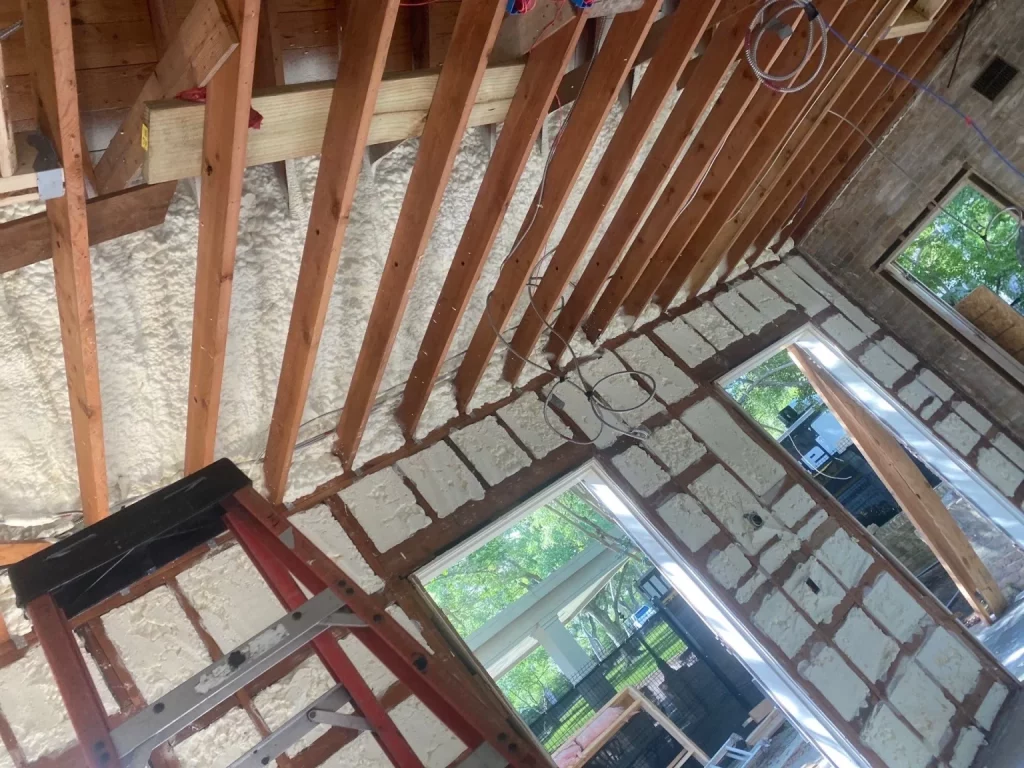
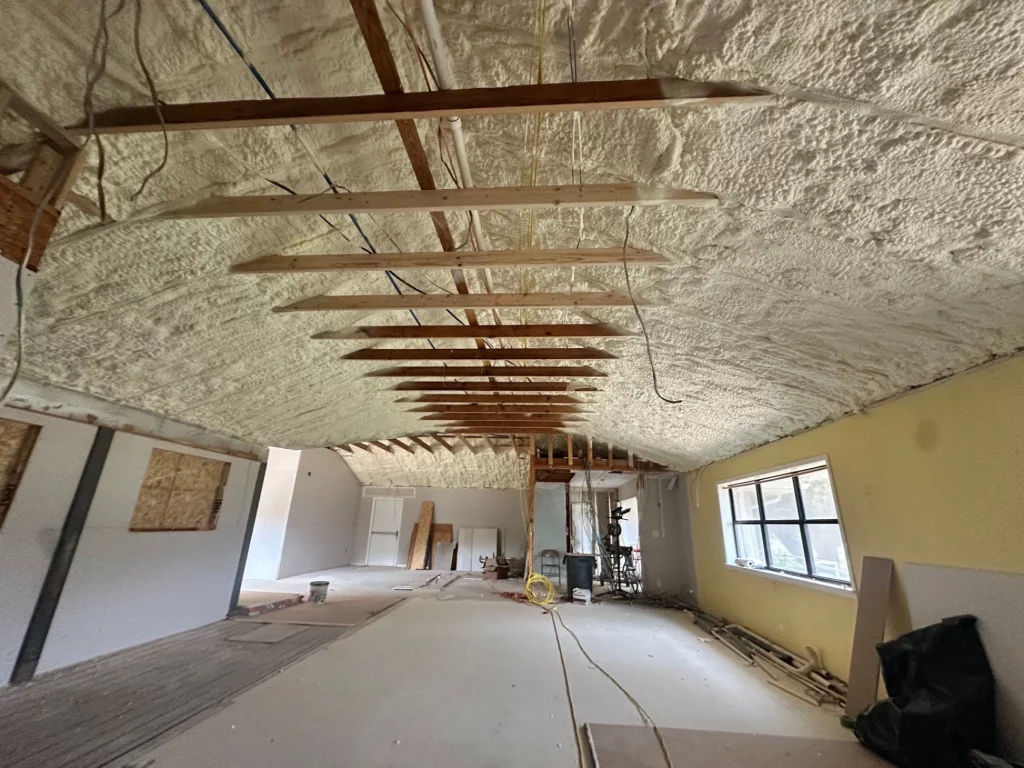
| Outdoor noise intrusion | Home near busy arterial road | Traffic noise entering through poorly insulated exterior walls with single-pane windows | Injected open-cell spray foam into exterior wall cavities for air sealing and sound absorption, replaced windows with double-pane assemblies | Indoor ambient noise levels dropped significantly; conversations no longer competed with traffic sound |
Actionable Strategies for Reducing Wall Noise Transmission
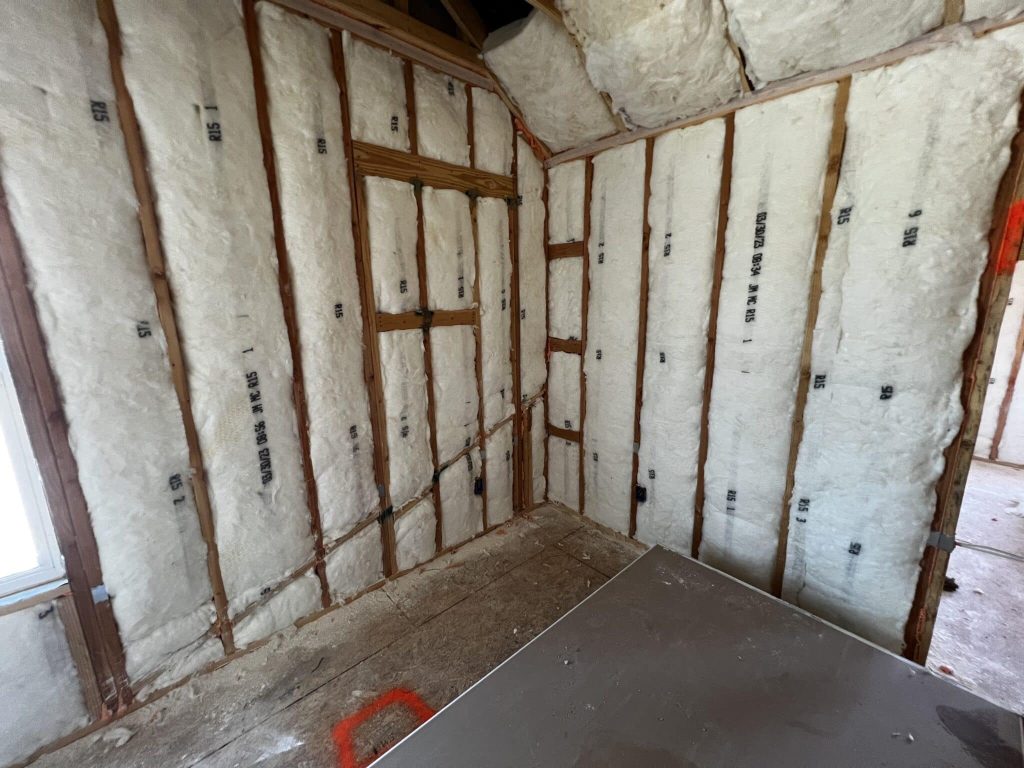
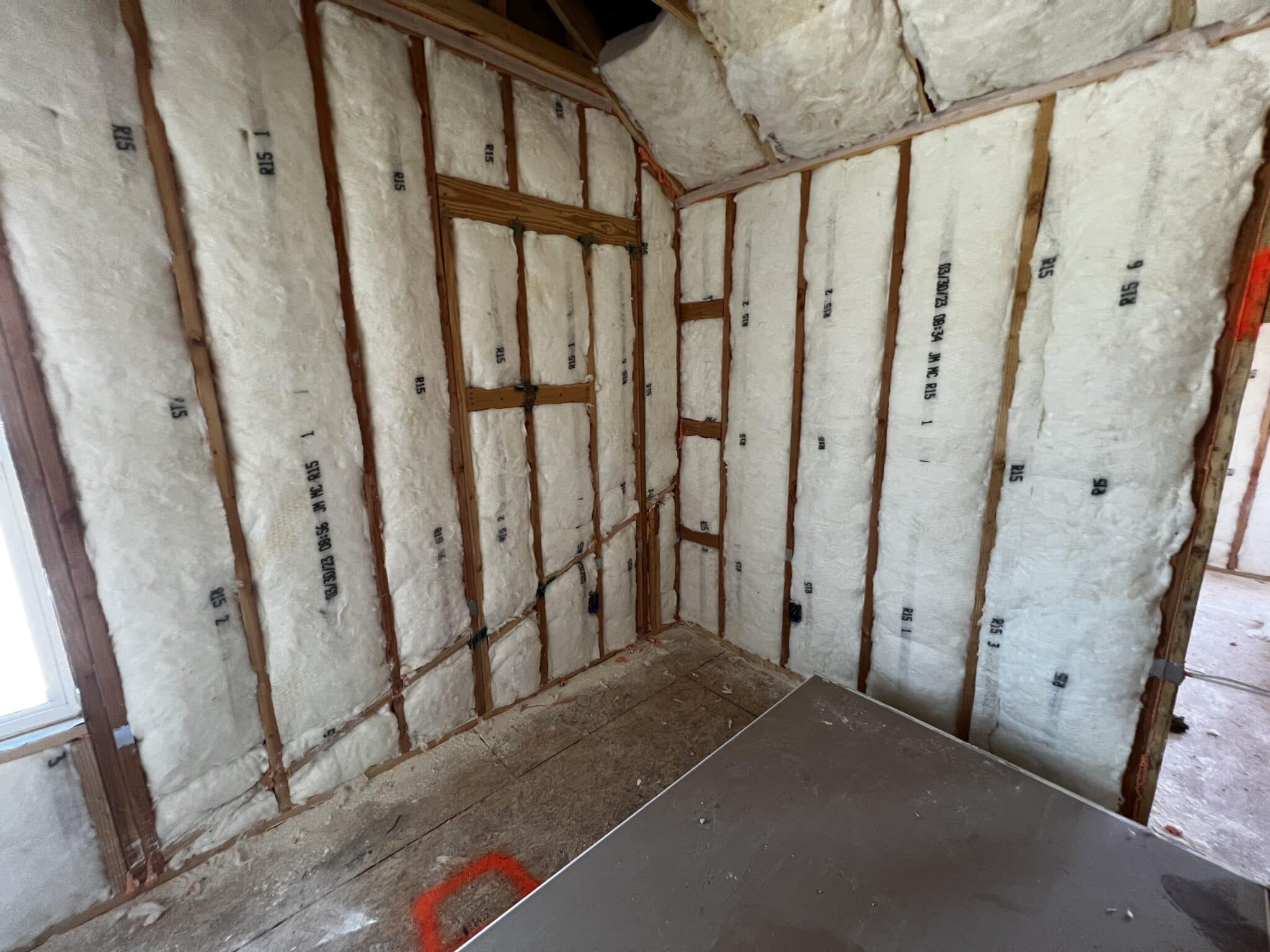
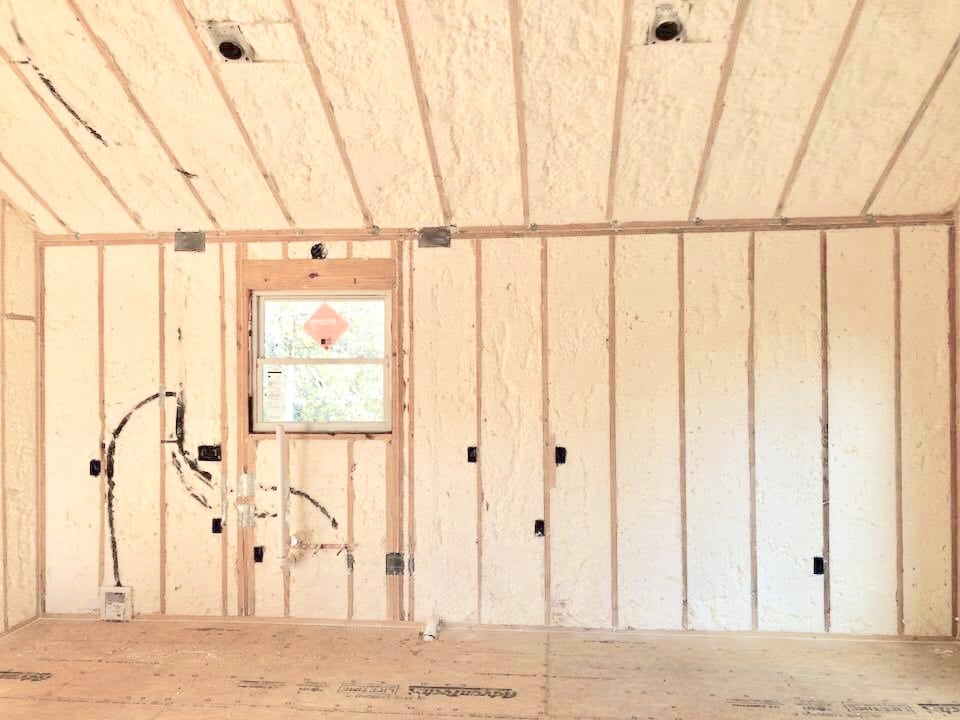
1. Insulate every wall cavity with dense fibrous material. Start by filling empty cavities. Mineral wool batts or dense-pack cellulose offer the best combination of sound absorption, fire resistance, and moisture management. For retrofit projects, blown-in materials can fill cavities without removing drywall.
2. Seal every gap, crack, and penetration. Use acoustical caulk at wall-floor and wall-ceiling junctions. Pack fiberglass around electrical boxes and cover with putty pads. Seal around all plumbing and duct penetrations. Even hairline cracks transmit far more sound than homeowners realize.
3. Eliminate back-to-back electrical boxes. Outlets and switches placed directly opposite each other in a shared wall create a direct sound tunnel. If possible, relocate one box to a different stud bay. If that is not feasible, pack the cavity densely with mineral wool and seal the box perimeter.
4. Upgrade hollow-core doors to solid-core with gaskets. Interior doors are often the weakest link in a wall assembly. A hollow-core door with a half-inch gap underneath can undo the benefit of an insulated wall. Install solid-core doors with perimeter gaskets and a threshold seal.
5. Add mass through additional drywall layers. For moderate noise problems, adding a second layer of half-inch drywall to one or both sides of the wall can increase STC by 2 to 3 points. For better results, use a damped drywall product or apply a viscoelastic compound between layers.
6. Decouple the drywall from the framing. For serious noise issues, remove the existing drywall on one side and install resilient channels before rehanging. This breaks the structural vibration path and can provide an additional 15 to 20 STC points when combined with cavity insulation.
Health Effects of Chronic Noise Exposure in the Home
The World Health Organization identifies excessive noise as a significant public health concern. Their Environmental Noise Guidelines note that chronic noise exposure is linked to increased risk of ischemic heart disease, hypertension, sleep disturbance, hearing impairment, tinnitus, and cognitive impairment. There is also growing evidence connecting noise to adverse birth outcomes and mental health problems.
Within homes, poor wall insulation contributes to this problem by allowing unwanted noise to infiltrate living spaces and sleeping areas. When outdoor traffic, neighbor activity, or household noise cannot be adequately blocked, residents experience elevated stress responses even during sleep. The NIST guide notes that sound levels of 70 dB or more trigger physiological stress responses, including increased heart rate, shallower breathing, dilated pupils, and elevated blood pressure, even when the person is asleep.
Improving wall insulation and sound isolation is not just about convenience or privacy. It is a measurable investment in the health and comfort of everyone in the home.
Factors That Affect Sound Control Performance
- Cavity fill quality: Even the best insulation material underperforms if it is poorly installed. Gaps, voids, and compressed areas create weak spots where sound passes through unimpeded. Dense-pack installation methods ensure consistent performance.
- Framing type and gauge: Light-gauge steel studs (25-gauge or lighter) provide better sound isolation than wood studs or heavier steel, because they are less stiff and transmit fewer vibrations. According to Wikipedia’s STC reference, single metal stud partitions can outperform single wood stud partitions by up to 10 STC points.
- Stud spacing: Increasing stud spacing from 16 inches to 24 inches on center can improve STC by 2 to 3 points by reducing the number of rigid connections between the drywall leaves.
- Drywall type and layers: Standard half-inch drywall on both sides of 2×4 wood studs with no insulation yields STC 33. Double drywall layers with insulation push performance into the mid-40s. Lightweight drywall can degrade low-frequency performance compared to standard-weight board.
- Air sealing: Sound behaves like water and will find any path available. Flanking paths through ceiling plenums, shared ductwork, unblocked floor joists, and continuous attic spaces can bypass even well-insulated walls. Blocking these indirect paths is essential.
- Frequency range of the noise: Low-frequency sounds like bass from audio equipment are the hardest to block because they have longer wavelengths that pass more easily through standard wall assemblies. High-frequency sounds are easier to absorb and block with insulation and sealed assemblies.
Get Expert Help With Your Noise Problem
If poor wall insulation is letting unwanted noise disrupt your home, our team at Stellrr Insulation & Spray Foam has the experience and training to diagnose the problem and deliver a lasting solution. We evaluate every wall assembly, identify leakage paths, and recommend the right combination of insulation solution, air sealing, and structural upgrades for your specific situation. Whether you are dealing with a single noisy wall or need whole-home sound control, we take a building science approach to get real results.
Reach us at info@stellrr.com or call 512-520-0044 to get started. Every home is different, and we make sure our recommendations match your actual conditions, not guesswork.
FAQs
Can adding insulation to an existing wall really reduce noise?
Yes. Adding fiberglass or mineral wool insulation to an empty wall cavity can improve the STC rating by 5 to 10 points, depending on the framing type and insulation density. For many homeowners, this moves loud speech from “clearly understandable” to “not intelligible.”
What STC rating should I aim for between rooms?
For general privacy between bedrooms and living areas, aim for at least STC 45 to 50. The International Building Code requires STC 50 between separate dwelling units. Higher ratings of 55 or more are appropriate for home offices, studios, or rooms adjacent to mechanical equipment.
Is mineral wool better than fiberglass for sound control?
Mineral wool generally outperforms standard fiberglass for sound absorption because of its higher density and more uniform fiber structure. It absorbs sound across a wider frequency range, particularly at lower frequencies where fiberglass is less effective.
Do I need to tear out drywall to insulate for noise?
Not necessarily. Blow-in insulation can be installed through small holes drilled in the wall, which are then patched and painted. However, if you want the best results, removing one side of drywall allows for proper cavity fill, installation of resilient channels, and thorough air sealing of penetrations.
Will soundproofing my walls also improve energy efficiency?
Yes. The same insulation that blocks sound transmission also reduces heat transfer. Sealing gaps and adding cavity insulation improves both the STC rating and the thermal performance of the wall assembly, so you gain comfort on both fronts.
Sources
- Sound Transmission Class – Wikipedia – Comprehensive reference for STC rating methodology, wall assembly comparisons, and factors affecting sound isolation, including mass, absorption, stiffness, and decoupling.
- NIST Handbook 119: Quieting, A Practical Guide to Noise Control – Detailed guide on how sound travels through buildings, the sounding board effect, flanking transmission paths, and practical solutions for reducing noise in walls, ceilings, and floors.
- InterNACHI – Construction Methods and Materials for Noise Control – Overview of airborne and structure-borne sound transmission, sound absorption vs. insulation, and construction techniques including resilient channels, mineral fiber insulation, and decoupling methods.
- WHO Environmental Noise Guidelines for the European Region – World Health Organization guidelines documenting the health effects of noise exposure, including cardiovascular risk, sleep disturbance, cognitive impairment, and mental health impacts.
- WBDG – Acoustic Comfort – Whole Building Design Guide resource recommending STC values for various occupancies, partition design strategies, NRC specifications for ceiling tiles, and noise control approaches for buildings.