Poor attic insulation is one of the most common and costly hidden problems in residential homes. When insulation is insufficient, damaged, or improperly installed, it creates a chain reaction of drafts, moisture accumulation, and significant energy loss that compounds over time. According to the EPA, air leakage accounts for between 25% and 40% of the energy used for heating and cooling in a typical home, and much of that leakage originates at the attic plane. Addressing attic insulation problems means tackling all three issues at once: stopping unconditioned air from entering, preventing condensation that damages structural materials, and reducing the constant drain on your HVAC system. The right solution depends on your climate zone, the current condition of your insulation, and whether your home has a ventilated or unvented attic assembly.
TLDR / Key Takeaways
- Air leakage through the attic accounts for 25% to 40% of heating and cooling energy use in a typical residence, driven by stack effect, wind, and pressure differentials
- 9 out of 10 U.S. homes are under-insulated, according to ENERGY STAR estimates, with the attic being the most common weak point
- Poor insulation allows warm, humid indoor air to reach cold roof surfaces, causing condensation, frost, mold growth, and wood rot over time
- The 2021 IECC requires ceiling R-values from R-30 to R-60 depending on climate zone, yet many existing homes fall well below these minimums
- Ice dams form when heat escapes through the attic, warming the roof deck enough to melt snow that refreezes at the cold eaves, causing water damage
- Air sealing must happen before or alongside insulation upgrades to be effective, since adding insulation over unsealed penetrations simply buries the leak
- Homeowners can save an average of 15% on heating and cooling costs by combining air sealing with proper attic insulation
- Moisture-damaged insulation loses thermal effectiveness and can become a breeding ground for mold, creating both health and structural risks
How Attic Insulation Works and Where It Goes Wrong
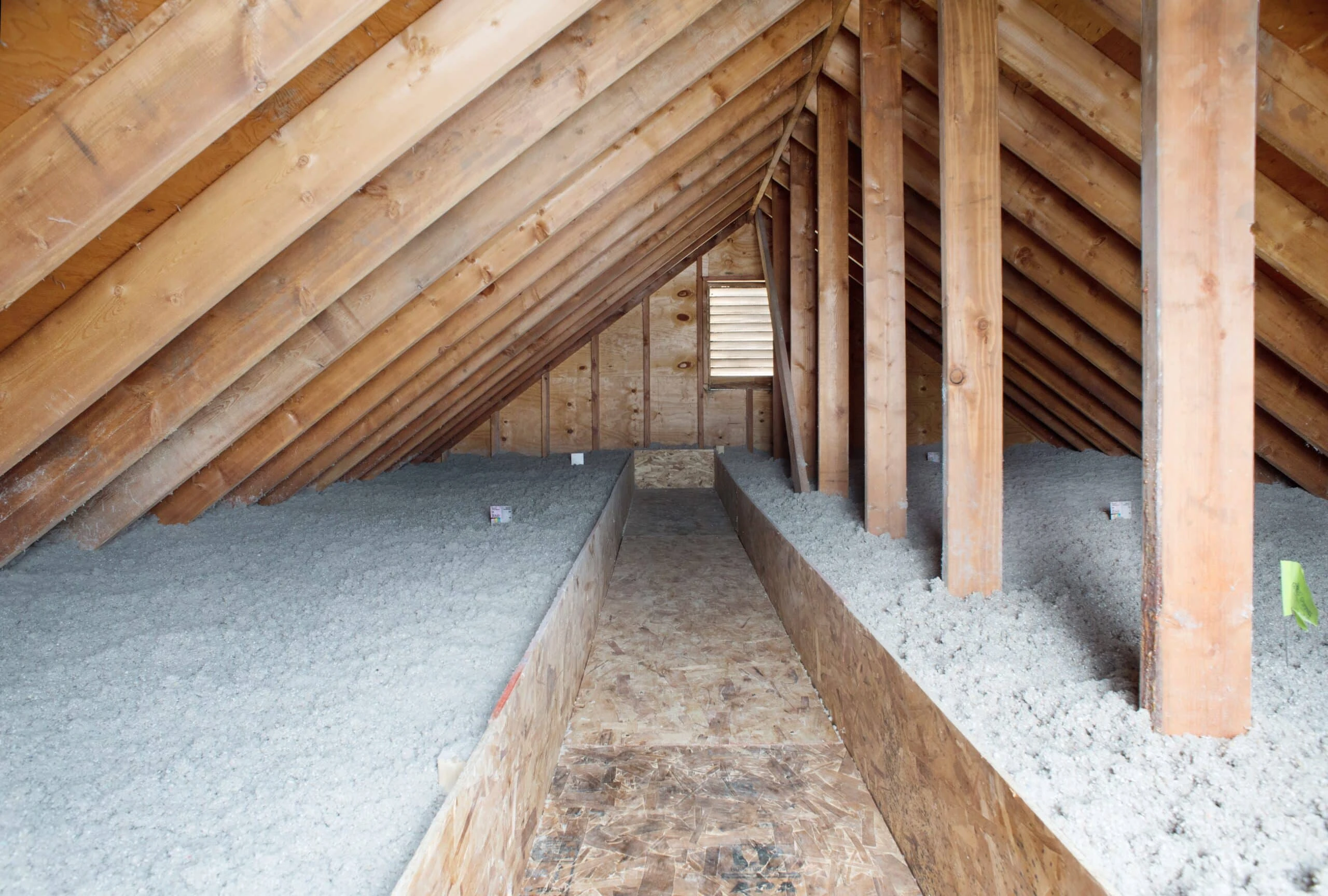
Attic insulation serves as the primary thermal barrier between your conditioned living space and the unconditioned attic above. In a properly insulated home, heat stays where you want it during winter and stays out during summer. The insulation rests on the ceiling plane, which acts as both the thermal boundary and the air barrier between the home and the attic. For additional insights, read our attic insulation energy efficiency guide.
The problem develops when any part of this system breaks down. Insulation settles over time, gets compressed by storage or foot traffic, absorbs moisture from leaks or condensation, or was never installed at sufficient depth to begin with. Gaps around recessed lights, plumbing vents, electrical wiring, and HVAC register boots create direct channels for warm air to escape into the attic. Even a well-insulated attic with poor air sealing at these penetration points will underperform because air movement bypasses the thermal resistance of the insulation entirely.
The Three Problems: Drafts, Moisture, and Energy Loss
Drafts and Air Leakage
When attic insulation is thin, missing, or has gaps, the natural stack effect pulls warm air up through ceiling penetrations and out through the attic. Cold outside air gets drawn in through lower-level gaps to replace it, creating noticeable drafts. These drafts show up as cold spots near exterior walls, uncomfortable temperature swings between rooms, and visible air movement around light fixtures and electrical outlets.
The Building America Solution Center explains that condensation in attics occurs when warm, moist interior air escapes through holes in the air barrier and reaches cold surfaces like roof trusses and roof sheathing. The same air leakage paths that cause your drafts are the pathways that carry moisture into the attic where it does real damage.
Moisture and Condensation
Moisture is arguably the most destructive consequence of poor attic insulation, yet it often goes unnoticed until significant damage has already occurred. Here is what happens inside an under-insulated attic:
- Warm indoor air rises through ceiling penetrations carrying water vapor
- That vapor contacts cold surfaces like the underside of the roof deck
- Water vapor condenses into liquid water or frost on those cold surfaces
- In cold weather, frost accumulates and then melts when temperatures rise
- Repeated wetting and drying cycles cause wood rot, mold growth, and sheathing delamination
The University of Minnesota Extension identifies air leakage from the house into the attic as the major mode of heat transfer leading to ice dam formation and associated moisture damage. In many homes, air leakage through penetrations around recessed lights, plumbing stacks, and duct chases carries far more heat and moisture into the attic than conduction through the insulation itself.
Beyond condensation, poor attic insulation can also allow roof leaks to saturate insulation more easily since there is less material to absorb and slow the spread of water. Wet insulation of any type loses its R-value and becomes a magnet for mold growth.
Energy Loss and Rising Bills
The financial impact of poor attic insulation shows up month after month on utility bills. The U.S. Department of Energy notes that heat can be lost or gained through any building component, especially through gaps where walls, ducts, pipes, vents, or other interfaces meet. When your attic insulation is inadequate, your HVAC system has to work harder and run longer to maintain comfortable temperatures.
According to ENERGY STAR, the EPA estimates that homeowners can save an average of 15% on heating and cooling costs by air sealing their homes and adding insulation in attics, floors over crawl spaces, and basements. The same source notes that 9 out of 10 homes in the U.S. are under-insulated, meaning the vast majority of homeowners are leaving measurable savings on the table.
Common Causes of Poor Attic Insulation
Understanding what went wrong in your attic helps guide the right fix. The table below covers the most frequent causes we encounter and the problems each one creates.
| Cause of Failure | What Happens | Problems It Creates |
|---|---|---|
| Insufficient depth | Existing insulation falls below recommended R-value for the climate zone | Direct energy loss, uneven temperatures, ice dams in cold climates |
| Settling and compression | Blown-in insulation settles over time; batts get compressed by storage | Reduced R-value, exposed gaps at top plates, air leakage paths open up |
| Moisture damage | Roof leaks or condensation saturate insulation material | Wet insulation loses thermal resistance, mold growth, wood rot on sheathing |
| Missing air sealing | Gaps around penetrations go unsealed before insulation is added | Warm humid air bypasses insulation, causing drafts, condensation, and frost |
| Blocked ventilation | Insulation pushed into soffit vents, no baffles installed | Trapped moisture cannot dry, roof deck overheating in summer, ice dams in winter |
| Animal damage | Pests nest in and displace insulation, creating tunnels and gaps | Compromised air barrier, reduced insulation coverage, contamination |
R-Value Requirements by Climate Zone
Insulation performance is measured by R-value, which indicates the material’s resistance to heat flow. Higher R-values mean better thermal protection. The Department of Energy publishes the following minimum ceiling R-values based on the 2021 IECC for uninsulated attics:
| Climate Zone | Minimum Ceiling R-Value | Description |
|---|---|---|
| 1 | R-30 | Hot, humid (South Florida, South Texas) |
| 2 | R-49 | Warm, humid (Most of Texas, Gulf Coast) |
| 3 | R-49 | Mixed, warm (Central Texas, Carolinas) |
| 4 (except Marine) | R-60 | Mixed, cold (Mid-Atlantic, Midwest) |
| 5 and Marine 4 | R-60 | Cold (New England, Great Lakes) |
| 6 | R-60 | Very cold (Northern tier states) |
| 7 and 8 | R-60 | Subarctic and arctic (Alaska, extreme northern) |
Many older homes were built with far less insulation than these current standards require. A home built in the 1980s or earlier might have R-11 to R-19 in the attic, which is less than half of what modern codes demand in most climate zones.
Ice Dams: A Visible Sign of Attic Heat Loss
Ice dams are one of the most recognizable consequences of poor attic insulation, and the damage they cause extends well beyond the roof. The National Weather Service explains that ice dams form when heavy snow buildup melts during the day and refreezes at the colder eaves overnight. The primary driver of this uneven melting is heat escaping from the house through the attic.
As warm air leaks through the ceiling plane, it warms the upper portions of the roof deck enough to melt the snow above. The meltwater runs down the roof and hits the cold overhang, where it refreezes into a ridge of ice. Water backs up behind this dam and can work under shingles, through the roof deck, and into the attic space. From there, it soaks into insulation, stains ceilings, damages drywall, and creates conditions for mold growth.
The University of Minnesota Extension recommends a two-step approach: first, make the ceiling airtight so no warm, moist air can flow from the house into the attic, and second, increase ceiling insulation to reduce conductive heat loss. Both steps are necessary for lasting results.
Recommendations by Home Type
The right approach to attic insulation depends on the age, construction, and climate conditions of your home.
Older homes (pre-1980): These homes often have little to no insulation in the attic, along with numerous unsealed penetrations. The priority is a comprehensive air sealing pass on the ceiling plane followed by adding blown-in insulation to the recommended R-value for your zone.
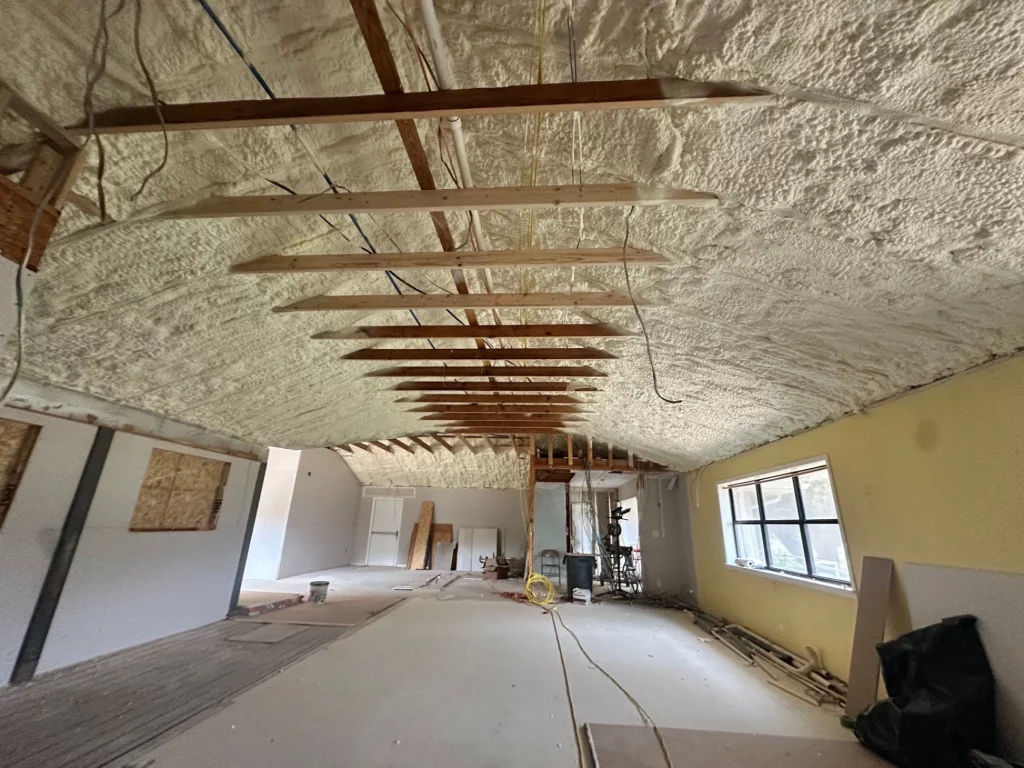
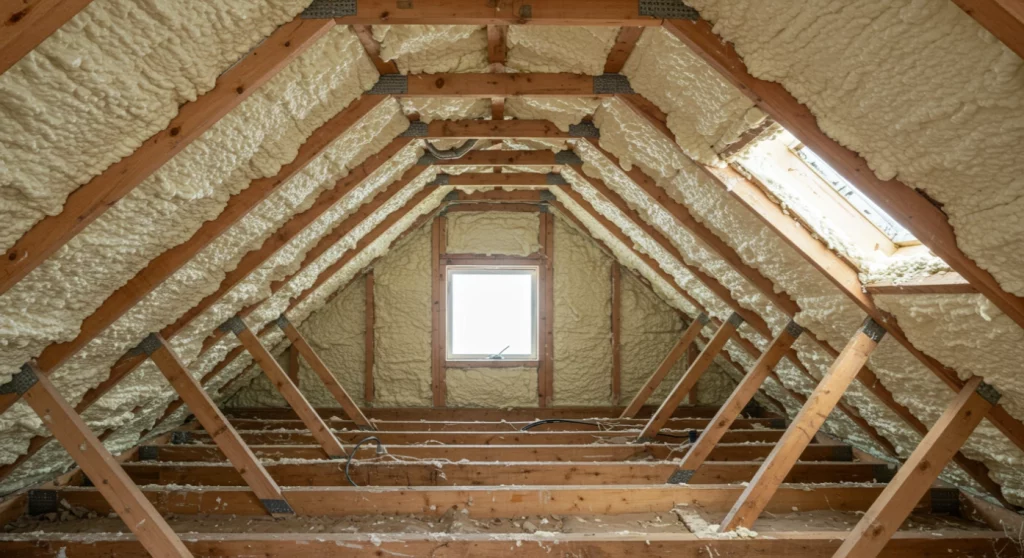
Homes with vaulted or cathedral ceilings: These compact roof assemblies lack the open attic space that allows for easy blown-in insulation. Solutions include dense-packed cellulose or spray foam in the rafter cavities, with attention to maintaining proper ventilation channels between insulation and the roof deck.
Homes with HVAC equipment in the attic: Ductwork and air handlers in unconditioned attic space compound energy loss. The most effective solution is either moving the equipment into conditioned space or sealing and insulating all ducts to at least R-8 and air sealing the attic floor thoroughly.
Homes in cold, snowy climates: Ice dam prevention should be a priority alongside energy efficiency. This means full depth insulation at the eaves, proper baffles to maintain soffit ventilation, and complete air sealing of all ceiling penetrations.
Signs You Have Found the Right Approach
A quality insulation upgrade should address more than just R-value. Here are the indicators that your project is being handled correctly:
- The contractor performs a blower door test before and after the work to measure actual air leakage reduction
- Air sealing is completed before new insulation is added, not skipped or treated as optional
- The contractor uses infrared imaging to identify hidden air leakage paths and insulation gaps
- Ventilation baffles are installed at the eaves to keep soffit vents clear after insulation is blown in
- The recommended insulation depth matches or exceeds the 2021 IECC requirements for your climate zone
- The scope of work includes sealing around recessed lights, plumbing vents, electrical boxes, HVAC registers, and other ceiling penetrations
- The contractor explains how moisture management and ventilation tie into the insulation strategy
Get Your Attic Insulation Evaluated
If your home experiences drafts, fluctuating indoor humidity, high energy bills, or visible signs of moisture damage, an attic insulation assessment can identify exactly where your thermal boundary is failing and what it will take to fix it. Stellrr Insulation & Spray Foam provides thorough inspections that cover air sealing, insulation depth, ventilation adequacy, and moisture management to give you a complete picture of your attic’s condition.
Request a Free Quote | Schedule an Attic Assessment
Call us at 512-520-0044 or email info@stellrr.com to get started. We evaluate your entire attic assembly, not just the insulation level, because real comfort and efficiency come from treating air sealing, insulation, and ventilation as a single system.
Frequently Asked Questions
Can poor attic insulation cause mold?
Yes. When warm, moist indoor air escapes through ceiling gaps into a cold attic, condensation forms on roof sheathing and framing. That moisture creates ideal conditions for mold growth on wood surfaces and in wet insulation.
How do I know if my attic insulation is sufficient?
The best method is a professional inspection that measures insulation depth, checks for gaps and settling, and evaluates air sealing at penetration points. A blower door test provides objective data on how much air is leaking through your ceiling plane.
Can I add new insulation over old, damaged insulation?
In most cases, damaged or wet insulation should be removed before adding new material. Compressed, waterlogged, or moldy insulation has lost its thermal effectiveness and can contaminate new insulation. An inspection can determine whether the existing material can stay.
Does adding more attic insulation eliminate ice dams?
Insulation alone is not enough. Ice dams form primarily from warm air leaking through the ceiling into the attic. Air sealing the ceiling plane must come first, followed by adding insulation to the recommended depth for your climate zone.
Why does my attic insulation need ventilation baffles?
Baffles keep insulation from blocking soffit vents, maintaining the airflow path along the underside of the roof deck. Without proper intake ventilation, moisture gets trapped in the attic, raising the risk of condensation, mold, and wood rot.
Sources
- ENERGY STAR – Why Seal and Insulate? – EPA data on energy savings from air sealing and insulation, including the estimate that 9 out of 10 U.S. homes are under-insulated.
- ENERGY STAR – Air Sealing Building Envelope Improvements – Detailed fact sheet on air leakage, including the statistic that air leakage accounts for 25% to 40% of heating and cooling energy in typical residences.
- Building America Solution Center – Condensation Control in Attics and Roofs – PNNL guide covering the conditions that cause attic condensation, construction techniques to prevent it, and ventilation requirements for roof assemblies.
- U.S. Department of Energy – Insulation and Air-Sealing Essentials – Federal guidance on R-value requirements by climate zone per the 2021 IECC, along with air sealing criteria for building envelope components.
- University of Minnesota Extension – Dealing with and Preventing Ice Dams – University research-based guide explaining how attic heat loss causes ice dams through conduction, convection, and radiation, and recommending air sealing combined with insulation upgrades.