Spray foam insulation outperforms blown-in insulation in Fredericksburg, TX when it comes to overall energy efficiency, air sealing, and moisture resistance, making it the stronger long-term performer for the Texas Hill Country climate. As explained in our spray foam and traditional insulation guide, the biggest difference comes down to air sealing and moisture control. Blown-in insulation is the more budget-friendly option and delivers solid thermal performance for attics and existing wall cavities, but it lacks the air barrier qualities that make spray foam effective against the intense heat and humidity swings Fredericksburg experiences. For homeowners focused on lowering energy bills and protecting against moisture problems, spray foam delivers the best return. For those working with tighter budgets or upgrading existing attic spaces, blown-in insulation remains a practical choice.
Fredericksburg sits in IECC Climate Zone 3 in Central Texas, where the Department of Energy recommends R-49 to R-60 for uninsulated attics and R-20 or higher for wood-frame walls. This is consistent with regional guidance from the Texas A&M AgriLife Extension. The Texas Hill Country brings extreme summer heat, unpredictable humidity, and temperature swings that push insulation systems hard year-round. Choosing the right material means balancing upfront cost against decades of comfort and energy savings.
TLDR / Key Takeaways
- Spray foam delivers higher R-value per inch: closed-cell spray foam achieves R-6 to R-7 per inch, while blown-in fiberglass and cellulose range from R-2.2 to R-3.7 per inch, according to the ENERGY STAR.
- Spray foam provides an integrated air seal: it simultaneously insulates and air-seals, which the Spray Polyurethane Foam Alliance identifies as one of its primary advantages over all other insulation types
- Blown-in insulation costs less upfront: blown-in fiberglass and cellulose run $1 to $3 per square foot installed, compared to $3 to $7 per square foot for spray foam
- Climate Zone 3 requirements: Fredericksburg homes need minimum R-49 in attics and R-20 in walls to meet current energy code standards
- Moisture management matters: closed-cell spray foam resists moisture and is the only cavity insulation rated as North Central Insulation.
- Lifespan differs: spray foam typically lasts 80+ years without settling, while blown-in materials can settle and lose effectiveness over time
- Best use cases differ: spray foam excels in walls, crawl spaces, and metal buildings; blown-in works well for attic floor retrofits and large open spaces
Head-to-Head: Spray Foam vs. Blown-In Insulation
Understanding how these two materials compare across the performance categories that matter most in Fredericksburg, TX helps narrow down the right choice for each project.
| Performance Factor | Spray Foam Insulation | Blown-In Insulation |
|---|---|---|
| R-Value Per Inch | R-3.7 (open-cell) to R-6.7 (closed-cell) | R-2.2 to R-3.7 (fiberglass/cellulose) |
| Air Sealing | Yes, acts as air barrier | No, separate air sealing required |
| Moisture Resistance | High (closed-cell); moderate (open-cell) | Low to moderate |
| Cost Per Sq Ft (Installed) | $3 to $7 | $1 to $3 |
| Lifespan | 80+ years, no settling | 20 to 30 years, may settle |
| Best Applications | Walls, crawl spaces, rim joists, metal buildings | Attic floors, existing wall cavities, large open areas |
| Installation Time | 1 to 2 days for average home | Same day for most attic jobs |
| Code Compliance (Zone 3) | Easily exceeds with less depth | Requires more depth to reach target R-value |
Why Fredericksburg’s Climate Demands More Than Basic Insulation
The Texas Hill Country is not a mild climate zone. Summers regularly push past 100 degrees, and humidity levels swing between dry and sticky depending on the season. Standard insulation that only slows conductive heat transfer is not enough when outdoor air is pouring through gaps around windows, doors, electrical boxes, and framing penetrations.
According to the Department of Energy, heat flows from warmer areas to cooler areas until there is no longer a temperature difference. During a Fredericksburg summer, that means heat constantly pushes inward through every weakness in the building envelope. The Spray Polyurethane Foam Alliance points out that spray polyurethane foam provides insulation and air sealing in a single product, which is why it reduces the workload on HVAC systems by preventing heat from flowing in and out of the building.
Blown-in insulation slows heat transfer through conduction but does not block air movement. In a humid climate like Fredericksburg, unsealed building envelopes allow warm, moist air to infiltrate wall cavities and attic spaces. Over time, that moisture can condense on cooler surfaces, leading to mold growth, wood rot, and degraded insulation performance.
Spray Foam Insulation: The High-Performance Option
Spray foam insulation comes in two main varieties, each suited to different applications:
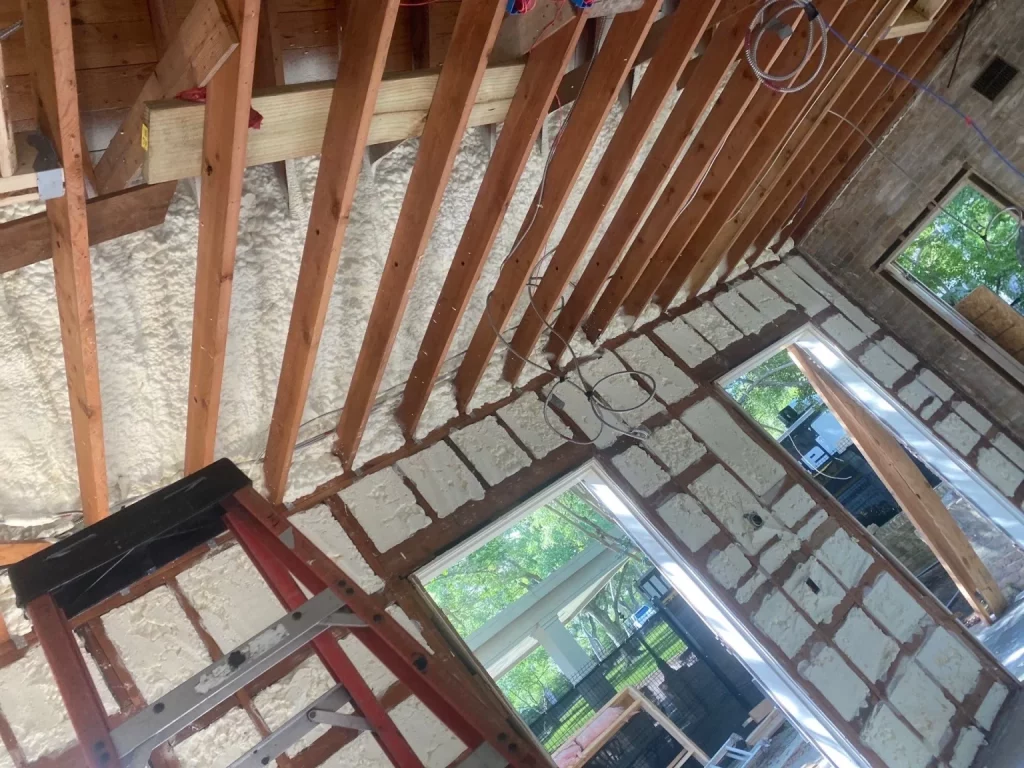
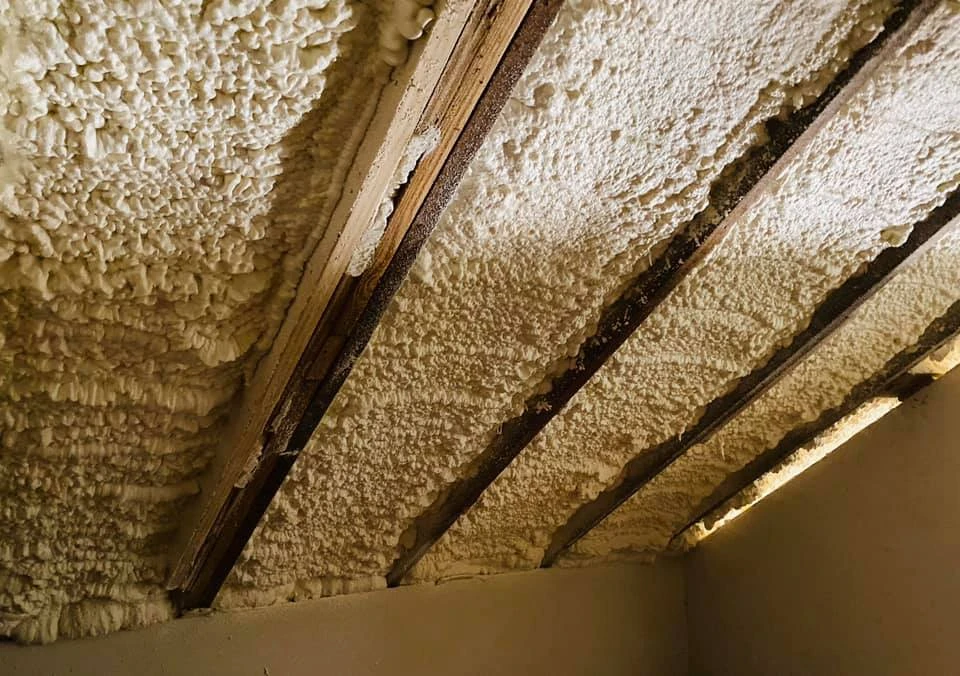
Open-cell spray foam has an R-value of approximately R-3.7 per inch. It expands significantly to fill cavities, is flexible, and works well in wall framing and hard-to-reach areas. It is less expensive than closed-cell but does not provide a vapor barrier.
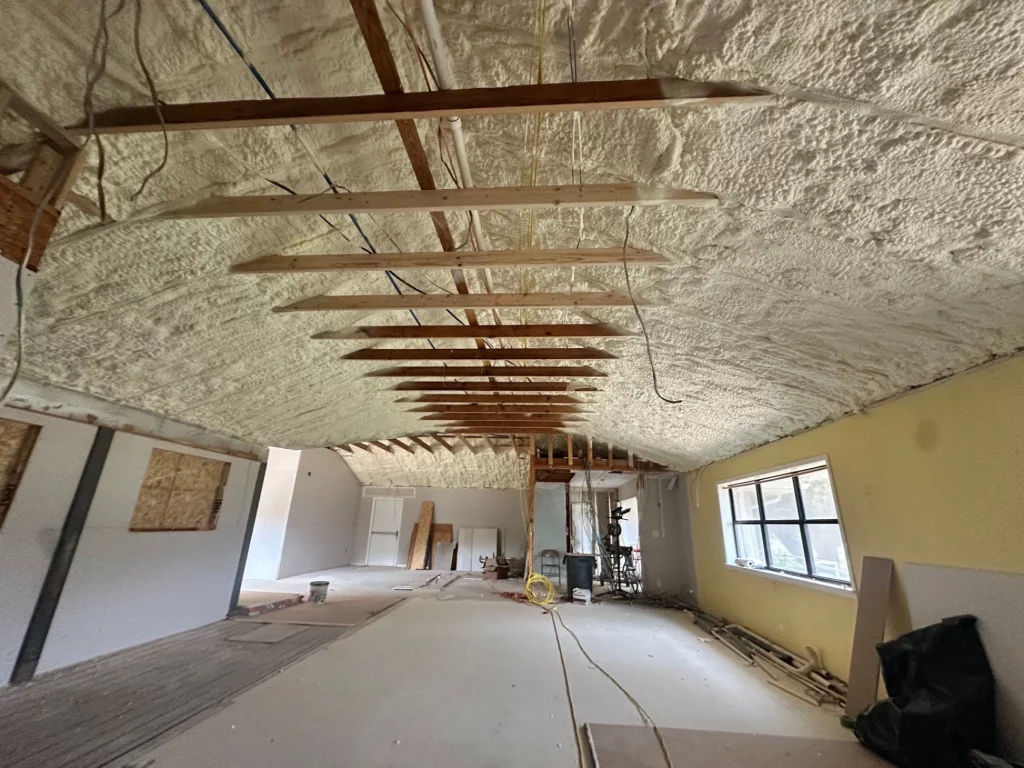
Closed-cell spray foam delivers R-6 to R-7 per inch, is denser, and acts as both a vapor barrier and a moisture barrier. It adds structural rigidity to wall assemblies and is the only cavity insulation recognized by FEMA as flood-damage resistant material. For Fredericksburg homeowners dealing with occasional heavy rains and humidity concerns, closed-cell is the stronger choice.
Key advantages of spray foam in the Fredericksburg climate:
- Eliminates air infiltration at the source by expanding to fill gaps, cracks, and penetrations
- Reduces HVAC system sizing requirements because the building envelope is tighter
- Resists mold growth because it does not absorb moisture (closed-cell)
- Maintains its R-value over decades without settling or degrading
- Works in metal buildings, which are common in the Hill Country for workshops, barns, and barndominiums
Blown-In Insulation: The Practical, Budget-Conscious Option
Blown-in insulation is available in two primary materials:
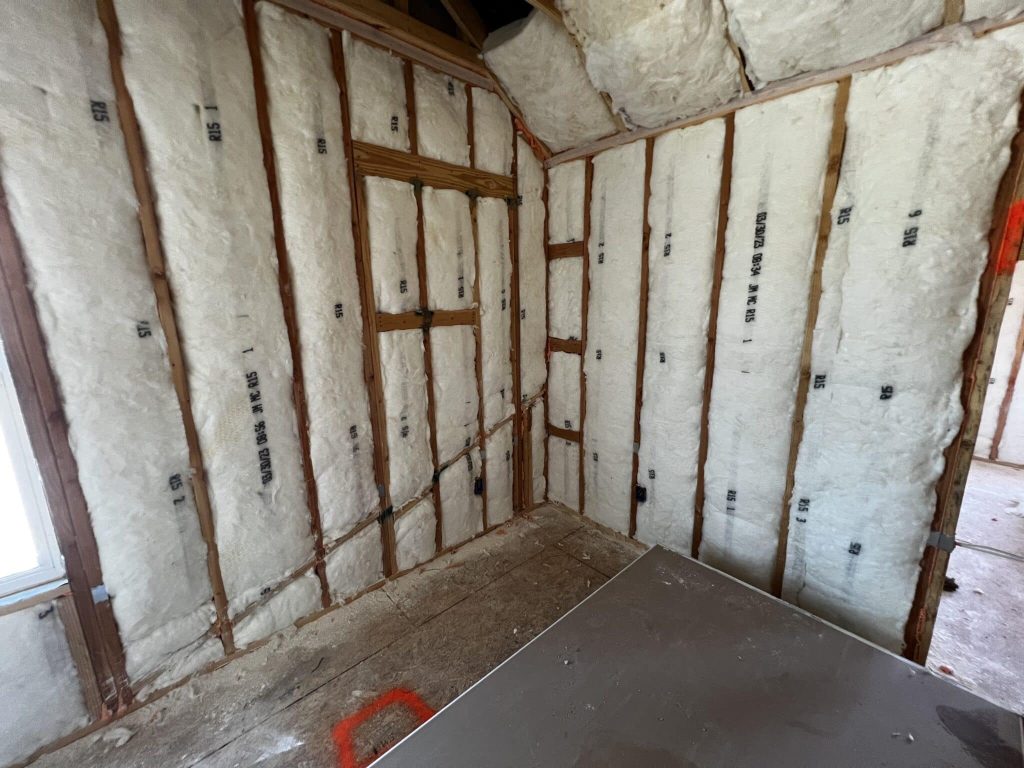
Fiberglass is the most common and affordable option, with an R-value of roughly R-2.2 to R-2.7 per inch. It is lightweight, fire-resistant, and widely available.
Cellulose is made from recycled paper treated with fire retardants and delivers approximately R-3.2 to R-3.7 per inch. It fills cavities more completely than fiberglass and has slightly better sound-dampening qualities.
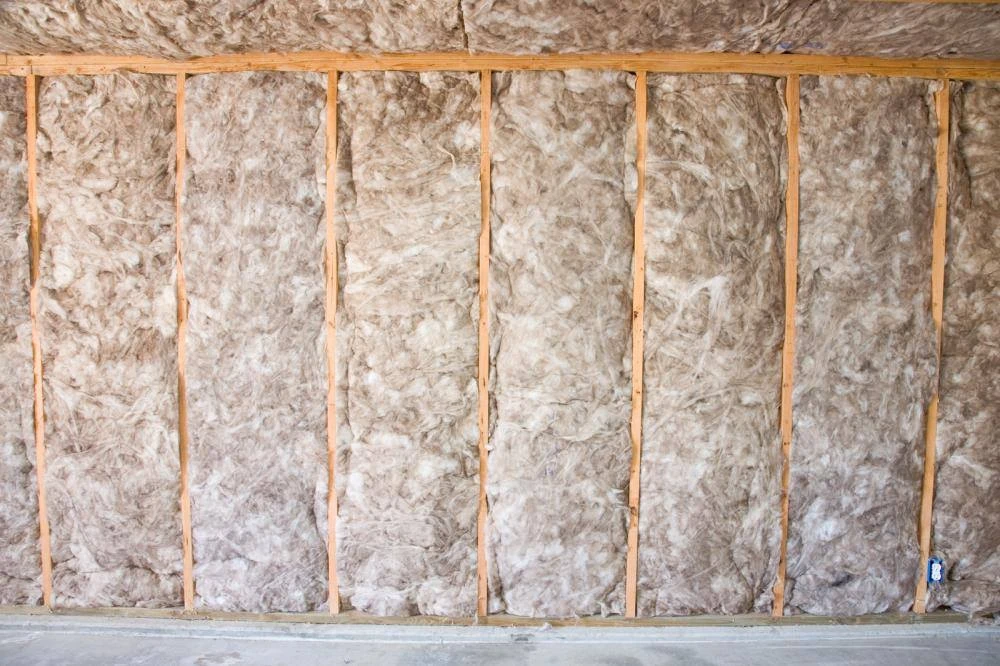
Blown-in insulation is installed using a machine that blows loose material into attic floors or wall cavities through small holes. It works well for retrofitting existing homes where opening walls is impractical.
Where blown-in insulation works best in Fredericksburg:
- Attic floors where adding depth to reach R-49 or R-60 is the primary goal
- Existing wall cavities in older homes where drywall cannot be removed
- Budget-conscious projects where upfront cost is the deciding factor
- Homes that already have reasonable air sealing and just need more thermal resistance
Cost Comparison for a Typical Fredericksburg Home
The following estimates are based on a 2,000 square foot home in Fredericksburg needing both attic and wall insulation. Actual costs vary based on existing conditions, accessibility, and material choices.
| Area | Spray Foam (Closed-Cell) | Blown-In Cellulose |
|---|---|---|
| Attic (R-49 target) | $8,000 to $14,000 | $2,000 to $4,500 |
| Walls (R-20 target) | $5,000 to $9,000 | $1,500 to $3,000 |
| Crawl Space / Rim Joist | $1,500 to $3,000 | $500 to $1,200 |
| Total Estimated Range | $14,500 to $26,000 | $4,000 to $8,700 |
Spray foam costs roughly two to three times more upfront, but the energy savings over time can offset the difference. Homes insulated with spray foam typically see 30 to 50 percent reductions in heating and cooling energy consumption, according to industry data from the SPFA.
Real-World Scenarios in Fredericksburg
Every property has different needs. Here are five realistic scenarios we encounter regularly in the Hill Country:
| Scenario | Property Type | Recommended Option | Estimated Cost |
|---|---|---|---|
| New construction with metal roof and open framing | Custom home build | Closed-cell spray foam (walls and ceiling) | $15,000 to $25,000 |
| 1970s ranch home, hot upstairs, high energy bills | Existing single-family home | Blown-in cellulose in attic + air sealing | $3,000 to $5,500 |
| Barndominium with metal building shell | Metal building conversion | Closed-cell spray foam (walls and roof deck) | $12,000 to $20,000 |
| Historic limestone home near downtown Fredericksburg | Older stone construction | Open-cell spray foam (walls) + blown-in attic | $6,000 to $12,000 |
| Guest house or casita on acreage | Small accessory dwelling | Blown-in fiberglass (attic) + spray foam rim joist | $2,000 to $4,000 |
Factors That Influence the Decision
Several variables determine which insulation type makes the most sense for a specific project:
- Property age and construction type: newer homes with open framing benefit most from spray foam; older homes with finished walls may only be practical candidates for blown-in attic insulation
- Existing air sealing condition: if the building envelope already has good air sealing, blown-in insulation can deliver strong results at lower cost
- Budget constraints: blown-in insulation is the clear winner for upfront cost savings
- Moisture exposure: crawl spaces, basements, and flood-prone areas benefit from closed-cell spray foam’s moisture resistance
- HVAC system size and condition: spray foam’s air sealing can allow for smaller, more efficient HVAC equipment
- Long-term ownership plans: homeowners planning to stay for decades benefit more from spray foam’s longevity and energy savings
Which Option Is Right for You
Spray foam insulation is the better fit if:
- You are building new or doing a major renovation with exposed framing
- You want the best possible energy efficiency and indoor comfort
- Moisture control and air quality are priorities
- You own a metal building, barndominium, or home with vaulted ceilings
- You plan to own the property long-term and want maximum return on investment
Blown-in insulation is the better fit if:
- You are upgrading an existing home and cannot open walls
- Your budget is limited and you need the most thermal resistance per dollar
- The home already has adequate air sealing and primarily needs more attic insulation
- You are improving a rental property or flip where upfront cost matters more than long-term performance
- The project is limited to attic floor insulation only
Get a Professional Insulation Assessment for Your Fredericksburg Property
Choosing between spray foam and blown-in insulation is not a one-size-fits-all decision. The right answer depends on your property’s construction, condition, budget, and long-term goals. Our team at Stellrr Insulation & Spray Foam has worked extensively with homes and buildings throughout the Fredericksburg area and the Texas Hill Country. We evaluate each project individually and recommend the insulation solution that delivers the best performance for your specific situation.
Request a Quote | Schedule an Insulation Assessment
Call us at 512-520-0044 or email info@stellrr.com to get started. We provide honest recommendations backed by building science, not upselling. The right insulation choice today means lower energy bills, better comfort, and a healthier home for decades to come.
Is spray foam insulation worth the extra cost in Fredericksburg?
For most homeowners planning to stay in their home long-term, yes. The combination of air sealing and higher R-value per inch delivers measurable energy savings that offset the higher upfront investment over time.
Can blown-in insulation be added on top of existing insulation?
Yes, blown-in fiberglass or cellulose can be installed over existing insulation in attics, as long as there is no moisture damage, mold, or compression in the existing layer. A professional inspection should come first.
Does spray foam insulation require special ventilation?
Because spray foam creates a tight building envelope, mechanical ventilation is often recommended to maintain healthy indoor air quality. This is a standard consideration for any tightly sealed home.
How long does blown-in insulation last compared to spray foam?
Blown-in insulation can last 20 to 30 years but may settle over time, reducing its effectiveness. Spray foam insulation typically lasts 80+ years without settling or degrading.
Is closed-cell or open-cell spray foam better for the Texas Hill Country?
Closed-cell spray foam is generally the better choice for Fredericksburg because it provides a vapor barrier, resists moisture, and delivers higher R-value per inch, which matters in a hot, humid climate zone.
Sources
- ENERGY STAR – Insulation Fact Sheet – Official reference document covering R-value requirements, insulation materials, and performance standards for residential buildings.
- Spray Polyurethane Foam Alliance – Benefits of SPF – Industry organization providing data on spray foam insulation performance, including air sealing, moisture resistance, and energy efficiency.
- Rmax – Building Code Insulation Requirements in Texas – Breakdown of IECC climate zones in Texas, code-compliant R-values, and residential and commercial insulation requirements.