When your HVAC system works harder than necessary to maintain comfortable temperatures, the culprit is often hiding right above your living spaces. Attic insulation acts as a thermal barrier between your conditioned living areas and the extreme temperatures outside, and without adequate coverage, your heating and cooling equipment must run longer cycles to compensate for constant heat transfer. This increased workload accelerates wear on components, drives up monthly utility bills, and shortens the overall lifespan of your climate control investment.
Most residential HVAC systems in warm climates spend significant time in the attic, where temperatures can soar well above interior setpoints during summer months. Without proper insulation, the ductwork absorbs this excess heat, forcing your system to work against thermal gain at every cycle. The solution is straightforward: ensure your attic has sufficient insulation depth and quality to create an effective barrier, keeping conditioned air where it belongs and preventing unwanted heat exchange.
TLDR / Key Takeaways
- Attic insulation R-values below R-38 in warm climates allow significant thermal transfer that forces HVAC systems to run 30-50% longer cycles
- Uninsulated or poorly insulated attics can increase cooling costs by 15-25% during peak summer months
- HVAC efficiency loss from insulation gaps primarily affects the ductwork, which can lose 20-30% of conditioned air through leaks and heat absorption
- Proper insulation extends HVAC equipment lifespan by reducing cyclic stress and runtime hours
- The most common insulation gaps occur around duct penetrations, attic access points, and above exterior walls
- Spray foam and blown-in cellulose provide superior coverage in irregular attic spaces compared to batts alone
- Insulation degradation over time reduces R-values and should be inspected every 5-7 years
- Energy audits from qualified professionals can identify specific insulation deficiencies costing you money
Why Attic Heat Becomes Your HVAC’s Worst Enemy
The attic environment creates a continuous thermal challenge for your climate control system. During summer months in Austin, uninsulated attics can reach temperatures exceeding 130 degrees Fahrenheit, while winter nights can drop them well below freezing. This extreme temperature swing means your HVAC system faces a thermal gradient across your ceiling and ductwork that fluctuates daily.
Without adequate insulation, your ceiling becomes a direct pathway for heat transfer into your conditioned living spaces. Your cooling system must remove this accumulated heat while simultaneously battling new influx through your ceiling and ductwork. This creates a compounding effect where each degree of temperature difference between your attic and interior requires additional energy to overcome.
Ductwork located in the attic faces an even more direct challenge. Exposed supply and return ducts absorb attic heat during the cooling season, raising the temperature of conditioned air before it reaches your registers. By the time air arrives at your vents, it may be several degrees warmer than when it left the air handler, meaning your system must overcool to compensate. The reverse occurs during heating season, when cold attic temperatures chill ducts and extract heat from your conditioned air supply.
The Science of Heat Transfer and HVAC Workload
Understanding how heat moves through your home helps explain why insulation matters so much for efficiency. Heat naturally flows from warmer spaces to cooler spaces through three mechanisms: conduction, convection, and radiation. Your ceiling and ductwork in the attic experience all three simultaneously.
Conduction transfers heat through solid materials like drywall, wood joists, and duct metal. Without insulation interrupting this pathway, your ceiling materials conduct heat continuously from the attic into your living spaces. Convection moves heat through air currents, and in uninsulated attics, hot air that accumulates near the roof deck can seep through gaps around light fixtures, ceiling penetrations, and access doors. Radiation transfers heat from hot surfaces like exposed ductwork directly to cooler surroundings, and metal ducts exposed to attic heat radiate that warmth to the air passing through them.
Each mechanism operating in your attic creates additional cooling demand that your HVAC system must satisfy. Insulation interrupts all three pathways by trapping air within its structure, creating dead air spaces that slow conductive transfer, reducing convection currents near your ceiling, and absorbing or reflecting radiant energy before it reaches your living spaces.
Common Insulation Problems in Attic HVAC Setups
Several specific issues contribute to efficiency losses in attic-mounted HVAC systems. Identifying these problems helps you understand what needs correction during insulation improvement.
Gaps Around Duct Penetrations
The passages where ducts pass through your ceiling represent thermal weak points in your building envelope. These penetrations require proper sealing and insulation around their perimeter, but builders often leave gaps that allow conditioned air to escape into the attic while letting heat infiltrate downward. Over time, these gaps widen from settling, temperature cycling, and moisture exposure.
Inadequate Insulation Depth
Building codes establish minimum spray foam insulation requirements, but these minimums often fall short for optimal HVAC efficiency. Many older homes in Austin have attic insulation levels of R-19 or less, while current recommendations for the region suggest R-38 to R-49 for attics with HVAC equipment. This gap between existing and recommended insulation leaves significant efficiency gains unrealized.
Compressed or Settled Insulation
Fiberglass batts that become compressed under storage items, foot traffic, or settling lose their effectiveness rapidly. When insulation is squeezed into a thinner profile, the same amount of material provides a lower R-value because its insulating capability depends partially on trapped air volume. Blown-in insulation can also settle over time, creating thin spots where heat transfers more readily.
Missing or Damaged Vapor Barriers
In humid climates, moisture vapor moving upward through your ceiling can condense within insulation, reducing its effectiveness and potentially causing mold problems. Vapor barriers installed on the warm side of insulation help manage this moisture movement, but damage from renovations, pest activity, or normal wear can compromise their function.
Air Sealing Deficiencies
Insulation and air sealing serve complementary roles, and neglecting one undermines the other.
Comparing Insulation Types for Attic HVAC Efficiency
| Insulation Type | R-Value per Inch | Best Application | Pros | Cons |
|---|---|---|---|---|
| Fiberglass Batts | R-2.8 to R-3.8 | Flat attic floors between joists | Affordable, DIY-friendly | Gaps around joists, compression issues |
| Blown-in Cellulose | R-3.2 to R-3.8 | Filling irregular spaces, existing walls | Fills gaps thoroughly, good sound dampening | Can settle over time, dust during installation |
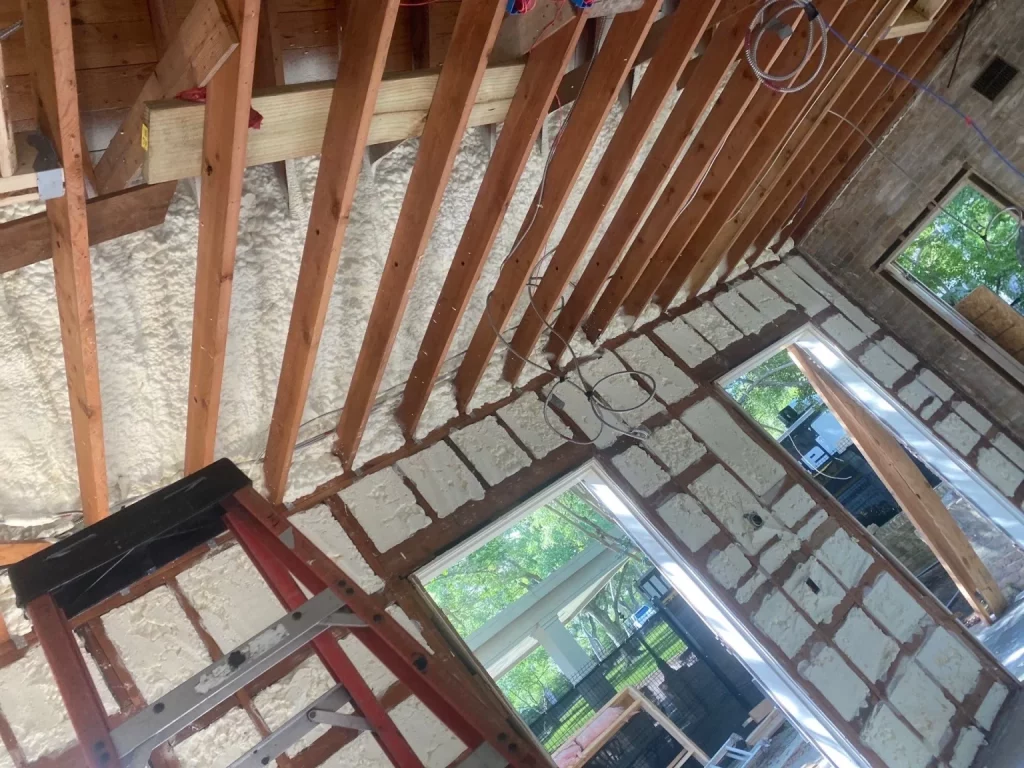
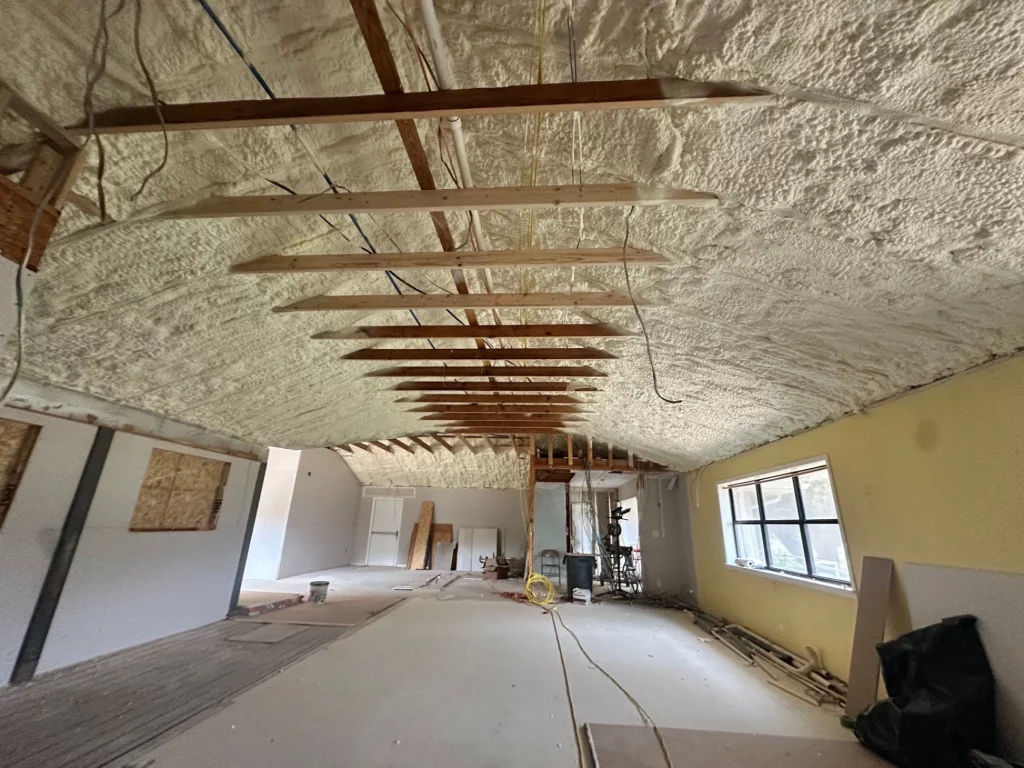
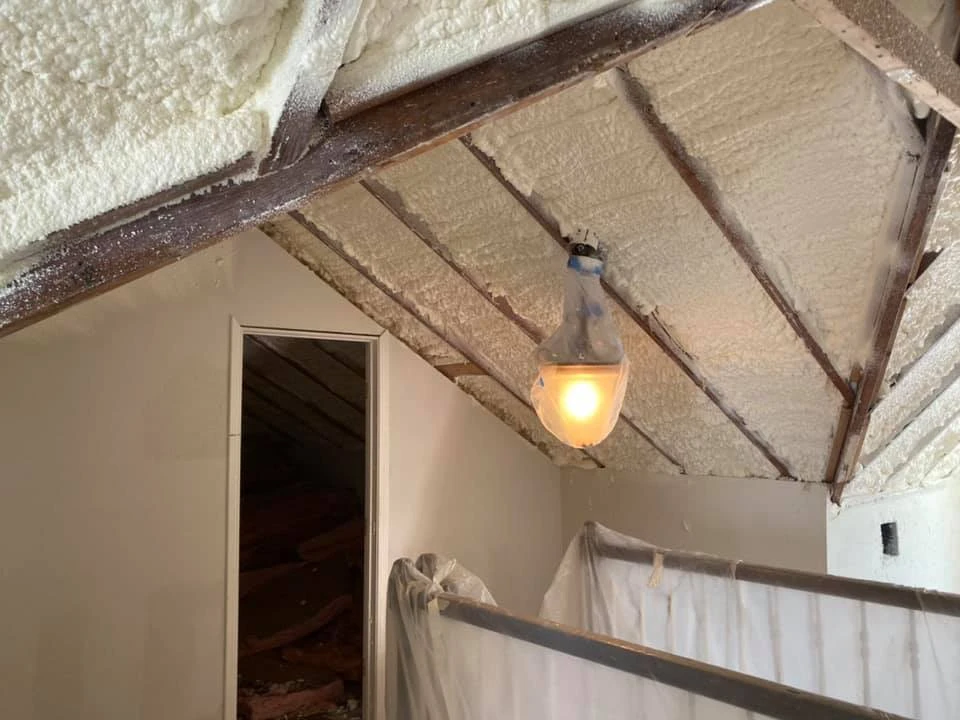
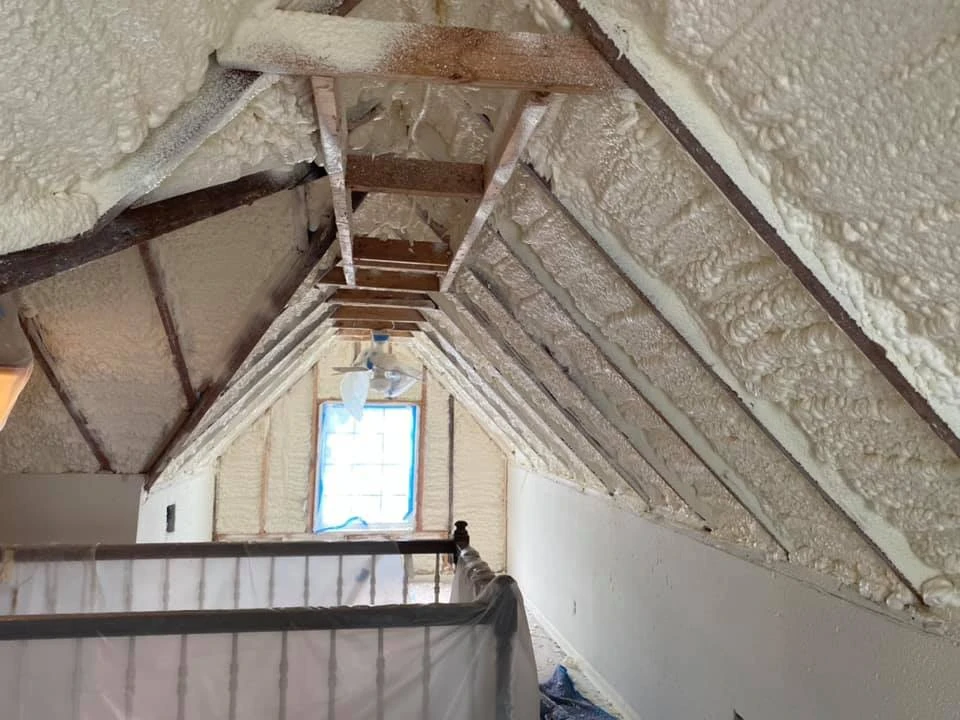
| Spray Foam (Open Cell) | R-3.5 to R-3.8 | Vaulted ceilings, irregular cavities | Air sealing included, conforms to any shape | Higher upfront cost, professional installation required |
| Spray Foam (Closed Cell) | R-6.0 to R-7.0 | High-performance applications | Highest R-value, moisture barrier, structural support | Most expensive, chemical smell during cure |
Fiberglass batts remain the most common insulation material in residential applications due to their lower cost and availability, but they require careful installation to avoid gaps, compression, and air leaks around joists. Blown-in cellulose or fiberglass provides superior coverage in attics with irregular surfaces, protruding joists, and hard-to-reach corners. Spray foam, while more expensive, offers the added benefit of air sealing when applied around ductwork and building penetrations.
For attic HVAC applications specifically, many energy specialists recommend combining approaches. A base layer of blown-in insulation across the attic floor, supplemented by spray foam around ductwork and penetrations, provides both high R-value and comprehensive air sealing. This hybrid approach addresses the primary efficiency losses while managing costs through strategic material selection.
Signs Your HVAC System Is Struggling Due to Attic Insulation
Recognizing the symptoms of insulation-related efficiency problems helps you address them before they cause equipment damage or excessive utility bills.
Higher than expected summer utility bills that track closely with outdoor temperature swings suggest your cooling system is working overtime against heat infiltration from your attic. If your thermostat calls for cooling but rooms never quite reach comfort setpoints, or if certain rooms maintain different temperatures than others, insulation gaps or duct leakage may be the cause. Your system running continuously during moderate weather, when it should cycle on and off periodically, indicates it cannot achieve setpoint against persistent heat loads.
Unusual noises from your HVAC system, particularly clicking, banging, or prolonged runtime sounds, can indicate overwork from excessive thermal load. Your air conditioner freezing up during summer operation, despite warm outdoor temperatures, sometimes results from low refrigerant charge caused by the system working too hard for too long. Finally, if your HVAC equipment requires frequent service calls or shows signs of wear well before its expected lifespan, thermal stress from poor insulation may be accelerating component failure.
How Attic Insulation Improves HVAC Efficiency and Longevity
Proper attic insulation delivers measurable benefits for your HVAC system performance and operational costs. When insulation creates an effective thermal barrier, your heating and cooling equipment runs shorter cycles to achieve and maintain comfort setpoints. Reduced runtime means lower monthly utility bills, fewer cycling events that stress compressors and motors, and slower accumulation of wear hours on critical components.
Ductwork in a properly insulated attic maintains temperatures closer to the conditioned air passing through it. This thermal stability means air arrives at your registers at or near the temperature your system intended, improving comfort consistency and removing the need for your system to overcool to compensate for duct heat gain. Spray foam insulation applied directly to ductwork surfaces provides the additional benefit of sealing leakage points that can account for 20-30% of conditioned air loss in some homes.
Temperature consistency throughout your home improves when insulation reduces the thermal variability entering through your ceiling. Rooms that previously felt drafty in summer or cold in winter often achieve comfort with properly insulated attics, reducing the tendency to set thermostats to extreme temperatures that increase system workload.
Evaluation Approaches for Attic Insulation Assessment
Professional energy audits provide a comprehensive evaluation of your attic insulation and its impact on HVAC performance. These assessments use blower door tests to identify air leakage locations, infrared cameras to visualize temperature differences across surfaces, and insulation depth measurements to calculate current R-values.
A simple visual inspection from your attic access can reveal obvious insulation gaps, compressed areas, and damage signs. Walk carefully across ceiling joists if you access your attic, noting areas where insulation appears thin or absent. Check around ductwork, at the eaves where attic meets exterior walls, and around any ceiling penetrations for light gaps or thin coverage.
Attic temperature monitoring during extreme weather conditions can help quantify the thermal challenge your system faces. Thermometers placed in your attic and near your ceiling registers can demonstrate temperature differentials that insulation should mitigate. A difference of more than 40 degrees between attic and interior living spaces indicates a significant opportunity for efficiency improvement.
Our Approach to Attic Insulation and HVAC Efficiency
Stellrr Insulation & Spray Foam understands that attic insulation represents an investment in your home’s energy performance and your HVAC system’s operational efficiency. Our team evaluates each home’s specific situation, considering factors like existing insulation type and condition, HVAC equipment age and capacity, ductwork configuration and condition, and your comfort complaints and utility cost concerns.
Our attic insulation services address the specific challenges that affect HVAC efficiency, from air sealing around penetrations to proper insulation depth across your entire attic floor. We work alongside our HVAC installation and service teams to ensure that envelope improvements deliver the efficiency gains your climate control system deserves.
Ready to stop wasting money on a system that works harder than it should? Contact our team to discuss your attic insulation needs, or request a quote for professional assessment and installation.
Email: info@stellrr.com
Phone: 512-520-0044
Let us help you create an attic environment that supports rather than sabotages your HVAC system performance. Proper insulation pays for itself through reduced utility bills, extended equipment lifespan, and improved comfort throughout your home.
Frequently Asked Questions
How can I tell if my attic insulation is insufficient without professional testing?
Check your insulation depth against the ceiling joists. If insulation comes to the top of joists or falls below, you likely need more. Look for gaps, compression, and areas where insulation has been disturbed. A simple test involves placing a thermometer in your attic during peak afternoon heat and comparing readings to your interior thermostat location.
Will adding more insulation to my attic void my HVAC warranty?
Attic insulation does not affect your HVAC warranty directly. However, if technicians need to access your attic for service and excessive insulation or poor access conditions cause damage during service, some warranty claims may be complicated. Proper attic access and clear working areas around equipment help prevent service-related issues.
How long does attic insulation last before needing replacement?
Quality insulation can last 20-30 years with proper conditions. However, fiberglass batts may compress over time, cellulose can settle, and any insulation can suffer damage from water intrusion, pests, or foot traffic. Inspections every 5-7 years help identify degradation before efficiency losses become significant.
Can I add new insulation over my existing insulation, or do I need to remove it first?
In most cases, you can add new insulation over existing material without removal. This approach, called Topping Up, works well when existing insulation is dry, undamaged, and not excessively compressed. The new material adds R-value and fills gaps that may exist in the original installation.
Does the color or type of my roof affect how much insulation I need?
Roofing material affects attic temperature significantly. Dark asphalt shingles absorb more heat than light-colored reflective materials, creating hotter attic conditions that demand more insulation to maintain efficiency. Roof ventilation also plays a role, with proper intake and exhaust ventilation helping manage attic temperatures regardless of roofing material.
Sources
- Energy.gov – Insulation – Comprehensive government resource on insulation types, R-values, and installation recommendations for residential applications.
- EPA – Home Energy Audits – EPA guidance on conducting home energy assessments and identifying efficiency opportunities including insulation deficiencies.
- ENERGY STAR – Insulation and Air Sealing – Guidelines on proper insulation and air sealing techniques that improve HVAC system efficiency in residential homes.
- Building Performance Institute – Technical Standards – Professional standards organization for building performance diagnostics and energy efficiency retrofit practices.