Spray foam insulation is one of the most effective ways to improve a home’s energy efficiency because it works as both an insulator and an air sealant in a single application. Unlike traditional fiberglass batts or blown-in cellulose, spray foam expands on contact to fill gaps, cracks, and hard-to-reach cavities, creating a continuous thermal barrier that resists heat transfer and blocks air infiltration. For homeowners looking to reduce utility bills, improve indoor comfort, and strengthen their building envelope, spray foam delivers measurable results across attics, walls, crawl spaces, and basements. The right approach depends on your climate zone, budget, and project scope, but both open-cell and closed-cell formulations offer distinct advantages that outperform conventional insulation in real-world performance.
TLDR: Key Takeaways
- Spray foam insulation can reduce home heating and cooling costs by up to 20% when combined with proper air sealing, according to Energy Star.
- Closed-cell spray foam delivers an R-value of up to 7.0 per inch, more than double the 3.2 per inch of fiberglass, as documented by Lowe’s.
- Air infiltration accounts for up to 40% of a building’s energy loss, and spray foam addresses this directly by expanding to seal gaps and cracks during installation.
- Homes insulated with spray foam may allow HVAC systems to be downsized by up to 35% without sacrificing comfort or efficiency.
- The spray foam insulation industry is a $2.78 billion sector employing nearly 55,000 people across the U.S., reflecting its growing adoption in both new construction and retrofit projects.
- Closed-cell spray foam is the only cavity insulation rated by FEMA as flood-damage resistant for areas with high moisture exposure.
- Typical return on investment for spray foam insulation falls between 3 and 7 years, depending on home size, climate, and existing insulation conditions.
How Spray Foam Insulation Works
Spray polyurethane foam (SPF) is created by mixing two liquid chemicals, isocyanate and polyol resin, at the point of application. When sprayed, the mixture expands up to 100 times its original volume, filling every crack, crevice, and void in the target area. Once cured, it hardens into a solid material that resists heat flow, blocks air movement, and in the case of closed-cell formulations, acts as a moisture barrier.
The U.S. Department of Energy explains that insulation works by providing resistance to heat flow through conduction, convection, and radiation. Higher R-values indicate greater insulating effectiveness. What separates spray foam from other materials is its ability to fill the building cavity completely, eliminating the gaps and compression issues that reduce the effective R-value of batt insulation. Even a small percentage of air gaps in fiberglass can reduce its real-world performance by 30% or more.
Open-Cell vs. Closed-Cell Spray Foam
Not all spray foam is the same. The two primary types, open-cell and closed-cell, serve different purposes and are suited to different areas of the home.
| Feature | Open-Cell Spray Foam | Closed-Cell Spray Foam |
|---|---|---|
| R-Value per Inch | ~3.5 | ~6.5 to 7.0 |
| Density | Low (softer, flexible) | High (rigid, dense) |
| Air Barrier | Yes | Yes |
| Moisture Barrier | No (vapor permeable) | Yes (vapor impermeable) |
| Best Applications | Walls, attics, ceilings | Crawl spaces, basements, rim joists, roofs |
| Expansion | Expands significantly | Expands moderately |
| Cost | Lower per board foot | Higher per board foot |
| Sound Dampening | Excellent | Good |
Open-cell spray foam is a strong choice for interior walls and attic cavities where moisture resistance is not a primary concern. It offers superior sound dampening and fills large areas at a lower material cost. Closed-cell spray foam is the better option for below-grade applications, crawl spaces, and anywhere moisture control is essential. According to the Spray Polyurethane Foam Alliance, closed-cell foam is also the only cavity insulation recognized by FEMA as flood-damage resistant, capable of withstanding floodwaters for up to 72 hours.
Spray Foam vs. Traditional Insulation Materials
When homeowners compare insulation options, the conversation usually centers on spray foam versus fiberglass. Here is how they stack up across the factors that matter most.
| Factor | Spray Foam Insulation | Fiberglass Insulation |
|---|---|---|
| R-Value per Inch | 3.5 (open-cell) to 7.0 (closed-cell) | ~3.2 |
| Air Sealing | Built-in during application | None, requires separate air barrier |
| Moisture Resistance | Closed-cell is water-resistant | Absorbs moisture, loses R-value |
| Lifespan | 80 to 100+ years | 10 to 15 years before replacement common |
| Installation | Professional application, fast curing | Can be DIY but prone to gaps |
| Settling or Sagging | Does not settle or sag | Can sag over time, reducing effectiveness |
| Upfront Cost | Higher | Lower |
As Lowe’s buying guide notes, fiberglass is less expensive upfront but may need replacement after a decade, while spray foam insulation lasts 80 to 100 years with minimal degradation. The higher initial investment in spray foam pays for itself through decades of reduced energy bills, fewer comfort complaints, and lower maintenance requirements.
Where Spray Foam Makes the Biggest Impact
Targeting the right areas of the home is essential for maximizing energy savings. These are the locations where spray foam delivers the highest return on investment.
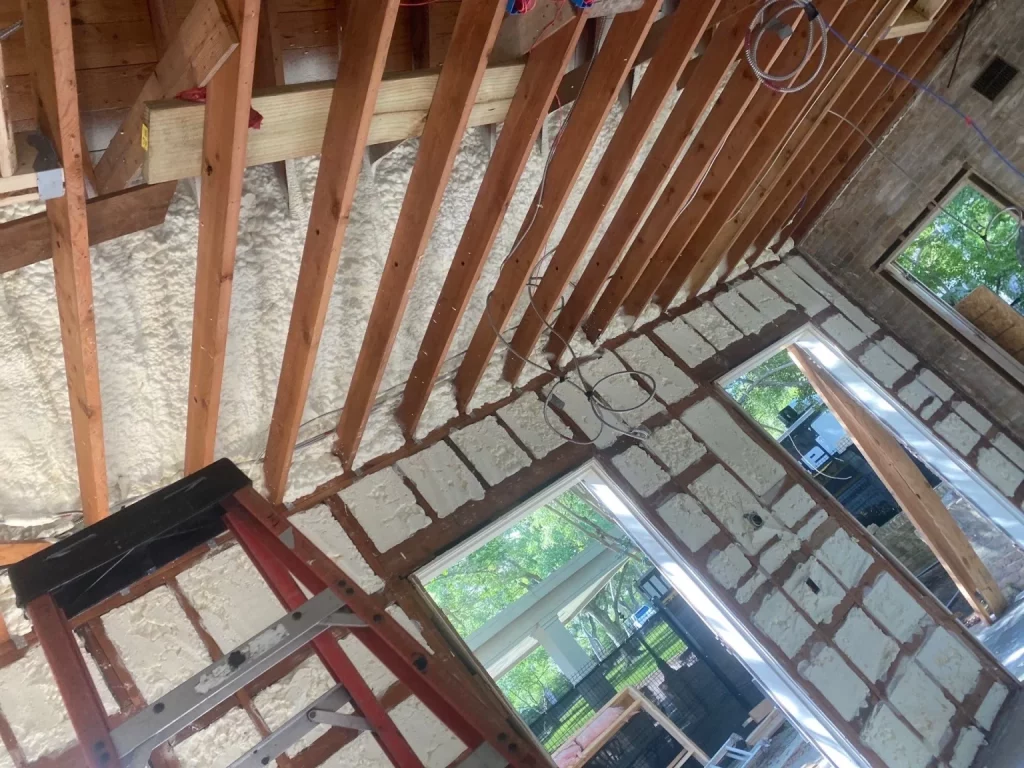
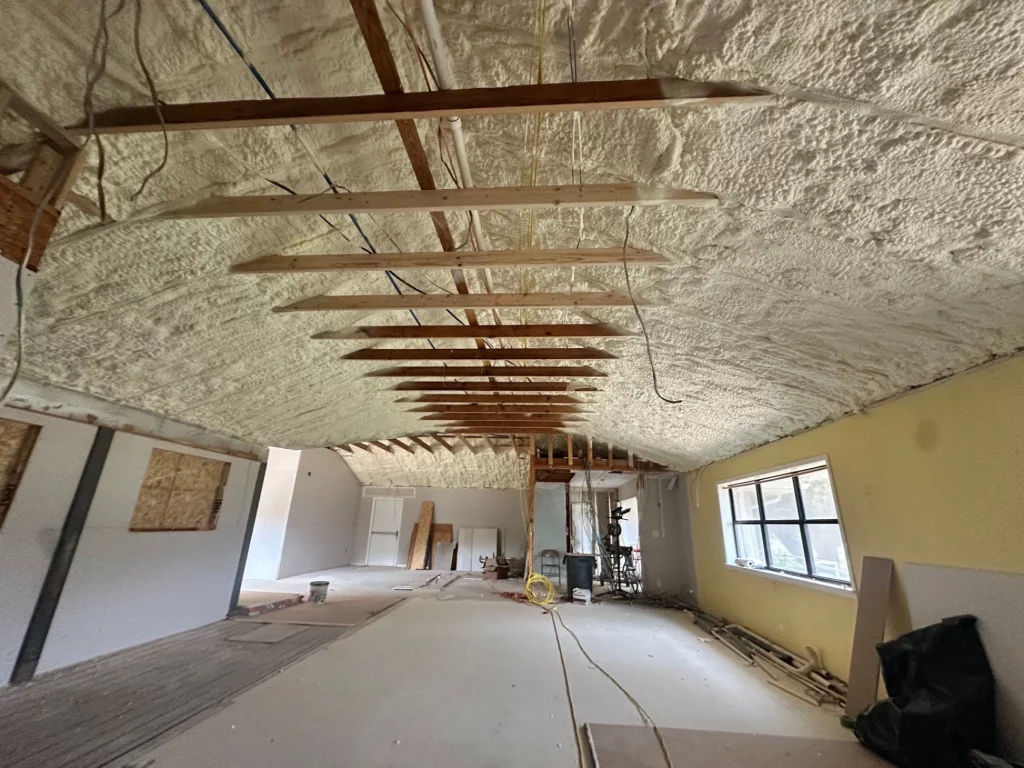
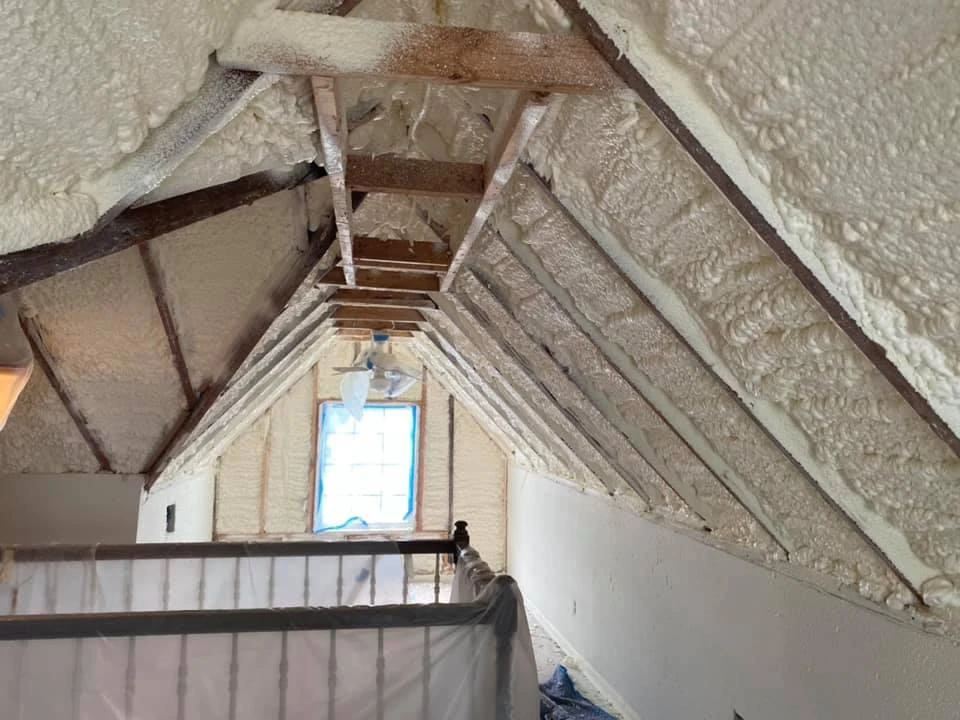
Attics and Rooflines. Attics are responsible for roughly 50% of a home’s energy loss. Applying closed-cell spray foam to the roof deck creates an unvented attic assembly that brings ductwork and HVAC equipment into the conditioned space, dramatically reducing energy waste. The WhySprayFoam resource notes that spray foam applied continuously in attics, crawlspaces, and basements provides a blanket of air-impermeable insulation that traditional materials cannot match.
Crawl Spaces and Basements. Ground-level spaces are prone to moisture intrusion, air leaks, and temperature fluctuations. Closed-cell spray foam applied to rim joists, foundation walls, and floor assemblies seals these areas against moisture and air infiltration while adding structural rigidity.
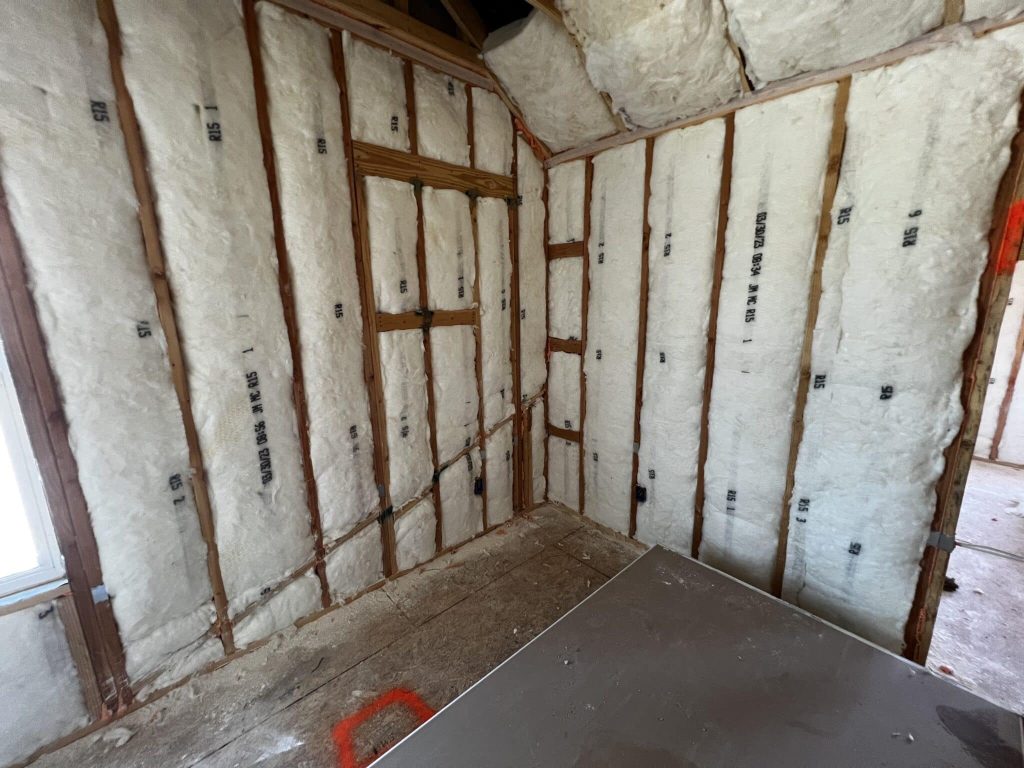
Walls and Ceiling Cavities. Open-cell spray foam fills wall studs and ceiling joists completely, eliminating the voids and gaps that plague fiberglass batt installations. This improves both thermal performance and sound isolation between rooms.
Rim Joists and Band Joists. These transitional areas between the foundation and framed walls are among the leakiest parts of any home. Spray foam fills the irregular shapes and penetrations in rim joist areas that are nearly impossible to seal with rigid foam boards or fiberglass.
ROI and Energy Savings Expectations
The financial case for spray foam insulation is supported by both government data and real-world installations. The EPA’s Energy Star program estimates that homeowners can save up to 20% on heating and cooling costs by adding insulation and sealing air leaks. In practice, homeowners report annual savings of $200 to $600 on a 2,000 square foot home, with typical payback periods of 3 to 7 years.
The Institute for the Building Envelope (IBE) reports that the spray foam industry generates $2.78 billion in annual revenue and continues to grow at 5 to 10 percent year over year. New residential construction accounts for over $1.6 billion of that figure, which signals that builders increasingly view spray foam as a standard rather than a premium upgrade.
Beyond monthly utility savings, spray foam insulation contributes to higher home appraisals, reduced HVAC equipment sizing, lower insurance premiums in storm-prone regions, and eligibility for federal and state tax credits under the Inflation Reduction Act.
Recommendations by Home Type
| Home Type | Recommended Spray Foam Approach | Key Considerations |
|---|---|---|
| New Construction | Full envelope coverage with closed-cell in basements/crawl spaces and open-cell in walls and attics | Lower installation cost, optimal access, can right-size HVAC |
| Existing Home Retrofit | Priority areas first: attic, rim joists, crawl space | Higher per-project cost, may require removal of old insulation |
| Older Homes (Pre-1980) | Focus on air sealing with closed-cell in leak-prone areas | Often have significant air infiltration, may need remediation first |
| High-Performance / Net Zero | Full continuous spray foam envelope with mechanical ventilation | Maximizes efficiency, enables smaller HVAC and solar offset |
| Flood-Prone Areas | Closed-cell exclusively (FEMA-rated flood resistant) | Protects against moisture damage, qualifies for insurance benefits |
Signs You Have Chosen the Right Insulation Contractor
Selecting the right installer is just as important as choosing the right insulation material. Here are indicators of a qualified spray foam contractor:
- They perform a thorough pre-installation assessment, including a blower door test or energy audit, rather than quoting over the phone
- They explain the difference between open-cell and closed-cell foam and recommend the right product for each specific area of your home
- They discuss mechanical ventilation requirements, since a tighter building envelope requires controlled fresh air intake
- They carry relevant certifications and can provide references from recent projects in your area
- Their proposal includes detailed scope of work, material specifications, thickness targets, and warranty information
- They address moisture control, combustion safety, and building code compliance as part of the planning process
Get Expert Spray Foam Insulation for Your Home
Stellrr Insulation & Spray Foam specializes in high-performance spray foam insulation that cuts energy costs, improves indoor comfort, and strengthens your home’s building envelope. Our team evaluates your home’s specific needs and recommends the right spray foam solution for every area, from attics and walls to crawl spaces and rim joists. We handle every project with precision, transparency, and a commitment to long-lasting results.
Request a Quote | Schedule an Energy Assessment
Reach us at info@stellrr.com or call 512-520-0044 to get started.
Frequently Asked Questions
How long does spray foam insulation last?
Spray foam insulation is a permanent installation that lasts 80 to 100 years or more without significant degradation in R-value or performance.
Can spray foam insulation be installed in an existing home?
Yes, spray foam can be retrofitted into existing homes, with the best returns coming from insulating attics, crawl spaces, and rim joists where access allows.
Does spray foam require special ventilation after installation?
Occupants should remain out of the home during installation and for 24 hours afterward. Once cured, spray foam is inert, but the tighter building envelope may require adding mechanical ventilation.
Is spray foam insulation worth the higher upfront cost?
For most homeowners, the energy savings of 15 to 30% on heating and cooling bills, combined with the 80-plus year lifespan, make spray foam a strong long-term investment.
Can spray foam help with humidity and moisture problems?
Closed-cell spray foam acts as both an air barrier and a vapor barrier, making it effective at controlling moisture in crawl spaces, basements, and other humid areas.
Sources
- U.S. Department of Energy – Insulation – Comprehensive federal resource covering R-values, insulation types, climate zone recommendations, and the relationship between insulation, air sealing, and energy efficiency.
- Spray Polyurethane Foam Alliance – Benefits of SPF – Industry trade association providing data on SPF energy efficiency, FEMA flood-resistance ratings, sustainability, structural benefits, and indoor air quality considerations.
- Lowe’s – Spray Foam vs. Fiberglass Insulation Buying Guide – Retailer comparison covering R-values, water resistance, installation methods, cost differences, and expected lifespan of spray foam versus fiberglass insulation.