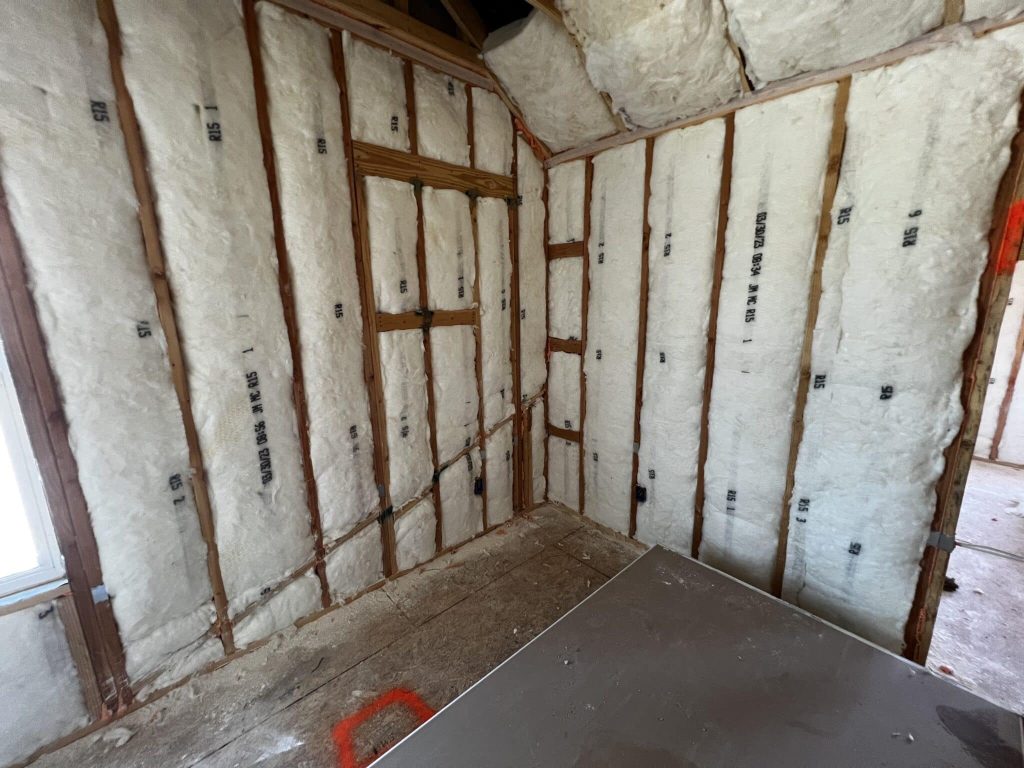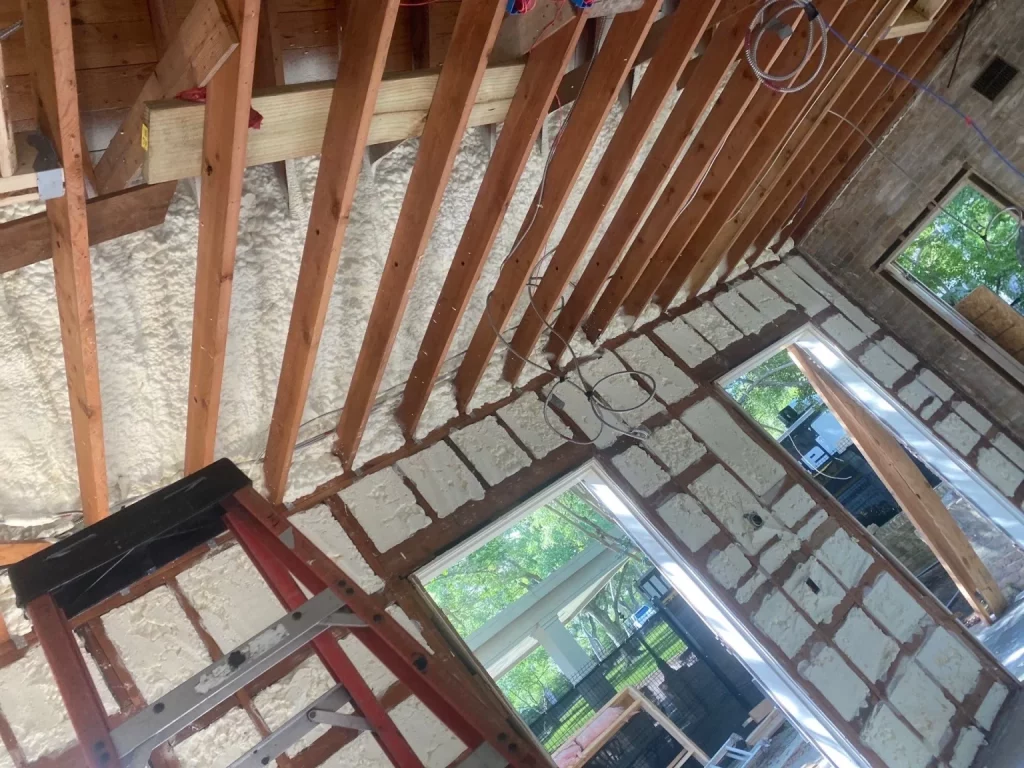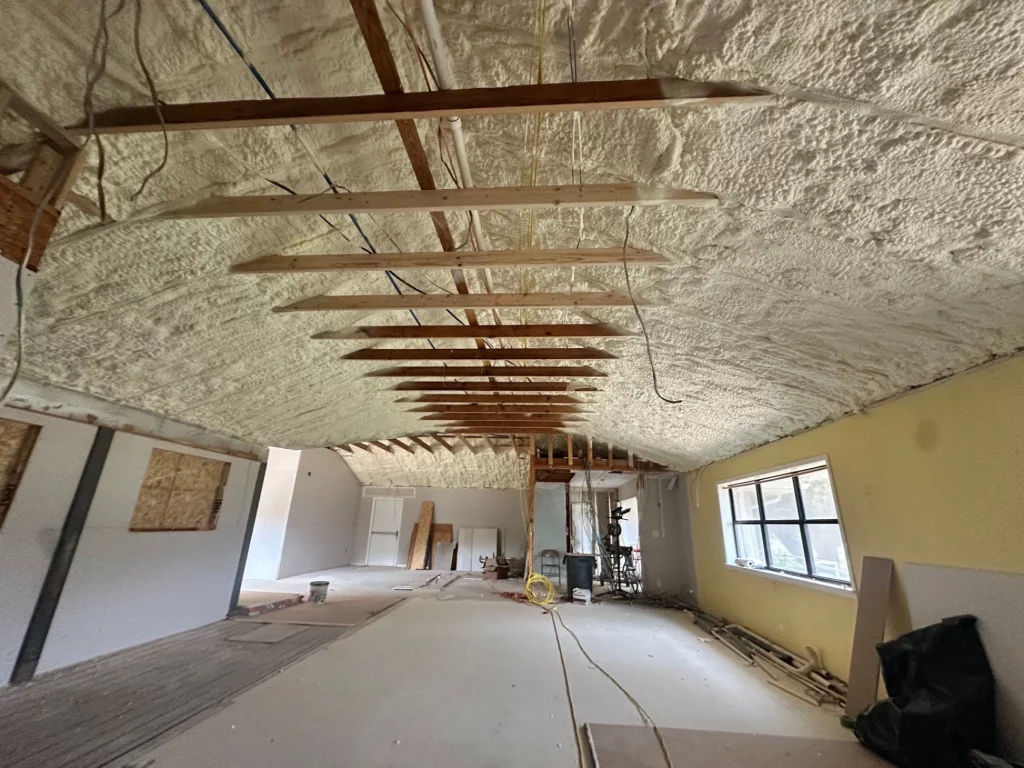
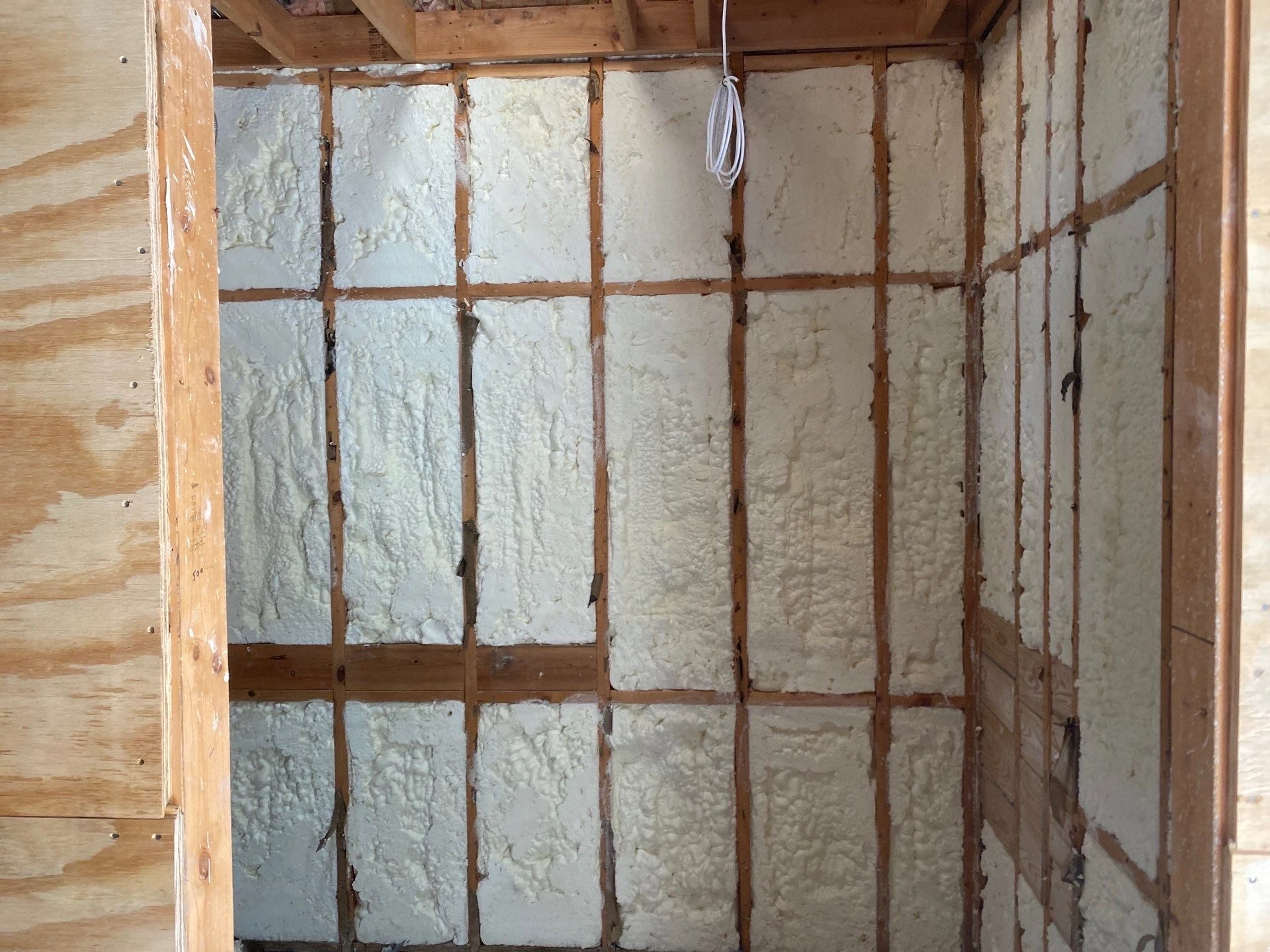
Spray foam insulation failure happens for several reasons, most of which trace back to poor installation practices, improper environmental conditions during application, or applying the wrong foam type for the building assembly. The most visible failures include shrinkage and delamination from framing, off-ratio chemical mixing that leads to persistent odors and poor curing, moisture trapping behind foam in unvented assemblies, and applying foam to damp or contaminated substrates. Identifying the specific cause is the first step to determining the right fix, and in many cases, the solution ranges from targeted re-spray with proper preparation to full mechanical removal and replacement.
TLDR: Key Takeaways
- Spray foam shrinkage pulls away from framing and studs, creating gaps that compromise the air barrier and thermal performance, often appearing as hidden gaps in insulation systems. Unrestrained closed-cell foam can shrink roughly 10% after curing according to manufacturer testing data.
- Off-ratio mixing of the A-side (isocyanate) and B-side (polyol resin) chemicals produces foam that may never fully cure, leading to persistent odors, sticky surfaces, and ongoing chemical off-gassing.
- Moisture trapped behind spray foam in roof assemblies or wall cavities causes condensation that rots sheathing and framing. The EPA notes that insulation is intended to seal a residence and can significantly decrease air exchanges, which means emissions from SPF and combustion sources can build up in a building.
- Ambient temperature and humidity at the time of installation directly affect cure quality. Manufacturers list minimum substrate temperatures, typically around 20F, and ccSPF must not be applied when the ambient temperature is within five percent of the dewpoint.
- Applying foam to high-moisture substrates like pressure-treated lumber or green concrete leads to delayed adhesion failure that may not appear until weeks after the installation looks acceptable.
- Open-cell foam used on exterior walls in cold climates without a separate vapor retarder allows moisture vapor to reach cold surfaces and condense, a problem Building Science Corporation addresses by recommending closed-cell foam for IECC Climate Zones 5 and higher.
- Proper fixes range from mechanical removal and reapplication to targeted patching, and in all cases the root cause, whether moisture, temperature, or substrate contamination, must be corrected before reinstallation.
Understanding the Root Causes of Spray Foam Failure
Spray polyurethane foam (SPF) insulation is widely used because it combines air sealing, vapor control, and thermal resistance in a single material. When everything goes right, SPF performs exceptionally well. When something goes wrong, the failure can be expensive to diagnose and correct. Understanding the primary failure modes helps contractors avoid problems and homeowners recognize warning signs early.
Shrinkage and Delamination
Shrinkage is one of the most common and visible spray foam failures. The chemical reaction that creates closed-cell spray polyurethane foam (ccSPF) is exothermic, meaning it generates heat as the foam expands and then cools. This thermal cycle produces tensile and shear stresses on the bonding surfaces. According to research published in the Closed-Cell Spray Polyurethane Foam: Shrinkage and How to Manage It – Construction Specifier, unrestrained ccSPF can shrink roughly 10% after hardening and curing, which induces additional shrinkage forces in the cured foam.
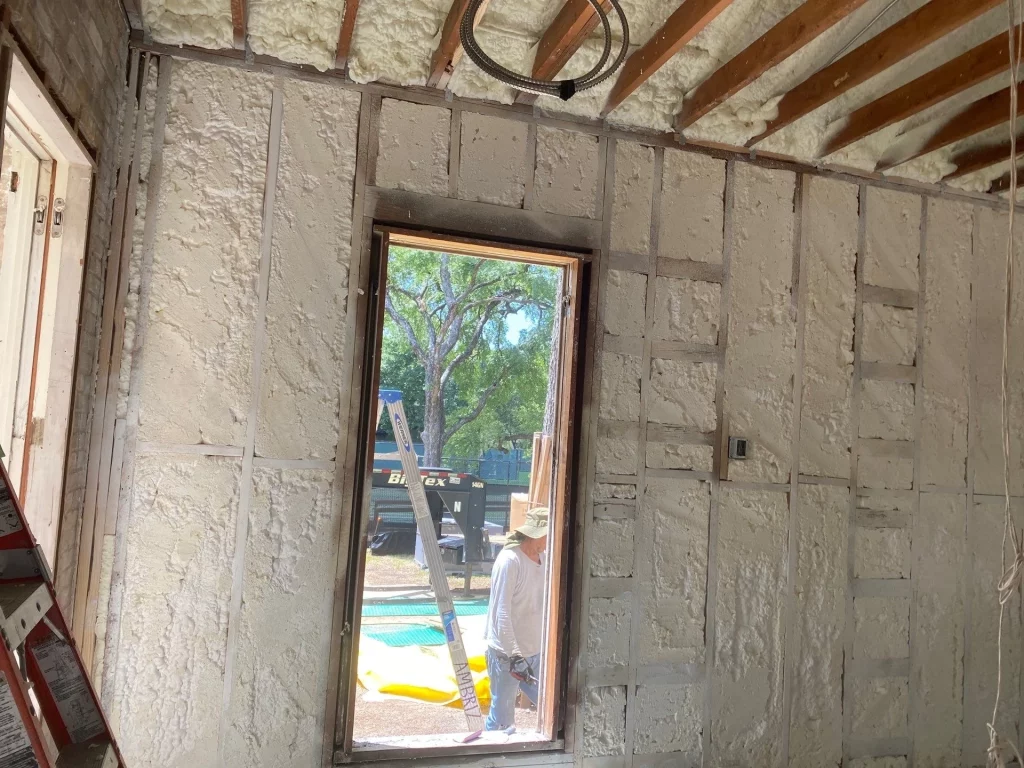
When the foam pulls away from wood framing, rafters, or studs, it creates gaps that break the continuity of the air barrier. Even small breaches allow rapid movement of conditioned air across the building enclosure, reducing thermal energy efficiency. In buildings with variable temperature and humidity between inside and outside, moisture-laden air traveling through these gaps can condense on cold surfaces within the assembly, leading to material deterioration and rot.
Long-term monitoring has shown that even minor delamination gaps can increase the rate of wood sheathing decay by 40% and accelerate the corrosion of fasteners exposed to cyclic condensation. Long-Term Effects of Failed Spray Polyurethane Foam on Building Integrity – Journal of Building Performance
Reason Foam Fails #5: Excessive Shrinkage – 475 High Performance Building Supply notes that the coefficient of thermal expansion for polyurethane foam is approximately a quarter-inch gap per 96 inches of foam. The Building Science Corporation’s Thermal Metric Summary Report found that even under controlled laboratory conditions, open-cell spray foam installation initially failed, and closed-cell foam connections held on by what they described as its “fingertips.”
Off-Ratio Chemical Mixing
Spray foam requires precise mixing of two chemical components: isocyanates (A-side) and polyol resins (B-side). When these chemicals are mixed in incorrect proportions, the foam cures improperly. Off-ratio foam may appear normal at first but then develops a range of problems:
- Sticky or tacky surfaces that never fully harden
- Persistent chemical odors that last far beyond the typical 24 to 72 hour curing window
- Oily residues on adjacent surfaces
- Reduced R-value and structural integrity
- Continuing off-gassing of volatile organic compounds
The Potential Chemical Exposures From Spray Polyurethane Foam – U.S. EPA has documented that the potential for off-gassing of volatile chemicals from spray polyurethane foam is not fully understood and is an area requiring more research. The agency notes that when SPF is not applied properly, chemical contaminants may migrate to hard and soft surfaces elsewhere in the building, becoming a source of residual odors even after the foam itself is removed.
Moisture Trapping and Condensation
Spray foam creates an exceptionally tight seal, which is one of its main advantages. That same tightness becomes a liability when moisture is present in the assembly. In unvented roof assemblies, spray foam applied directly to the underside of roof decking can trap moisture from the conditioned space or from construction materials against the sheathing. In cold climates, this moisture condenses on the cold side of the foam, leading to plywood deterioration and framing rot.
The Spray Foam in Accessible Spaces: Best Practices and Case Studies – Oak Ridge National Laboratory published best practices guidance stating that the guiding principle for any spray foam retrofit is to fix all moisture problems before retrofitting insulation. ORNL researchers emphasize that existing moisture issues must be resolved first, not covered up with foam.
Poor Substrate Preparation and Environmental Conditions
The surface that receives spray foam must be clean, dry, and free of contaminants. Substrates with coatings like rust inhibitors on metal framing or form release agents on concrete can interfere with chemical adhesion. Dust, dirt, and frost all compromise the bond.
The Construction Specifier reports that substrate materials with very smooth surfaces, such as dimension lumber, laminated veneer lumber, and architectural aluminum, require roughening by mechanical means or the addition of a mechanically attached device like expanded metal lath to restrain the foam and prevent shrinkage movement.
Ambient conditions matter enormously. Temperature affects the exothermic reaction. Low temperatures slow curing and can prevent the foam from reaching full strength. High humidity or conditions near the dewpoint introduce condensation on the substrate that acts as a bond-breaker.
How Spray Foam Failure Manifests: Warning Signs
Recognizing the symptoms of spray foam failure early can prevent costly structural damage. Here are the most common indicators:
- Visible gaps between foam and framing: The foam has shrunk or delaminated, breaking the air barrier.
- Persistent chemical odors: Off-ratio mixing or incomplete curing is releasing volatile compounds into the living space.
- Sticky or soft foam surfaces: The chemical reaction did not complete properly.
- Higher than expected energy bills: The air seal has been compromised, allowing conditioned air to escape.
- Mold or mildew on interior surfaces: Moisture is penetrating the assembly through failed foam connections.
- Staining or discoloration on drywall or ceiling surfaces: Hidden condensation is occurring within wall or roof cavities.
- Oily residue on windows or nearby surfaces: Off-ratio foam is off-gassing onto adjacent building materials.
Comparison of Spray Foam Failure Causes
| Failure Type | Primary Cause | Where It Occurs | Detection Difficulty | Severity |
|---|---|---|---|---|
| Shrinkage / Delamination | Thermal cycling, poor adhesion, smooth substrates | Roof decks, wall cavities, rim joists | Moderate, visible gaps | High, breaks air barrier |
| Off-Ratio Mixing | Equipment malfunction, improper calibration | Anywhere foam is sprayed | Difficult, may look normal initially | High, ongoing off-gassing |
| Moisture Trapping | Sealing over damp materials, missing vapor control | Unvented attics, exterior walls | Difficult, hidden behind finishes | Very High, structural rot |
| Poor Adhesion | Contaminated substrates, high moisture content | Concrete, metal framing, treated lumber | Moderate to difficult | High, air barrier failure |
| Improper Thickness | Rushed application, insufficient passes | Any cavity, especially thick assemblies | Easy with thermal imaging | Moderate, reduced R-value |
| Wrong Foam Type | Open-cell in cold climate walls, closed-cell in wrong assembly | Varies by climate zone and assembly | Moderate | High, condensation damage |
Real-World Failure Scenarios
Understanding how spray foam failures happen in practice helps both contractors and homeowners recognize patterns and avoid repeating mistakes.
| Scenario | Building Type | Problem | Solution | Outcome |
|---|---|---|---|---|
| Cold-climate attic foam separation | Two-story home, Climate Zone 6 | Closed-cell foam pulled away from rafters after first winter, creating gaps at the roof deck | Removed delaminated foam, installed metal lath as mechanical restraint, reapplied with proper substrate temperature control | Air barrier restored, no further shrinkage after two heating seasons |
| Off-ratio foam in basement rim joist | New construction, residential | Strong chemical odor persisted three weeks after installation, foam remained tacky | Mechanically removed all off-ratio foam, cleaned substrates, allowed concrete to dry, reapplied with calibrated equipment | Odor eliminated within 48 hours of re-occupancy |
| Moisture trapped behind wall foam | Retrofit, 1970s ranch home | Open-cell foam applied to exterior walls without vapor retarder in Climate Zone 5 caused hidden condensation and mold | Removed drywall and foam, addressed exterior water management, installed closed-cell foam to meet IRC Table 702.7.1 requirements, added proper ventilation | No recurring mold, energy bills reduced 35% |
| Concrete foundation adhesion failure | Basement renovation | Closed-cell foam applied to green concrete with moisture content above 18%, delaminated after six weeks | Ran dehumidifiers for three weeks until moisture meters read below 15%, mechanically abraded concrete surface, reapplied foam | Full adhesion confirmed with pull tests, no delamination at one-year follow-up |
| Roof deck rot behind sealed foam | Unvented cathedral ceiling | Spray foam sealed moisture from construction materials against roof sheathing, causing plywood rot | Removed all sheathing and foam, replaced deteriorated plywood, allowed framing to dry, reinstalled with proper drainage plane and balanced ventilation | Assembly fully dried, no further deterioration |
Factors That Affect Spray Foam Performance
Multiple variables determine whether a spray foam installation succeeds or fails. Contractors who control these variables consistently deliver better results.
Climate Zone Classification
The International Energy Conservation Code (IECC) divides North America into climate zones that directly influence which foam type and thickness are appropriate. According to GM-2102: Residential Spray Foam Guide – Building Science Corporation, in IECC Climate Zones 5 and higher, high-density closed-cell spray foam is preferred for wall assemblies because it provides additional condensation control and qualifies as a Class II vapor retarder at 1.5 inches. Low-density open-cell spray foam in these zones requires a separate interior vapor retarder to control condensation.
Substrate Moisture Content
Wood framing that leaves the kiln at 19% moisture content often sits exposed on job sites and reabsorbs moisture before the building is dried in. The Construction Specifier recommends confirming that wood framing moisture is below 18% using a moisture meter before application. For buildings that are enclosed but not yet conditioned, portable dehumidifiers may need to run for several days to several weeks before spraying.
Temperature and Humidity at Application
Both ambient temperature and substrate temperature affect post-installation behavior. Manufacturers stipulate minimum substrate temperatures, and ccSPF must not be installed when the ambient temperature is near the dewpoint. Surface temperatures should be verified with a handheld infrared thermometer. Heat-sink materials like concrete may not reach adequate temperatures with interior heating alone, requiring selection of a ccSPF grade formulated for lower substrate temperatures.
Installation Thickness and Pass Sequence
Applying too much foam in a single pass generates excessive heat that can damage the substrate, create internal voids, or produce foam with inconsistent cell structure. Best practice is to apply in thin layers, allowing each pass to partially cure before adding the next. Compartmentalizing the installation between framing bays also limits large expanses of foam that can split when shrinkage occurs.
Equipment Calibration and Chemical Freshness
Spray foam equipment must be calibrated at the start of each workday. Component materials degrade after opening, with more than two weeks of storage after opening potentially compromising the quality of the installed foam. Manufacturing dates should be checked on every drum, and open containers should be tracked.
Actionable Strategies for Preventing and Fixing Failures
1. Pre-Installation Assessment and Planning
Before any foam leaves the rig, conduct a thorough assessment of the project conditions. Check moisture content of all substrates with a pin moisture meter. Verify ambient temperature, substrate temperature, and dewpoint readings. Review the assembly design against the IRC requirements for the local climate zone. Identify smooth substrates that may require mechanical lath or surface roughening. Document all readings and conditions in writing before starting the job.
2. Substrate Preparation Protocol
Clean all substrates of dust, debris, and any surface coatings that may interfere with adhesion. For concrete, verify that form release agents have been fully removed. For metal framing, confirm that rust inhibitors or galvanized coatings have been treated or covered with an appropriate primer. For wood framing, verify moisture content is below 18%. Install metal lath or other mechanical restraints on smooth substrates where the foam will serve as part of the continuous air barrier.
3. Environmental Controls During Application
Maintain ambient temperatures within the manufacturer’s specified range for the entire duration of the installation and curing period. Use temporary heating equipment when permanent HVAC is not yet operational. Monitor dewpoint readings throughout the day, as conditions can shift. Use portable dehumidifiers when humidity approaches the dewpoint threshold. Never begin spraying if condensation is visible on any substrate surface.
4. Quality Control During Installation
Perform test cuts at regular intervals during the installation. With strong adhesion, ccSPF cannot be removed intact from the substrate but fails cohesively, meaning a portion of the foam remains bonded and requires mechanical removal. Document all test cut results. Monitor foam thickness with a depth gauge. Verify that the nozzle angle is perpendicular to the substrate when spraying over lath to ensure foam penetrates through and encapsulates the lath completely.
5. Post-Installation Verification
After curing is complete, perform a visual inspection of all sprayed surfaces looking for gaps, cracks, or discoloration. Use an infrared camera to check for thermal anomalies that may indicate adhesion failure or voids. If the foam will be covered, conduct the inspection before enclosing the assembly. Confirm that the required re-occupancy time has elapsed per the manufacturer’s guidelines, typically 24 hours for two-component high-pressure professional SPF systems.
6. Fixing Existing Failures
When spray foam has already failed, the repair approach depends on the type and severity of the failure:
- Localized shrinkage gaps: Cut out the affected foam, clean the substrate, verify adhesion conditions, and re-spray using proper technique.
- Off-ratio foam: Mechanical removal is required in all cases. The affected foam cannot be fixed in place. Clean all surfaces thoroughly, verify conditions, and reapply with freshly calibrated equipment.
- Moisture damage behind foam: Remove the foam and affected building materials. Dry the assembly completely before reinstalling. Address the source of moisture, whether from exterior water intrusion, plumbing leaks, or inadequate vapor control.
- Adhesion failure on substrates: Mechanically remove the delaminated foam, prepare the substrate with abrasion or lath installation, verify moisture content, and reapply.
The EPA warns that removal of improperly applied spray foam may not always resolve the problem if chemical contaminants have migrated to other surfaces in the building. In cases of widespread off-ratio installation, consultation with an independent indoor air quality professional is recommended before pursuing remediation.
Get Expert Help With Your Spray Foam Project
Stellrr Insulation & Spray Foam specializes in identifying and resolving spray foam insulation problems for residential and commercial properties. Whether you are dealing with a failed installation that needs professional remediation or you want to ensure your next project is done right the first time, our team has the experience and building science knowledge to deliver lasting results. We assess environmental conditions, verify substrate readiness, and apply manufacturer-approved installation protocols for every project.
Request a detailed quote for your project by calling 512-520-0044 or emailing info@stellrr.com. For homes with existing spray foam concerns, ask about our Insulation Failure Assessment to identify the root cause and develop a targeted repair plan before the damage worsens.
Frequently Asked Questions
How can I tell if my spray foam insulation was installed off-ratio?
The most reliable indicators are persistent chemical odors that last beyond 72 hours, foam surfaces that remain sticky or soft to the touch, and visible oily residue on adjacent building materials. Off-ratio foam may also have an abnormal color or crumbly texture compared to properly mixed material.
Is spray foam insulation safe after it has fully cured?
According to the EPA, spray foam is considered relatively inert once it has been properly applied and fully cured. The primary concerns are during and immediately after application when isocyanate vapors and aerosols are present. Once curing is complete, risks are minimal under normal conditions.
Can failed spray foam be repaired without removing it?
Small shrinkage gaps can sometimes be patched with targeted re-spray after proper surface preparation. However, off-ratio foam and moisture-damaged assemblies typically require full mechanical removal because the underlying chemical or moisture problem cannot be addressed with the failed material still in place.
What is the minimum temperature for spray foam installation?
Requirements vary by manufacturer and product formulation, but most specify minimum substrate temperatures around 20F and minimum ambient temperatures in a similar range. The foam must never be applied when the ambient temperature is within five percent of the dewpoint due to the risk of hidden condensation on the substrate.
Why does closed-cell spray foam shrink but open-cell does not?
Closed-cell foam has a denser cell structure filled with blowing agent gas that undergoes greater thermal expansion and contraction during the exothermic curing reaction. The rigid nature of the cured cells generates more internal stress as the material cools. Open-cell foam has a more flexible cell structure that accommodates dimensional changes without generating the same level of pulling force on bonding surfaces.