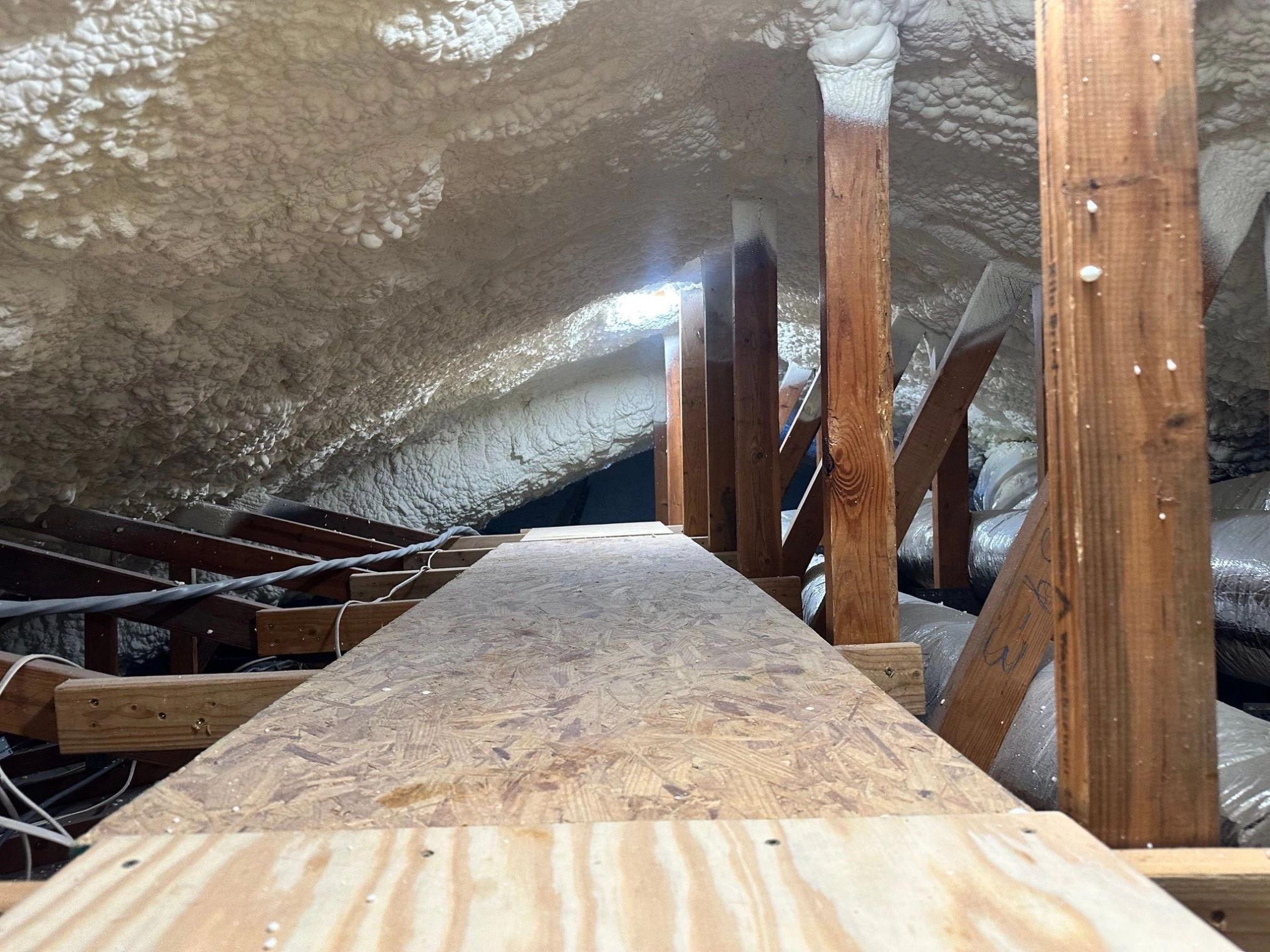
Attic insulation serves as the primary thermal barrier between your living space and the external environment, directly controlling how much heat enters or escapes your home. In both winter and summer, the attic represents the single largest source of heat transfer in most residential buildings. The right insulation strategy depends on your climate zone, existing insulation condition, the type of HVAC system in use, and whether air sealing work accompanies the insulation upgrade. To better understand how insulation affects long-term savings and performance, explore our attic insulation energy efficiency guide. Understanding the mechanics of heat transfer, R-value performance, and material selection is what separates a home that holds steady temperatures from one that forces HVAC systems to work overtime.
TLDR / Key Takeaways
- The attic is the largest single source of heat gain and loss in most homes, making insulation there the highest-impact upgrade for indoor temperature stability.
- Heat transfer occurs through three mechanisms: conduction, convection, and radiation. Most insulation materials address conduction and convection, while radiant barriers target radiant heat gain.
- R-value measures thermal resistance; higher R-values mean better insulation performance. The U.S. Department of Energy recommends attic insulation levels from R30 to R60, depending on climate zone.
- The EPA estimates homeowners can save an average of 15% on heating and cooling costs by air sealing and adding attic insulation.
- ENERGY STAR reports that 9 out of 10 homes in the U.S. are under-insulated, meaning most homeowners stand to benefit from an insulation assessment.
- Proper installation matters as much as material choice. Compressed, gaps, or misaligned insulation lose effectiveness regardless of its rated R-value.
- Building insulation contributes to roughly 40% of total building energy consumption, primarily from heating and cooling demands.
How Heat Transfer Works in Your Attic
To understand why attic insulation matters for indoor temperature stability, we need to look at how heat moves through a building. The U.S. Department of Energy identifies three basic mechanisms of heat flow: conduction, convection, and radiation.
Conduction is heat moving through solid materials. When your attic ceiling gets hot from direct sun exposure, that heat conducts through the drywall and framing into your living spaces below. In winter, the reverse happens: heat from your furnace conducts upward through the ceiling into the cold attic and eventually outside.
Convection is the circulation of heat through air. Warm air naturally rises, pushing heated air from your living room up into the attic space where it escapes through vents or conducts through the roof. This stack effect is one of the primary reasons upper floors often feel draftier in winter.
Radiation is heat traveling in a straight line from a warm surface to anything that absorbs energy. In summer, the sun radiates heat directly onto your roof, raising attic temperatures well above outdoor ambient levels. This radiant heat then transfers into the ceiling below.
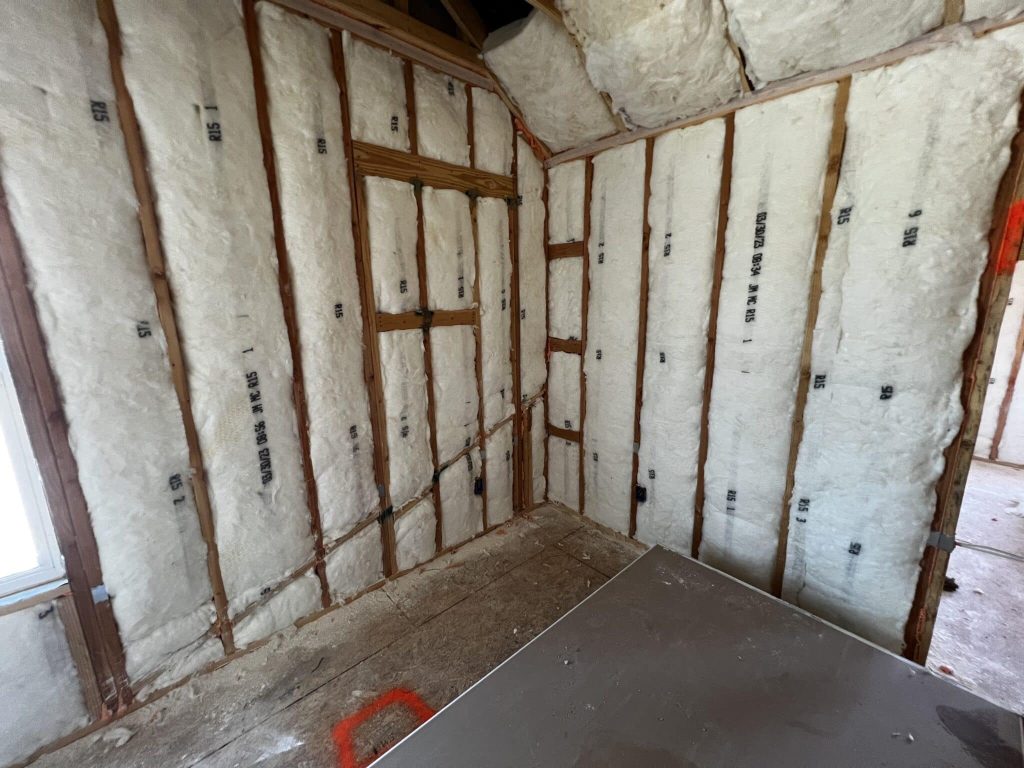
Attic insulation slows all three of these transfer mechanisms simultaneously. Bulk insulation materials like fiberglass, cellulose, and mineral wool trap air in millions of tiny pockets, creating resistance to conductive and convective heat flow. Wikipedia’s building insulation entry notes that these materials work by creating gas cavities that exploit air’s naturally low thermal conductivity. Radiant barriers, by contrast, reflect thermal radiation away from living spaces and are most effective in hot climates.
R-Values and What They Mean for Temperature Stability
R-value is the standard measurement of an insulation material’s thermal resistance. As ENERGY STAR explains, a higher R-value indicates better thermal performance and greater ability to resist heat traveling through the material.
The R-value of any insulation depends on its type, thickness, and density. When you add layers, you add the R-values together to find the total thermal resistance. This matters because the overall R-value of your ceiling assembly is not just the insulation itself. Heat also flows through studs, joists, and other framing, a phenomenon called thermal bridging that can reduce the effective performance of the entire assembly.
The Department of Energy publishes recommended R-values for attics by climate zone. Here is a simplified overview for existing homes:
| Climate Zone | Uninsulated Attic (Add) | 3-4 Inches Existing (Add) | Floor Over Crawlspace |
|---|---|---|---|
| 1 (Hot) | R30 | R25 | R13 |
| 2 (Warm) | R49 | R38 | R13 |
| 3 (Mixed) | R49 | R38 | R19 |
| 4 (Mixed/Cold) | R60 | R49 | R19 |
| 5-6 (Cold) | R60 | R49 | R30 |
| 7-8 (Very Cold) | R60 | R49 | R38 |
These ranges represent what the DOE considers cost-effective for each region. Homes in colder zones need more attic insulation because the temperature differential between indoors and outdoors is larger, driving more heat loss through the ceiling.
Why the Attic Matters More Than Walls or Floors
Among all building envelope components, the attic typically offers the greatest opportunity to improve temperature stability for a straightforward reason: hot air rises. In a home without adequate attic insulation, the stack effect pulls warm air upward and out through the attic during the winter months. During summer, the roof absorbs solar radiation and superheats the attic air, which then pushes heat downward into conditioned spaces.
The ENERGY STAR “Why Seal and Insulate” guide reports that EPA estimates show homeowners can save an average of 15% on heating and cooling costs, or an average of 11% on total energy costs, by air sealing and adding insulation in attics, floors over crawl spaces, and basements. The same source notes that if you added up all the leaks, holes, and gaps in a typical home’s envelope, the total would equal leaving a window open every day of the year.
Furthermore, ENERGY STAR states that 9 out of 10 U.S. homes are under-insulated. This means the majority of homeowners are losing temperature stability and paying more on energy bills than necessary, simply because their attics lack sufficient insulation to manage the heat transfer happening above their heads.
Common Insulation Materials for Attics
The right material for your attic depends on several factors: whether the attic is conditioned or unconditioned, the structure of the ceiling joists, access limitations, and moisture conditions. Here is a comparison of the most common options:
| Material | How It Works | Typical Application | Strengths | Limitations |
|---|---|---|---|---|
| Fiberglass Batts | Traps air in glass fibers | Unfinished attics with standard joist spacing | Widely available, DIY-friendly | Can leave gaps if not cut precisely; susceptible to moisture compression |
| Blown Cellulose | Recycled paper fiber blown into cavities | Existing attics with irregular joist spacing | Fills gaps and voids effectively; good fire resistance | Can settle over time, reducing the effective R-value |
| Mineral Wool | Spun rock or slag fibers | Attics needing fire resistance and sound dampening | Fire-resistant; maintains R-value well | Heavier material; may require professional installation |
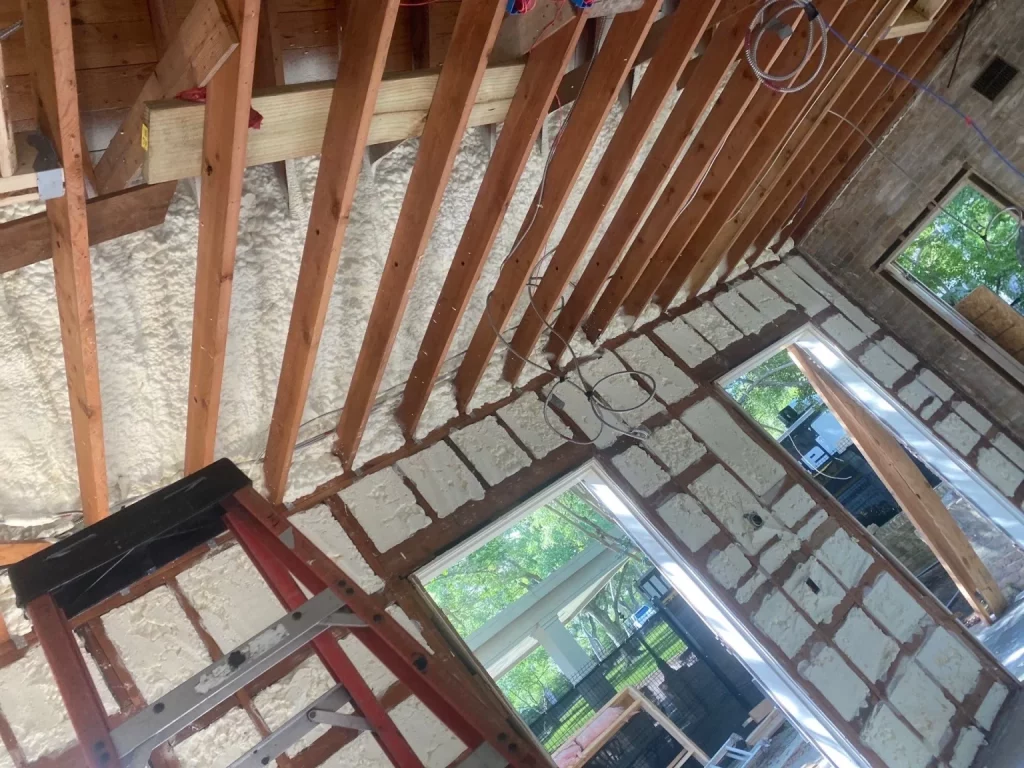
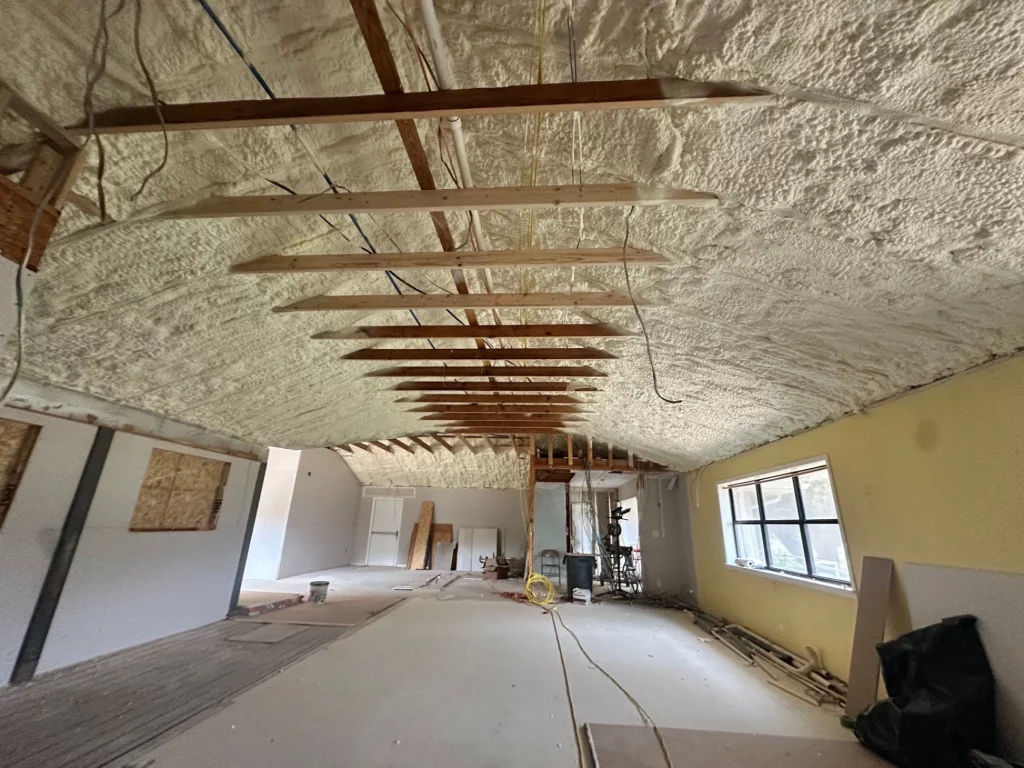
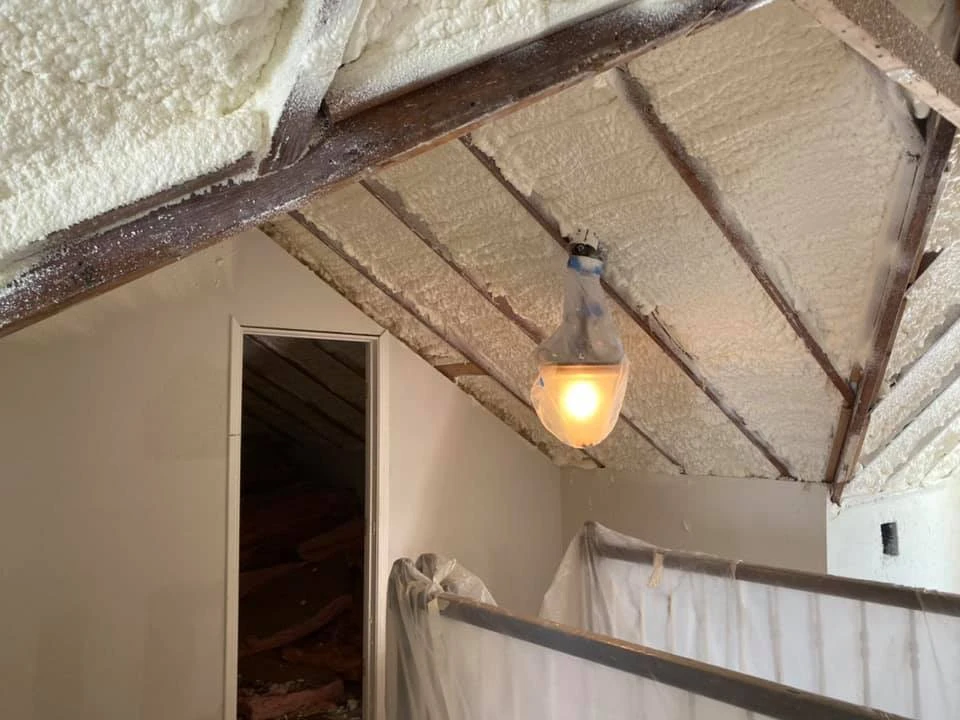
| Spray Foam (Open Cell) | Expanding foam that fills cavities | Conditioned attics or cathedral ceilings | Seals air leaks while insulating; good sound control | Higher material cost; requires professional installation |
| Radiant Barrier | Reflective surface that bounces radiant heat | Hot climates with direct sun exposure | Reduces radiant heat gain significantly | Minimal impact on conductive heat loss; not effective in all climates |
As InterNACHI points out, R-value is only meaningful when insulation is properly installed. Compressing batts, leaving voids between layers, or failing to fill cavities all reduce effective thermal resistance. The organization notes that heating and cooling costs account for 50% to 70% of energy used in an average U.S. home, making insulation quality a direct driver of both comfort and expense.
The Relationship Between Air Sealing and Insulation
Insulation and air sealing work together but serve different functions. Insulation slows conductive and convective heat transfer through materials. Air sealing stops conditioned air from escaping and unconditioned air from entering through gaps, cracks, and penetrations.
If you insulate without air sealing, you trap air movement pathways inside the insulation layer itself. Warm indoor air can still pass through gaps around recessed lights, plumbing vents, electrical runs, and chimney chases. Once that air reaches the attic, the heat escapes regardless of how much insulation sits above your ceiling.
For maximum indoor temperature stability, air sealing should always accompany or precede insulation work in the attic. The DOE recommends addressing the largest air leaks first, such as gaps around attic floors, dropped soffits, and bypasses behind kneewalls, before adding or upgrading insulation.
Recommendations by Homeowner Situation
| Situation | Recommended Approach | Key Considerations |
|---|---|---|
| Older home, never upgraded | Full assessment with air sealing first, then blown cellulose or fiberglass to reach DOE-recommended R-value | Likely has multiple air bypasses; existing insulation may be damaged or inadequate |
| Home with 3-4 inches of existing insulation | Add blown-in material on top to reach the target R-value; verify no moisture issues first | ENERGY STAR recommends supplementing to R38-R60, depending on the zone |
| Conditioned attic (living space above) | Spray foam on the roof deck to bring the attic into a conditioned envelope | Eliminates the need for floor insulation; addresses ductwork in the attic |
| Hot climate, high cooling loads | High R-value bulk insulation plus radiant barrier | Radiant barriers reduce solar heat gain; bulk insulation handles conductive transfer |
| Cold climate, high heating loads | Maximum R-value (R60) with thorough air sealing | Larger indoor-outdoor temperature differential drives more heat loss |
Signs You Have the Right Attic Insulation Strategy
How do you know your attic insulation is performing the way it should? Look for these indicators:
- Consistent temperatures from room to room. If upper floors feel noticeably hotter in summer or colder in winter than lower floors, the attic barrier is likely insufficient.
- HVAC system cycles normally. Systems that run constantly or short-cycle frequently often do so because they cannot maintain set temperatures against unchecked heat transfer.
- Energy bills are stable season to season. Unexplained increases in heating or cooling costs, especially after a particularly hot or cold season, can point to insulation degradation or air sealing failures.
- No visible ice dams in winter. Ice dams form when heat escaping through the attic melts snow on the roof, which then refreezes at the eaves. Proper attic insulation and air sealing prevent this heat loss.
- Professional inspection confirms adequate depth and coverage. A qualified energy auditor can measure existing insulation depth, check for gaps and compression, and identify air leakage pathways that compromise thermal performance.
Get Your Attic Insulation Right with Stellrr
Proper attic insulation is one of the most impactful investments you can make in your home’s comfort and efficiency, but getting it right requires experience with material selection, air sealing techniques, and climate-specific R-value targets. Our team at Stellrr Insulation & Spray Foam assesses your attic’s current condition, identifies air leakage points, and recommends the insulation strategy that delivers real temperature stability for your specific home and climate. Reach us at 512-520-0044 or info@stellrr.com. A well-insulated attic is the foundation of a comfortable, energy-efficient home, and we are here to help you get there.
Frequently Asked Questions
How does attic insulation actually keep my home cooler in summer?
Attic insulation reduces heat conduction from the hot roof deck into your living spaces below and, when paired with proper ventilation, limits the transfer of radiant solar heat. The material creates a thermal barrier that keeps attic heat from pushing through your ceiling.
Can I add new insulation on top of old insulation?
Yes, in most cases. You can layer new blown-in or batt insulation over existing material as long as the old insulation is dry, free of mold, and not compressed. A vapor barrier should not be installed between the old and new layers.
What R-value should my attic insulation meet?
The recommended R-value depends on your climate zone, ranging from R30 in hot southern regions to R60 in cold northern zones. Check the Department of Energy’s climate zone map and recommendations for your specific location.
Does attic insulation help with winter heating costs?
Attic insulation reduces heat loss through the ceiling by resisting the upward flow of warm air. Since heat naturally rises, an uninsulated or under-insulated attic allows a significant portion of your heating output to escape, forcing your system to work harder.
How long does attic insulation last?
Most bulk insulation materials, such as fiberglass and cellulose, can last 20 to 30 years or more when kept dry and undisturbed. However, settling, moisture damage, pest activity, or compression from storage can reduce effectiveness over time, making periodic inspection worthwhile.
Sources
- U.S. Department of Energy – Insulation – Comprehensive guide on how insulation works, R-values, heat transfer mechanisms, and recommended insulation levels by climate zone for residential buildings.
- ENERGY STAR – Why Seal and Insulate – EPA data on energy savings from air sealing and insulation, including the statistic that 9 out of 10 U.S. homes are under-insulated.
- ENERGY STAR – Recommended Home Insulation R-Values – Detailed tables showing cost-effective R-value recommendations for attic insulation by climate zone, based on the 2021 IECC.
- Wikipedia – Building Insulation – Reference article covering the science of thermal insulation in buildings, heat transfer mechanisms, material classifications, and global insulation standards.
- InterNACHI – Insulation R-Value – Technical overview of R-value measurement, factors affecting thermal resistance, and the relationship between insulation quality and home energy consumption.