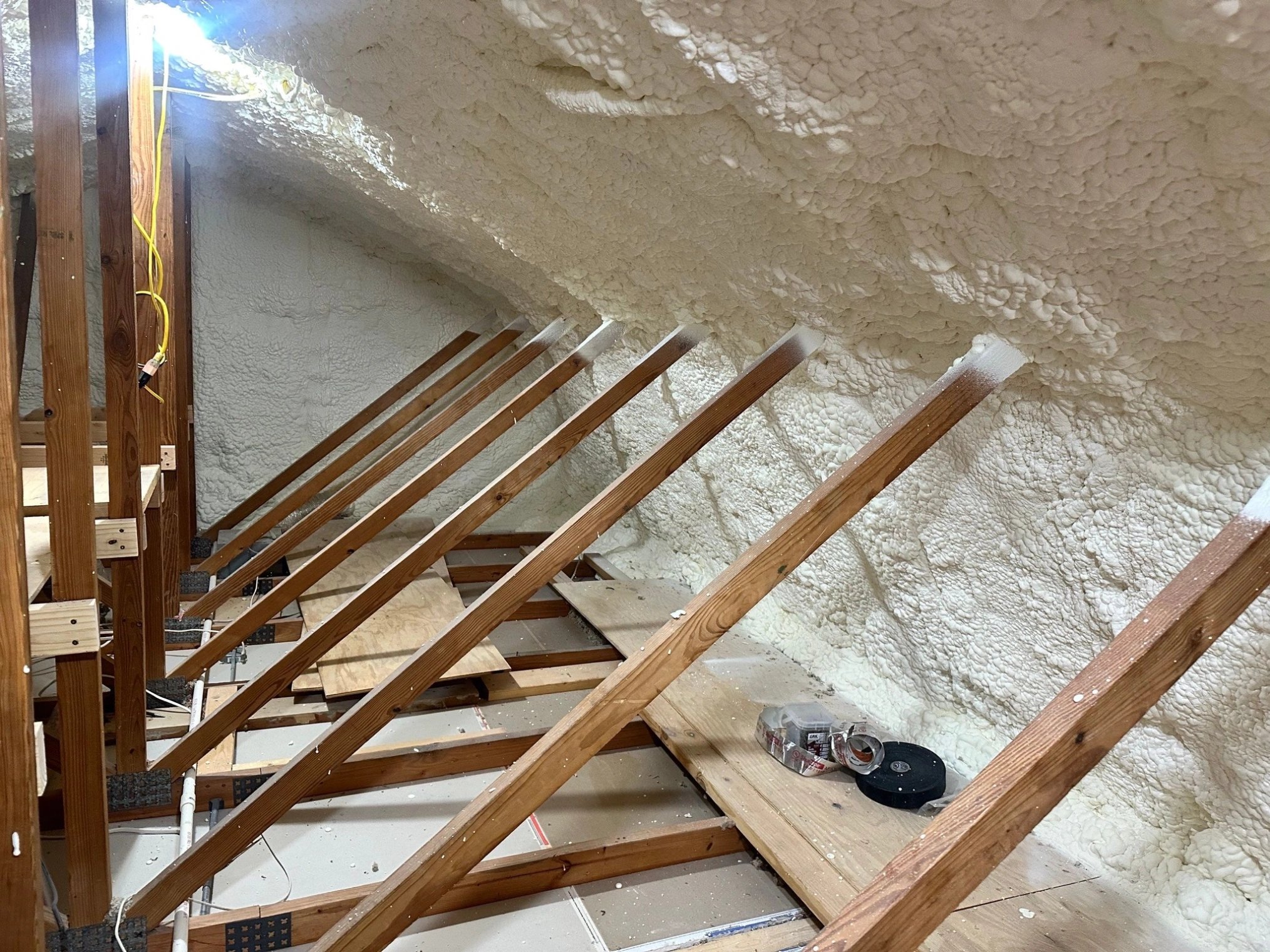
If your utility bills keep climbing despite running the same cooling schedule, the attic insulation in your Hudson Bend home is likely the culprit. In Central Texas, where summer temperatures regularly push past 100 degrees, the attic acts as a massive heat collector that forces your HVAC system to work harder than it should. According to the EPA, homeowners can save an average of 15% on heating and cooling costs by air sealing their homes and adding insulation in attics and other key areas. The savings potential in our region is even more focused on cooling loads, which dominate annual energy use for most Hudson Bend households. The difference between properly insulated and poorly insulated attics comes down to avoiding a handful of common mistakes that many homeowners and even some installers overlook.
TLDR / Key Takeaways
- EPA estimates homeowners save an average of 15% on heating and cooling costs through proper air sealing and attic insulation
- Central Texas homes in Climate Zone 3A should target R-38 to R-49 for attic insulation on existing homes
- Air sealing must happen before or during insulation installation since fiberglass and cellulose are not air barriers
- Gaps, voids, and compressions covering more than 2% of the attic floor can significantly reduce insulation effectiveness
- Blocking soffit vents with insulation eliminates critical attic ventilation and leads to moisture damage
- Homes built before 1990 in the Hudson Bend area commonly have less than half the current recommended insulation levels
- Bathroom and dryer vents terminated in the attic introduce moisture that destroys insulation performance over time
Why Hudson Bend Homes Face Unique Attic Insulation Challenges
Hudson Bend sits in a hot-humid climate zone where cooling demand drives the majority of annual energy consumption. The Department of Energy places this region in Climate Zone 3A, which calls for R-38 to R-49 of attic insulation in retrofit situations and R-49 to R-60 for new construction. Many homes in our area were built decades ago with far less insulation than modern standards require, and what was installed has often settled, compressed, or deteriorated over time.
The Department of Energy explains that insulation works by resisting heat flow through conduction, convection, and radiation. In a Central Texas summer, radiant heat from the sun pours onto your roof, and without adequate insulation and ventilation, that heat transfers directly into your living spaces through the ceiling below. During milder months, the reverse happens as warm indoor air escapes upward through gaps and insufficient insulation. Both scenarios force your air conditioning or heating system to compensate, driving up utility bills month after month.
The 7 Most Costly Attic Insulation Mistakes
1. Skipping Air Sealing Before Adding Insulation
This is the single most damaging mistake homeowners make. Fibrous insulation materials like fiberglass and cellulose slow conductive heat flow but they do not stop air movement. The Building America Solution Center, a U.S. Department of Energy program, explicitly states that “fibrous insulation is not an air barrier and shall not be used for air sealing.” Every gap around recessed lights, plumbing pipes, electrical wiring, HVAC duct boots, and drywall-to-top-plate seams allows conditioned air to escape into the attic. If you pile new insulation over these leaks without sealing them first, the air still escapes, and you gain very little thermal benefit.
2. Leaving Gaps, Voids, and Compressions in Coverage
The DOE’s quality installation checklist requires that attic insulation have less than 2% gaps, voids, and compressions across the entire ceiling plane. In practice, we regularly find attics with far more extensive gaps, especially around truss chords, wiring runs, and plumbing penetrations. Even a small, seemingly insignificant gap allows warm air from the house to leak into the attic. Insulation that is compressed below its rated thickness also loses effectiveness since R-value depends on proper depth and density.
3. Installing Below Recommended R-Values for the Climate
According to the ENERGY STAR recommended R-value chart, homes in Climate Zone 3 that already have 3 to 4 inches of existing insulation need a total of R-38 to R-49 for adequate performance. Many Hudson Bend homes we inspect have R-13 to R-19 at best, which is less than half the recommended level. For an uninsulated attic in this zone, the target jumps to R-49. Underinsulating leaves your ceiling as a weak point in your home’s thermal envelope, no matter how efficient your HVAC system is.
4. Blocking Soffit Vents with Insulation
Attic ventilation works with insulation, not against it. When blown insulation is piled too deep at the eaves and covers the soffit vents, outside air cannot enter and flow up to the ridge vents. This trapped heat raises attic temperatures dramatically in summer and can cause moisture condensation in cooler months. Baffles should always be installed at every soffit vent to maintain a clear air pathway before insulation is blown over the attic floor.
5. Ignoring Attic Knee Walls and Dropped Ceilings
Many Hudson Bend homes with vaulted ceilings have attic knee walls, the short walls between the living space and the triangular attic area behind them. These knee walls and any dropped ceiling areas need continuous R-19 insulation and full air sealing at all joints and penetrations. Leaving these areas untreated creates thermal bypasses that allow heat to pour into the conditioned space around the edges of rooms.
6. Terminating Bathroom and Dryer Vents into the Attic
Exhaust fans and dryer vents that dump humid air into the attic rather than routing it outside introduce moisture that attacks insulation from within. Damp insulation loses its R-value, and the persistent humidity promotes mold growth and wood rot. The DOE checklist requires that all exhaust fans be modified to vent to the outside before any insulation work proceeds.
7. Compressing Insulation or Using Inconsistent Density
The R-value of insulation depends on its installed thickness and density. If installers compress fiberglass batts to fit into narrow cavities or if blown insulation is applied at uneven depths across the attic floor, the thermal resistance drops. The DOE specifies that all attic insulation shall be uniform and conform to manufacturer-specified density with attic rulers installed to verify full depth throughout the space.
How These Mistakes Add Up on Your Hudson Bend Energy Bill
The impact of these errors compounds quickly in our climate. When your attic insulation fails to perform, your HVAC system cycles more frequently and runs longer to maintain the thermostat set point. According to EPA energy modeling, the estimated savings from proper air sealing and attic insulation in Climate Zone 3 reach 14% on heating and cooling costs alone. That represents a substantial portion of most Hudson Bend household energy budgets, given that cooling accounts for the largest share of electricity use in Central Texas homes.
| Mistake | Impact on Energy Bills | Typical Cause |
|---|---|---|
| Skipping air sealing | 15-25% higher HVAC runtime | HVAC duct leaks, top plate gaps, and unsealed penetrations |
| Below R-38 coverage | 10-20% higher cooling costs | The original builder installed minimum code, insulation has settled |
| Blocked soffit vents | 5-10% increase + moisture risk | Blown insulation without baffles at eaves |
| Unsealed knee walls | 5-15% increase in affected rooms | Ignored during initial or retrofit insulation work |
| Compressed insulation | 10-30% R-value loss at compression points | Storage on attic floor, wrong batt size |
| Vents dumping into the attic | Moisture damage reduces R-value by 20-50% | Original construction shortcut, homeowner DIY |
| Gaps over 2% of the floor area | Measurable increase in heat transfer | Poor blown insulation technique, voids around framing |
What Proper Attic Insulation Looks Like
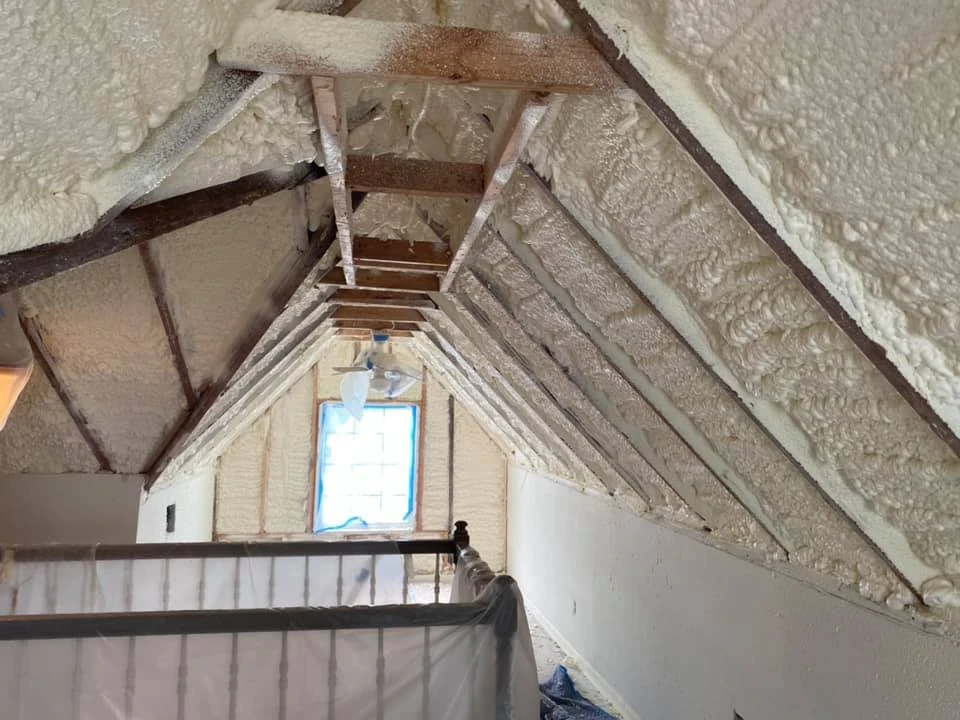
A correctly insulated attic in Hudson Bend should include several elements working together. First, every penetration between the conditioned space and the attic should be sealed with caulk, spray foam, or rigid blocking. Second, baffles should protect every soffit vent so that ventilation air can flow freely. Third, insulation should cover the entire ceiling plane to a uniform depth that achieves the target R-value, with attic rulers installed to verify consistency. Fourth, any recessed lights that are not ICAT-rated should be covered with sealed boxes before insulation is installed over them. Fifth, the attic access panel or pull-down stairs should be insulated to at least R-10 and gasketed for an airtight seal.
Signs Your Attic Insulation Needs Attention
- Visible ice dams on the roof in winter (less common in Texas, but possible during cold snaps)
- Rooms directly below the attic feel noticeably hotter in summer or colder in winter
- Energy bills have increased year over year without changes in usage habits
- Insulation depth appears uneven or visibly less than 10 inches across the attic floor
- Musty or damp smells coming from attic access points
- HVAC system runs significantly longer cycles than it used to
Signs You Have Found the Right Insulation Professional
A qualified insulation contractor will inspect your attic before quoting any work, identifying air sealing needs, ventilation issues, and existing insulation conditions. They will explain the recommended R-value for your specific climate zone and show you how their approach aligns with DOE best practices. Look for clear communication about what will be sealed, what insulation material will be used, and how the depth will be verified. The right professional will also address ventilation, knee walls, and attic access panels as part of a complete solution rather than simply blowing more insulation over existing problems. For more detailed standards, you can refer to the InterNACHI inspection guide.
Get Your Hudson Bend Attic Insulation Right
Stellrr helps homeowners across Hudson Bend, TX, fix the attic insulation mistakes that quietly drive up utility bills and reduce home comfort. Our team follows the Department of Energy’s Building America quality standards for every project, including thorough air sealing, proper baffling, and uniform insulation depth that meets or exceeds R-value recommendations for our climate zone. We inspect before we quote, and we never add insulation over unsealed air leaks or blocked ventilation.
Call us at 512-520-0044 or email info@stellrr.com to get started.
FAQs
What R-value do I need for my attic in Hudson Bend, TX?
Hudson Bend falls within Climate Zone 3A, where the recommended attic insulation level is R-38 to R-49 for existing homes with some insulation, and R-49 for uninsulated attics.
Can I add new insulation over my existing attic insulation?
Yes, as long as the existing insulation is dry, in good condition, and free of vermiculite (which may contain asbestos). Air sealing should be completed before adding new insulation on top.
Why does air sealing matter if I am adding insulation?
Fibrous insulation materials like fiberglass and cellulose slow heat transfer but do not stop air movement. Unsealed gaps allow conditioned air to escape regardless of how much insulation sits above them.
How do I know if my soffit vents are blocked by insulation?
Look at the eaves of your attic. If blown insulation has drifted over the soffit vent openings with no baffles visible, the vents are likely blocked and airflow is restricted.
Will fixing my attic insulation really lower my utility bills?
EPA estimates that proper air sealing and attic insulation can reduce heating and cooling costs by an average of 15% nationally, with the savings applying to both summer cooling and winter heating loads.
Sources
- ENERGY STAR – Recommended Home Insulation R-Values – Official climate zone map and recommended R-value table for retrofitting existing wood-framed buildings.
- U.S. Department of Energy – Insulation – Comprehensive guide on how insulation works, R-value definitions, and climate-based recommendations for residential buildings.
- Building America Solution Center – Attic Air Sealing and Insulation – DOE quality installation checklist covering preparation, air sealing, insulation installation, and commissioning specifications.
- ENERGY STAR – Rule Your Attic! For Comfort and Savings – EPA campaign page with estimated energy savings data and guidance on improving attic insulation performance.
- InterNACHI – Inspecting Added Blown Insulation in an Existing Vented Attic – Detailed inspection guide covering proper installation methods, air sealing requirements, baffles, ventilation, and common defects in attic insulation.