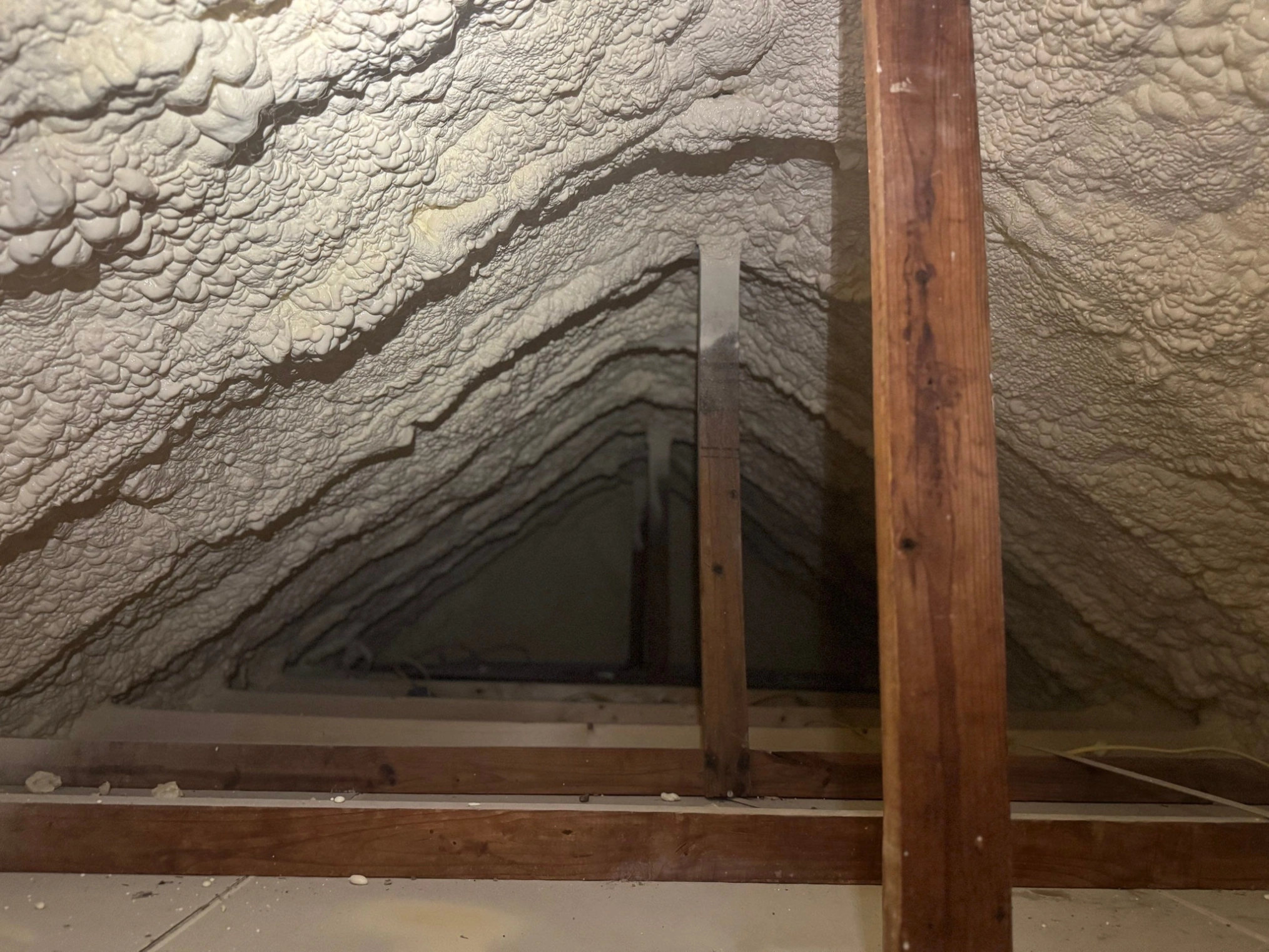
Proper attic insulation delivers measurable, compounding returns for property owners over years and decades. It is not a single fix but a system-level investment that affects energy consumption, structural durability, HVAC performance, moisture management, and property value. The right approach depends on your climate zone, existing insulation levels, where your ductwork is located, and whether the attic is vented or unvented. Understanding these factors helps property owners make decisions that protect both the building envelope and long-term operating budgets.
TLDR / Key Takeaways
- The EPA estimates that air sealing combined with adding attic insulation saves an average of 15% on heating and cooling costs and 11% on total energy costs nationwide.
- In northern climate zones, savings can reach 18-20% on heating and cooling alone when insulation is brought up to current code standards.
- Ductwork in unconditioned, uninsulated attics increases HVAC energy use by roughly 10%, with air leakage commonly exceeding 20% of conditioned airflow.
- Proper attic insulation is one of the three primary defenses against ice dams, along with air sealing the ceiling plane and adequate roof ventilation.
- ENERGY STAR provides R-value recommendations ranging from R30 to R60 depending on climate zone, based on the 2021 International Energy Conservation Code.
- Unvented, conditioned attics can substantially outperform vented attics when HVAC ducts and equipment are located in the attic space.
- Benefits extend beyond energy savings to include moisture control, condensation prevention, improved indoor comfort, and protection against wind-driven rain and wildfire embers.
Why the Attic Matters Most
Heat rises, and in most homes the attic represents the largest single area of the building envelope separating conditioned living space from the outside. The Department of Energy’s Building America program has documented that the preference for locating HVAC systems in unconditioned attics is highly inefficient, contributing to significant energy waste across U.S. housing stock. When ducts sit in uninsulated attic spaces, the additional heat loss and gain increases energy use for heating and cooling by about 10%. Combine that with duct air leakage that commonly exceeds 20% of conditioned airflow, and the losses compound quickly.
For property owners, this means the attic is where insulation upgrades deliver the highest impact per dollar invested compared to walls, floors, or basements.
Energy Savings by Climate Zone
The EPA’s ENERGY STAR program modeled estimated savings across all U.S. climate zones using nationally recognized DOE-2 hourly simulation software. Their analysis of typical existing homes shows that savings vary significantly by geography, with northern climates seeing the highest returns.
| Climate Zone | Region | Savings on Total Energy Bills | Savings on Heating and Cooling Only |
|---|---|---|---|
| CZ 8 | Far North | 16% | 18% |
| CZ 7 | Northern | 15% | 19% |
| CZ 6 | North Central | 14% | 18% |
| CZ 5 | Central North | 12% | 16% |
| CZ 4C | Mountain West | 13% | 20% |
| CZ 4 | Mid-Atlantic | 12% | 17% |
| CZ 3 | South Central | 8% | 14% |
| CZ 2 | Southeast | 6% | 9% |
| CZ 1 | Deep South | 5% | 7% |
| National Average | 11% | 15% |
These figures assume air sealing combined with insulation upgrades to meet 2012 IECC requirements. The savings come from reduced heat transfer through the ceiling plane, less duct loss, and lower air infiltration rates.
Recommended R-Values for Attic Insulation
R-Value measures insulation’s ability to resist heat traveling through it. Higher R-Values mean better thermal performance. ENERGY STAR’s recommended levels for retrofitting existing wood-framed buildings, based on the 2021 International Energy Conservation Code, provide clear targets by zone.
| Climate Zone | If Attic Is Uninsulated | If You Already Have 3-4 Inches |
|---|---|---|
| 1 | R30 | R25 |
| 2 | R49 | R38 |
| 3 | R49 | R38 |
| 4A and 4B | R60 | R49 |
| 5, 6, and 4C | R60 | R49 |
| 7 and 8 | R60 | R49 |
A home in Climate Zone 4 or above with only 3 to 4 inches of existing insulation needs roughly R49 in the attic to meet recommended levels. Most homes built before the 1990s fall well short of these targets.
HVAC Performance and Equipment Longevity
When HVAC ducts run through an uninsulated attic, the system works harder in both summer and winter. During summer, attic temperatures can exceed 140 degrees Fahrenheit. That heat transfers directly into the ductwork, forcing the air conditioner to compensate. In winter, the opposite occurs: heat escapes from ducts into the cold attic before it reaches living spaces.
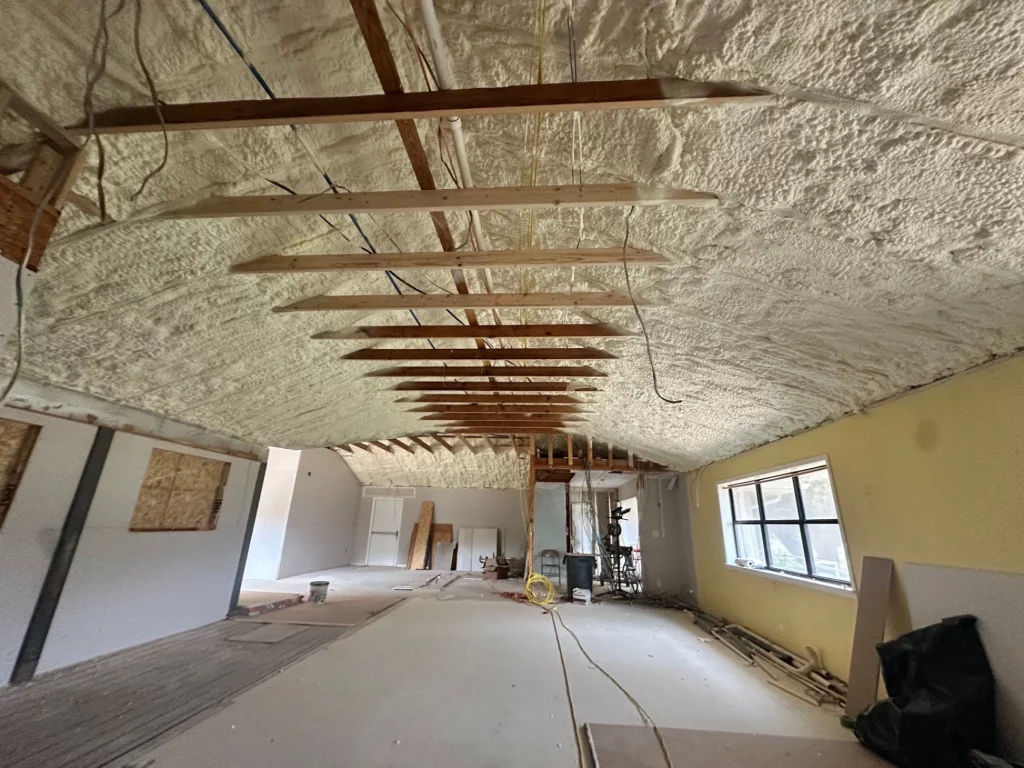
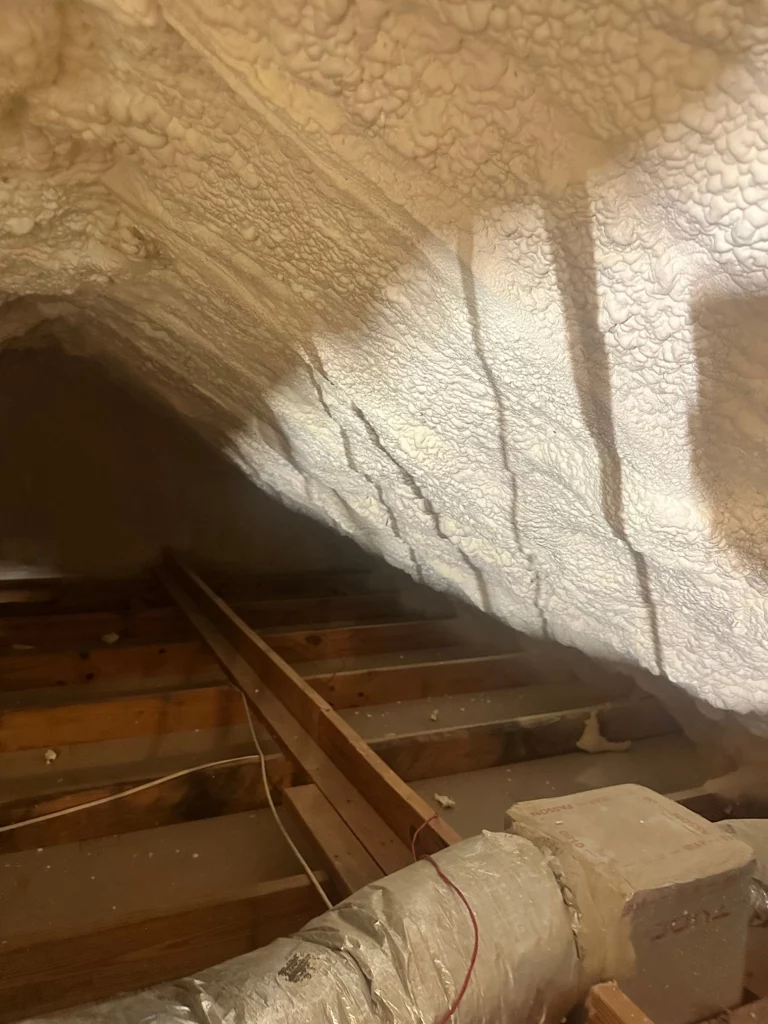
The Building America research found that unvented, conditioned attics can substantially improve energy performance while allowing HVAC systems to remain in the attic. In this approach, insulation is moved from the ceiling plane to the roof line, bringing the ductwork inside the building envelope. The attic stays warmer in winter and cooler in summer, reducing HVAC load and extending equipment life. Oversized units installed to compensate for leaky, uninsulated attic ducts cost more upfront and waste energy throughout their lifespan.
Moisture Control and Ice Dam Prevention
In cold climates, proper attic insulation serves as a direct defense against ice dams, which form when three conditions align: snow on the roof, freezing temperatures, and a poorly insulated or poorly air-sealed attic. Warm air escaping from the living space heats the underside of the roof deck, melting snow that then flows down to the cold eaves and refreezes.
The Building America Solution Center identifies three primary strategies to combat ice dam formation:
- Fully air-seal the ceiling plane to keep warm conditioned air from entering the attic
- Thoroughly insulate the attic to prevent conductive heat transfer to the roof deck
- Ventilate the roof to keep the roof deck cool
Common air leakage points include gaps around recessed lights, plumbing stacks, electrical wiring, furnace flues, attic hatches, and dropped soffits. Each penetration represents a path for warm, moist air to reach the roof deck. In Climate Zones 5 and above, the recommended R-value for attic insulation is R60 or greater for effective ice dam prevention.
Structural and Environmental Protection
Beyond energy and moisture benefits, proper attic insulation contributes to structural resilience. The DOE’s Building America research documents that roofs over unvented, conditioned attics are less likely to be blown off in high winds because the wind cannot readily enter the attic through soffit vents. In wildfire-prone areas, eliminating soffit vents removes entry points for floating embers. In coastal regions, an unvented roof assembly keeps out wind-driven rain and protects metal connectors against salt spray corrosion.
On the moisture side, humid indoor air escaping into a cold attic can condense on roof sheathing, leading to mold growth and wood rot. Proper insulation and air sealing keep the ceiling plane intact, preventing this moisture migration and protecting structural components over the long term.
How Attic Design Affects Strategy
The approach that works best depends heavily on where the insulation is placed and how the attic is configured.
| Attic Configuration | Where Insulation Goes | Best Use Case | Key Consideration |
|---|---|---|---|
| Vented, unconditioned | Ceiling plane (attic floor) | No ductwork in attic, simple roof geometry | Must air seal all ceiling penetrations thoroughly |
| Unvented, conditioned | Along roof line | HVAC ducts and equipment in attic | Roof deck must be exceptionally airtight |
| Hybrid (vented over-roof) | Above and below roof deck | Cold climates with high snow loads | Provides ventilation above insulation to prevent ice dams |
The choice between vented and unvented attic strategies depends on climate, ductwork location, building design, and local code requirements. Both approaches work when installed correctly, but mixing strategies or cutting corners on air sealing negates the benefits.
Recommendations by Property Type
- Older homes (pre-1980s): These homes typically have minimal attic insulation, often just a few inches of loose-fill fiberglass. Prioritize bringing the attic up to the R-value recommended for your climate zone and air sealing all penetrations before adding insulation. The EPA modeled its savings estimates around the characteristics of homes built between 1970 and 1989, making these figures directly applicable.
- Homes with HVAC in the attic: If ductwork runs through the attic, consider an unvented, conditioned attic approach where insulation moves to the roof line. This brings ducts inside the building envelope and eliminates the roughly 10% energy penalty documented by Building America research for ducts in unconditioned space.
- New construction or major renovation: Use raised-heel energy trusses to allow full-depth insulation coverage over the exterior wall top plates. This eliminates the common weak point where insulation thins out at the eaves, a frequent contributor to ice dams and energy loss.
Signs of a Quality Insulation Upgrade
A well-executed attic insulation project includes several indicators that the work was done right:
- All ceiling penetrations are sealed before insulation is added, not buried underneath it
- Insulation depth is consistent across the entire attic floor, including above the top plates of exterior walls
- Ventilation baffles are installed at the soffit to maintain airflow in vented attic assemblies
- The R-value meets or exceeds ENERGY STAR recommendations for the home’s climate zone
- Ductwork connections are sealed and insulated, or the attic is converted to a conditioned space
Skipping air sealing and simply adding more insulation on top is a common mistake that leaves significant savings on the table.
Get a Professional Attic Insulation Assessment
Stellrr Insulation & Spray Foam helps property owners make informed insulation decisions with thorough assessments that account for your climate zone, existing conditions, and HVAC configuration. Our team evaluates every attic on its own merits and recommends the approach that delivers the best long-term performance for your specific situation. Whether you need to bring an under-insulated attic up to code or want to explore a conditioned attic approach for better ductwork protection, we provide clear, honest guidance.
Call us at 512-520-0044 or email info@stellrr.com to get started. Proper attic insulation is a decision that pays for itself year after year, and the sooner you act, the sooner those savings begin.
Frequently Asked Questions
What R-value should my attic insulation be?
The recommended R-value depends on your climate zone. Homes in Zones 1 through 3 need R30 to R49 for uninsulated attics, while Zones 4 through 8 require R49 to R60. Check the ENERGY STAR R-value table for your specific zone.
Can attic insulation cause moisture problems?
Improperly installed insulation without adequate air sealing can allow humid indoor air to reach cold surfaces and condense. Proper air sealing of all ceiling penetrations before insulating prevents this issue and actually improves moisture control.
Does adding attic insulation help with ice dams?
Yes. Ice dams form when warm air from the living space escapes through a poorly insulated ceiling and melts snow on the roof. Proper attic insulation, combined with air sealing and roof ventilation, addresses all three causes of ice dam formation.
Should I insulate the attic floor or the roof line?
If HVAC ducts are in the attic, insulating along the roof line to create a conditioned attic is typically more effective. If no mechanical equipment is in the attic, insulating the attic floor in a vented assembly is simpler and works well when properly air sealed.
How much can I realistically save on energy bills?
The EPA estimates an average savings of 11% on total energy bills and 15% on heating and cooling costs nationwide. Northern climate zones see the highest savings, reaching up to 18-20% on heating and cooling alone.
Sources
- Recommended Home Insulation R-Values – ENERGY STAR – Official R-value recommendations for attic insulation across all U.S. climate zones, based on the 2021 International Energy Conservation Code.
- Methodology for Estimated Energy Savings – ENERGY STAR – EPA’s energy modeling methodology and estimated savings table showing percentage reductions by climate zone from air sealing and insulating existing homes.
- Unvented, Conditioned Attics – Building America Top Innovation – Department of Energy – DOE Building America research demonstrating that unvented, conditioned attics outperform vented attics when HVAC ducts are located in attic space, including data on duct losses and air leakage.
- Attic Air Sealing, Insulating, and Ventilating for Ice Dam Prevention – Building America Solution Center – Detailed guidance from PNNL on the three-part strategy for preventing ice dams through air sealing, insulation, and ventilation, with references to university extension research.
- Construct Roofs and Attics for Ice Dam Prevention – Building America Solution Center – Comprehensive guide covering vented and unvented attic strategies, ventilation guidelines, air tightness requirements, and climate-specific recommendations for cold-weather roof performance.