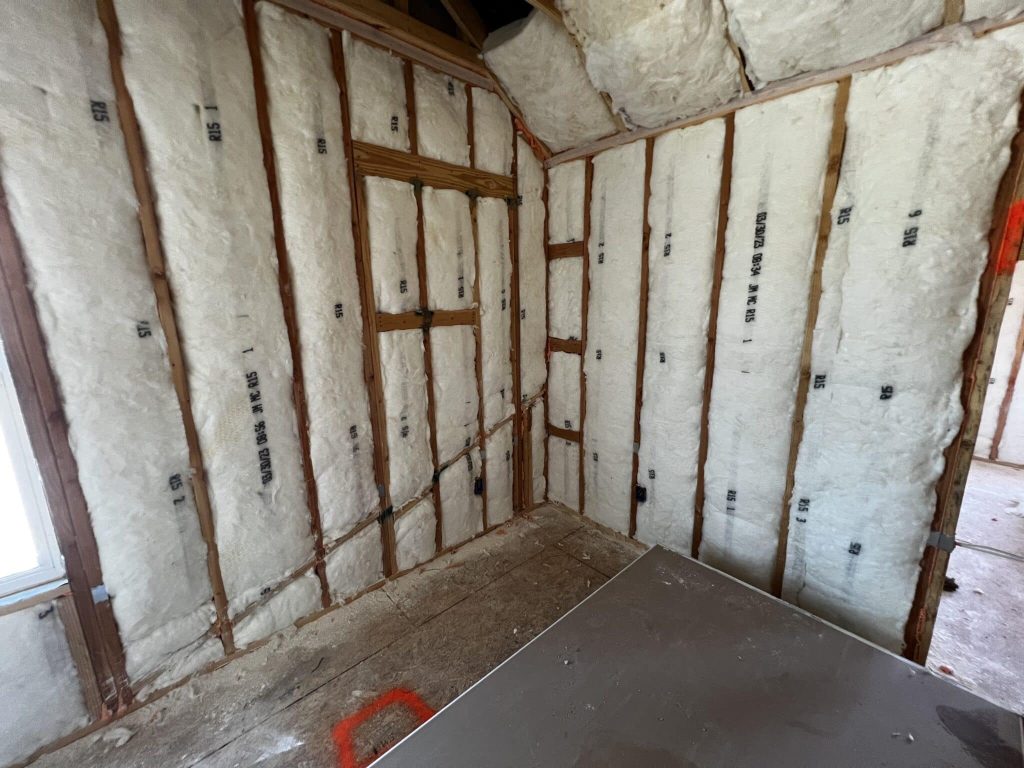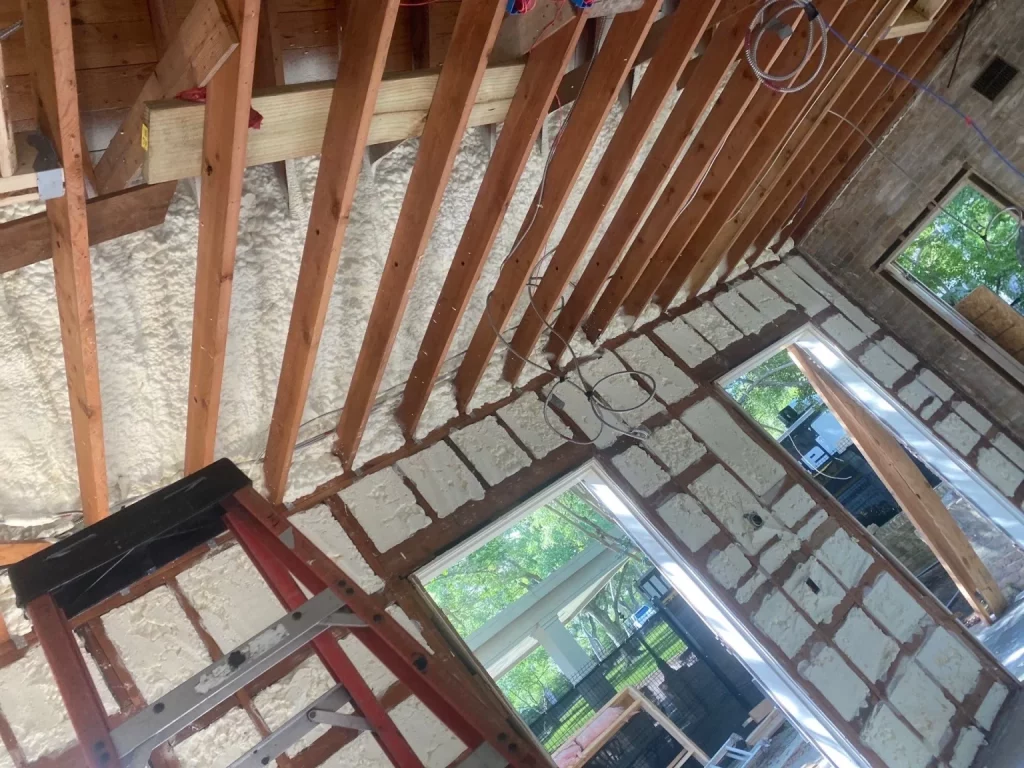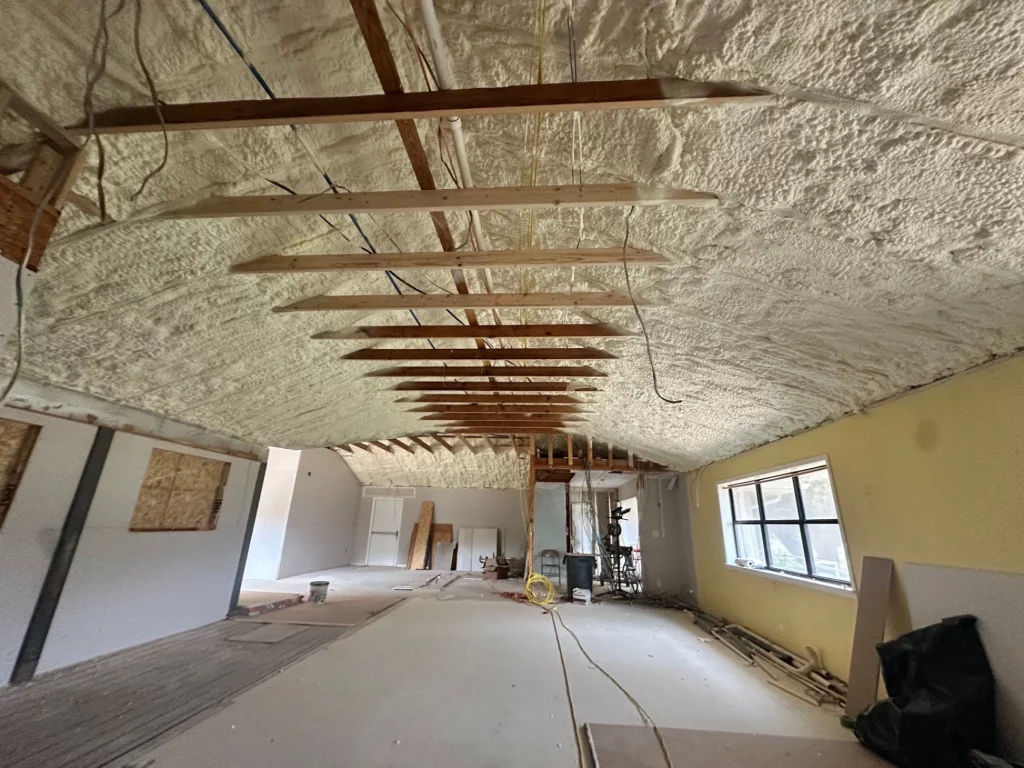
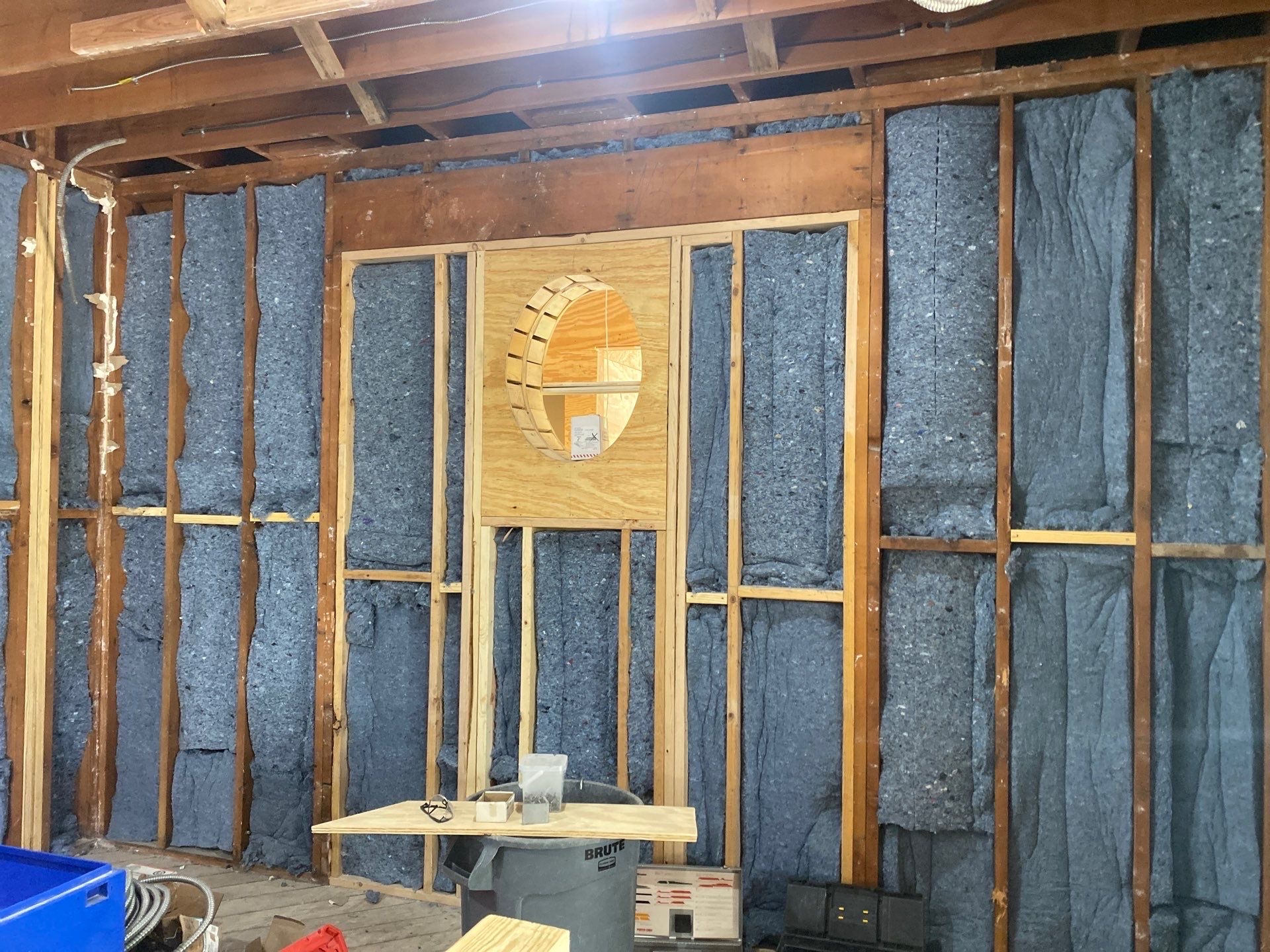
Spray foam insulation protects your property from extreme weather by creating a continuous air, moisture, and thermal barrier that seals gaps, blocks wind-driven water, strengthens structural assemblies, and resists flood damage. Unlike traditional batt insulation, which leaves seams and voids vulnerable to air infiltration and moisture penetration, spray foam adheres directly to surfaces and expands to fill every crack and cavity. This creates an airtight seal that defends against hurricane-force winds, freezing temperatures, flooding, and severe heat waves. The two main types, closed-cell and open-cell, offer different levels of protection depending on the weather threats in your region and the specific areas of your home being insulated.
TLDR / Key Takeaways
- Spray foam insulation creates a continuous air, moisture, and thermal barrier that traditional batt and blown-in insulation cannot match
- Closed-cell spray foam delivers R-6.5 per inch and acts as a vapor barrier with roughly 3 perms per inch, making it the preferred choice for extreme weather protection
- FEMA classifies closed-cell spray foam as flood-damage resistant, the only cavity insulation to earn that designation
- Spray foam applied to roof decks improves wind uplift resistance and reduces the risk of roof failure during hurricanes
- Closed-cell foam bonds to framing members and can dramatically improve the racking resistance of wall assemblies by up to 200% or more
- SPF roofing systems have demonstrated exceptional durability in post-hurricane surveys conducted by NIST and RICOWI
- The U.S. Department of Energy notes that foam insulation eliminates additional weatherization tasks like caulking, housewrap, and vapor barrier installation
- Proper installation by certified professionals is essential to realize the full weather-protective benefits of spray foam
How Spray Foam Defends Against Different Types of Extreme Weather
Hurricane and Wind Protection
Hurricanes and severe windstorms exploit every weakness in a building envelope. Wind-driven rain, rapid pressure changes, and uplift forces can tear off roofing, blow out windows, and push water through the smallest gaps in walls and attics. Spray foam insulation addresses these vulnerabilities in multiple ways.
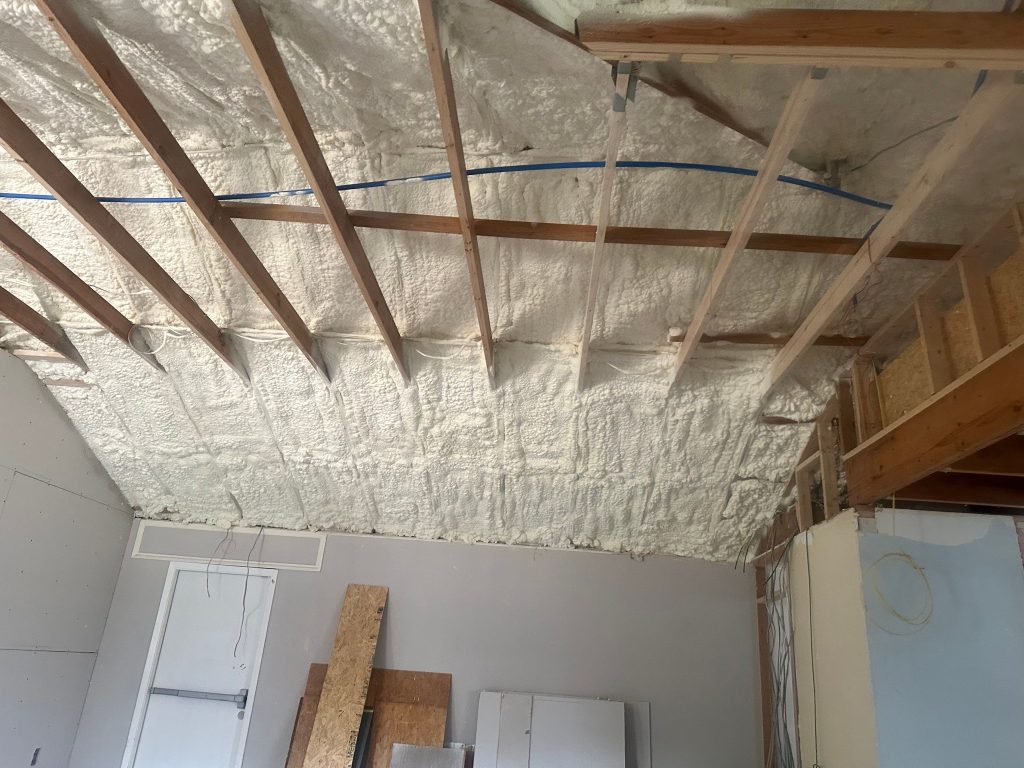
When spray foam is applied directly to the underside of a roof deck, it forms a continuous, bonded layer that improves a building’s ability to withstand high wind loads. This bonded connection reduces the risk of wind uplift, which is a leading cause of catastrophic roof failure during hurricanes. The foam also seals against air and water intrusion, helping prevent the rapid pressurization and moisture damage that often lead to structural failure. According to the Spray Polyurethane Foam Alliance (SPFA), research performed by SPFA member suppliers and the University of Florida shows that closed-cell SPF applied beneath roof decks can significantly improve wind-uplift resistance and provide a secondary water barrier if the primary roof covering is destroyed.
Independent post-hurricane surveys by the National Institute of Standards and Technology (NIST) and the Roofing Industry’s Committee on Weather Issues (RICOWI) found that SPF roofing systems perform exceptionally well during hurricanes, maintaining their integrity and protecting the substrate from hail and wind-driven debris.
Flood and Water Intrusion Defense
Flooding causes billions of dollars in property damage every year, and most traditional insulation materials must be removed and replaced after any contact with floodwater. Fiberglass batts, cellulose, and mineral wool absorb water, harbor mold, and lose their insulating properties when wet.
Closed-cell spray foam is different. FEMA classifies closed-cell spray foam insulation as highly resistant to floodwater damage, making it the only cavity insulation recognized as flood-damage resistant and approved for reconstruction in flood-prone areas. According to WhySprayFoam.org, FEMA notes that closed-cell spray foam “can survive wetting and drying and may be successfully cleaned after a flood to render them free of most harmful pollutants.” This single characteristic can save homeowners tens of thousands of dollars in post-flood remediation costs.
For deeper understanding of moisture-prone areas, see the crawlspace insulation guide, which explains how proper encapsulation prevents water damage, mold growth, and energy loss.
Extreme Cold and Freezing Temperatures
In regions with harsh winters, extreme cold penetrates poorly insulated homes through air leaks in walls, attics, and basements. These air leaks also allow warm, humid indoor air to reach cold surfaces inside wall cavities, where condensation forms and can lead to mold growth, wood rot, and structural decay.
Closed-cell spray foam provides an R-value of approximately R-6.5 per inch, nearly double that of fiberglass batts at R-3.2 to R-3.8 per inch. The higher R-value per inch means less thickness is needed to achieve the same thermal performance, which is especially valuable in areas with limited cavity depth like 2×4 walls. Beyond its thermal resistance, closed-cell foam acts as both an air barrier and a vapor retarder, with a permeance of roughly 3 perms per inch. This combination prevents condensation within wall assemblies by keeping warm moist air away from cold surfaces.
As noted by Building Science Corporation, high-density closed-cell spray polyurethane foam is the only insulation product that can perform all four principal control layer functions simultaneously: water control, air control, vapor control, and thermal control.
Extreme Heat and Summer Storms
During heat waves, poorly sealed attics can reach temperatures above 150 degrees Fahrenheit, forcing HVAC systems to work overtime and driving up energy costs. Spray foam insulation applied to the attic floor or roof deck creates an airtight seal that prevents superheated air from infiltrating living spaces. The U.S. Department of Energy states that foam insulation has higher R-values and forms an air barrier, which can eliminate additional weatherization tasks such as caulking, applying housewrap, and vapor barriers. In homes with spray foam insulation, the U.S. DOE reports that structures can achieve 35% to 40% better energy efficiency compared to conventionally insulated buildings. Studies from the U.S. Environmental Protection Agency indicate that spray foam can reduce heating and cooling costs by 30% to 50%.
Closed-Cell vs Open-Cell: Which Offers Better Weather Protection?
Choosing the right type of spray foam depends on the specific weather threats your property faces. Here is a comparison of how each type performs across the key weather-resistance categories.
| Feature | Closed-Cell Spray Foam | Open-Cell Spray Foam |
|---|---|---|
| R-Value per Inch | R-6.0 to R-7.0 | R-3.5 to R-3.7 |
| Density | ~2.0 lb/ft3 | ~0.5 lb/ft3 |
| Air Barrier | Yes | Yes |
| Vapor Barrier | Yes (~3 perms/inch) | No (~50 perms/inch) |
| Moisture Barrier | Yes | No |
| Structural Reinforcement | Yes, bonds to framing | Minimal |
| FEMA Flood-Resistant | Yes | No |
| Wind Uplift Resistance | Excellent | Limited |
| Best Application for Weather | Foundations, crawlspaces, exterior walls, roof decks | Interior wall cavities, attics (non-flood zones) |
For extreme weather protection, closed-cell spray foam is the clear choice. Its higher density, vapor resistance, structural bonding capability, and FEMA flood-resistance classification make it the preferred option for properties in hurricane zones, flood plains, and regions with extreme temperature swings. Open-cell spray foam still provides excellent air sealing and sound attenuation, but it absorbs water and should not be used below grade or in flood-vulnerable areas.
Structural Benefits: How Spray Foam Makes Your Home Stronger
One of the most overlooked advantages of spray foam insulation is its ability to reinforce the structural integrity of a building. Closed-cell spray foam adheres directly to framing members, sheathing, and roof decking, creating a rigid, monolithic layer that adds significant strength to wall and roof assemblies.
Multiple studies have documented this effect:
- Racking resistance: Research by the Canadian Council of Forest Industries, the National Association of Home Builders, and the SPFA shows that closed-cell cavity insulation can dramatically improve the racking resistance of framed wall assemblies. Walls containing spray foam maintain their shape and integrity under lateral stress far better than conventionally insulated walls.
- Roof deck bonding: When applied to the underside of roof decking, closed-cell spray foam bonds the decking to the trusses or rafters, reducing the chance of nail pop-through during high-wind events.
- Wall rigidity: The foam fills gaps between studs, sheathing, and framing, eliminating voids that allow movement under wind loads.
These structural benefits are particularly valuable in coastal and tornado-prone regions where lateral wind forces place enormous stress on wall and roof connections.
Real-World Scenarios: Spray Foam in Action
The following table illustrates how spray foam insulation has been used to protect properties from specific extreme weather threats.
| Scenario | Home Type | Problem | Solution | Outcome |
|---|---|---|---|---|
| Coastal Hurricane Zone | Two-story wood-frame home, Gulf Coast | Repeated water intrusion through attic during hurricanes; roof shingles tearing off | Closed-cell SPF applied to underside of roof deck (2 inches) and gable end walls | Eliminated wind-driven rain penetration; roof deck remained intact during Category 3 hurricane; no interior water damage |
| Flood-Prone Basement | Ranch home, Midwest river valley | Basement insulation destroyed after repeated flooding; mold growth in fiberglass batts | Closed-cell SPF applied to basement walls and rim joist (2 inches) | Withstood 3 feet of floodwater; FEMA-compliant for flood zone; dried and cleaned without replacement; no mold growth |
| Extreme Cold Climate | 1970s farmhouse, Northern Minnesota | Ice dams forming on roof; high heating bills; drafts around windows and rim joists | Closed-cell SPF in attic rafters (3 inches) and rim joist areas | Ice dams eliminated; heating costs reduced by approximately 35%; indoor temperature remained stable during -20F cold snap |
| Tornado Alley Retrofit | Brick veneer home, Central Texas | Walls flexing during severe thunderstorms; concerns about structural integrity under wind loads | Closed-cell SPF injected into wall cavities (2 inches) | Wall racking resistance improved; reduced air infiltration; homeowner reported noticeably less movement during 70 mph wind event |
| Desert Heat Protection | Stucco home, Southwest Arizona | Attic temperatures exceeding 150F; AC running constantly; high energy bills | Closed-cell SPF on roof deck (2.5 inches) creating unvented attic assembly | Attic temperatures dropped to near indoor ambient; AC runtime reduced by 40%; energy bills decreased significantly |
Actionable Strategies for Weather-Protecting Your Property
1. Prioritize the Building Envelope
The building envelope (exterior walls, roof, foundation, and all openings) is your property’s first line of defense against extreme weather. Focus spray foam application on the areas where weather threats are greatest:
- Roof deck: Apply closed-cell SPF to the underside of the roof decking in hurricane-prone or high-wind regions to improve wind uplift resistance and create a secondary water barrier.
- Rim joist: The rim joist area where the foundation meets the floor framing is one of the leakiest and most vulnerable areas in any home. Sealing it with closed-cell spray foam eliminates air infiltration and prevents moisture-driven rot.
- Crawlspace and basement walls: In flood-prone areas, apply closed-cell spray foam directly to foundation walls to create a FEMA-compliant, flood-resistant insulation system.
2. Match the Foam Type to the Threat
Not all spray foam provides the same level of weather protection. Use closed-cell spray foam for any application where moisture resistance, structural reinforcement, or flood resistance is required. Reserve open-cell spray foam for interior applications in non-flood zones where air sealing and sound control are the primary objectives.
3. Address All Four Control Layers
According to building science principles, a well-protected building envelope must manage four control layers: water, air, vapor, and thermal. As U.S. DOE Building America explains, closed-cell spray foam is currently the only product that can perform all four functions in a single application. When planning your insulation upgrade, verify that your chosen approach addresses each of these layers for the specific climate zone and weather threats in your area.
4. Ensure Proper Ventilation in Sealed Homes
Spray foam creates an airtight building envelope, which is excellent for weather protection but requires mechanical ventilation to maintain healthy indoor air quality. Plan for a balanced ventilation system or energy recovery ventilator (ERV) when significantly upgrading your home’s air sealing with spray foam.
5. Work with Certified Installers
The weather-protective benefits of spray foam depend entirely on proper installation. Gaps, voids, or insufficient thickness in the foam layer compromise its ability to seal against air and water. Hire installers who are certified by the Spray Polyurethane Foam Alliance (SPFA) or an equivalent body, and verify their experience with weather-resistant applications like roof deck spraying and flood-zone installations.
Factors That Affect Spray Foam Performance in Extreme Weather
| Factor | Impact on Performance | Recommendation |
|---|---|---|
| Foam thickness | Directly determines R-value, vapor resistance, and structural bonding | Apply minimum 1.5 to 2 inches of closed-cell for vapor barrier classification; thicker for higher R-values |
| Climate zone | Determines the R-value requirements and vapor drive direction | Follow IECC prescriptive R-values for your zone; consult a building science professional for vapor diffusion requirements |
| Installation temperature | Spray foam cures differently in extreme cold or heat | Most manufacturers recommend substrate temperatures between 60F and 90F for optimal expansion and adhesion |
| Building age and condition | Older homes may have pre-existing moisture damage or structural issues | Address any rot, water damage, or structural concerns before insulating; foam seals moisture in as well as out |
| Application surface | Foam bonds differently to wood, metal, concrete, and masonry | Ensure surfaces are clean and dry; use appropriate primers on non-porous substrates when recommended by the manufacturer |
Get Expert Protection for Your Property
Extreme weather events are becoming more frequent and more severe, and your insulation system plays a direct role in how well your property withstands the next storm, flood, or deep freeze. At Stellrr Insulation & Spray Foam, our team specializes in spray foam insulation solutions that are designed to protect homes and buildings from the worst conditions nature can deliver. We evaluate your property’s specific vulnerabilities, recommend the right foam type and thickness for your climate zone, and install every application to the highest standard.
Request a Quote | Schedule a Weather Protection Assessment
Call us at 512-520-0044 or email info@stellrr.com to get started. Your property deserves more than basic insulation. It deserves a weather-resistant building envelope built to last.
Frequently Asked Questions
How does spray foam hold up during a hurricane?
Closed-cell spray foam applied to the roof deck bonds directly to the sheathing and framing, significantly improving wind uplift resistance and providing a secondary water barrier if shingles or roofing materials are torn away during the storm.
Can spray foam insulation survive a flood?
Closed-cell spray foam is the only cavity insulation classified by FEMA as flood-damage resistant. It can withstand floodwater submersion, be cleaned after drying, and does not need to be replaced after a flood event.
Is closed-cell spray foam better than open-cell for weather protection?
Yes. Closed-cell spray foam provides a higher R-value per inch, acts as a vapor barrier, adds structural rigidity, and resists water absorption, making it the superior choice for extreme weather conditions including hurricanes, floods, and deep freezes U.S. Environmental Protection Agency.
How much does spray foam cost compared to traditional insulation?
Spray foam insulation typically costs two to three times more per square foot than fiberglass batts, but it eliminates the need for separate air sealing, vapor barriers, and housewrap, and provides superior protection that can reduce long-term repair and energy costs.
Does spray foam insulation help with ice dams?
Yes. When applied to the roof deck to create an unvented attic assembly, spray foam keeps the roof surface at a temperature closer to the outdoor air, preventing the melting and refreezing cycle that causes ice dams to form.
Sources
- Types of Insulation – U.S. Department of Energy – Comprehensive overview of insulation types, R-values, and performance characteristics including foam insulation’s air barrier capabilities and weatherization benefits.
- Benefits of SPF – Spray Polyurethane Foam Alliance – Industry resource covering SPF’s energy efficiency, structural enhancement, flood resistance, and wind uplift resistance with references to FEMA, NIST, and RICOWI research.
- BSI-048: Exterior Spray Foam – Building Science Corporation – Technical analysis by Joseph Lstiburek explaining how closed-cell SPF performs all four principal control layer functions (water, air, vapor, thermal) and its R-value and permeability specifications.