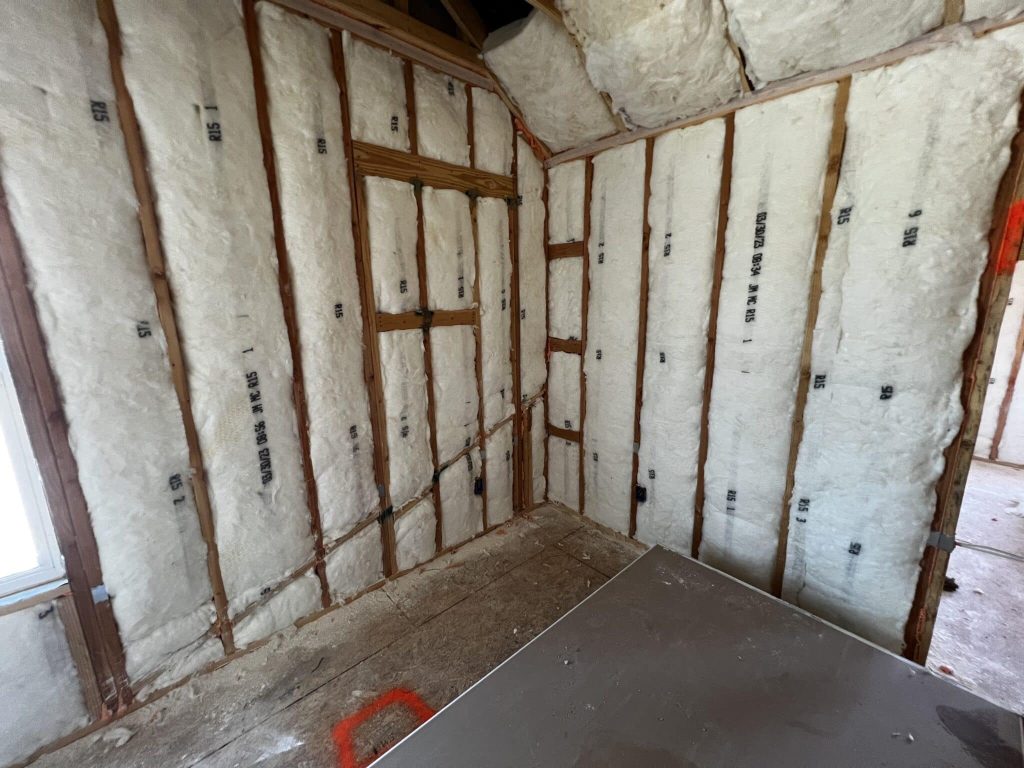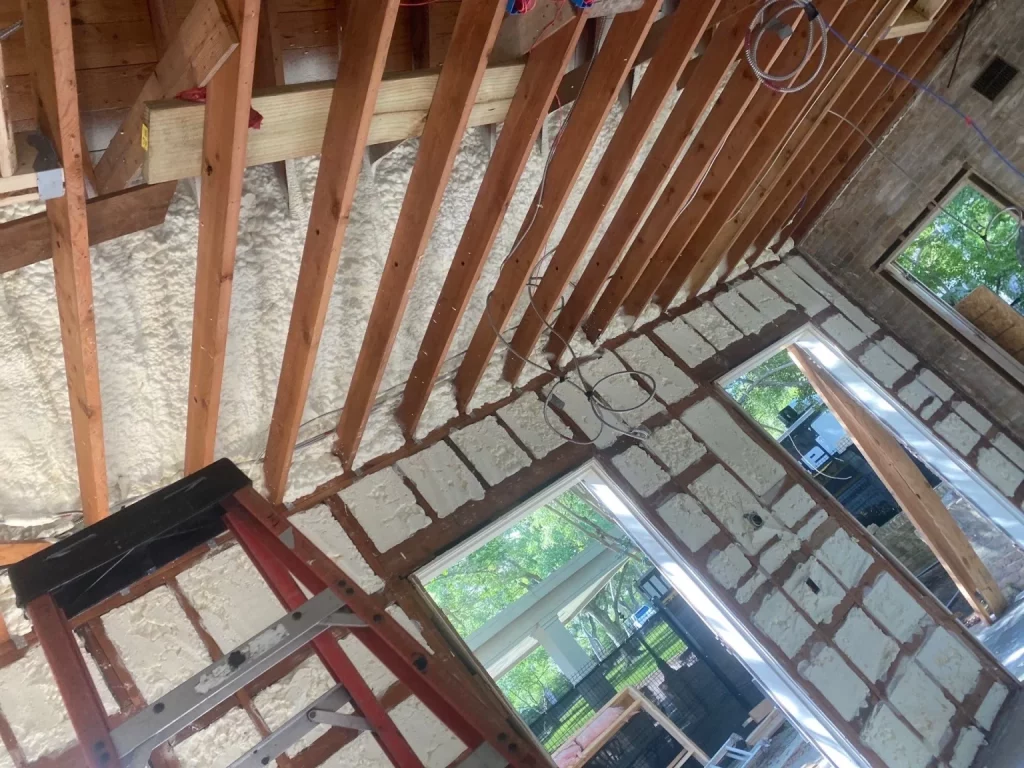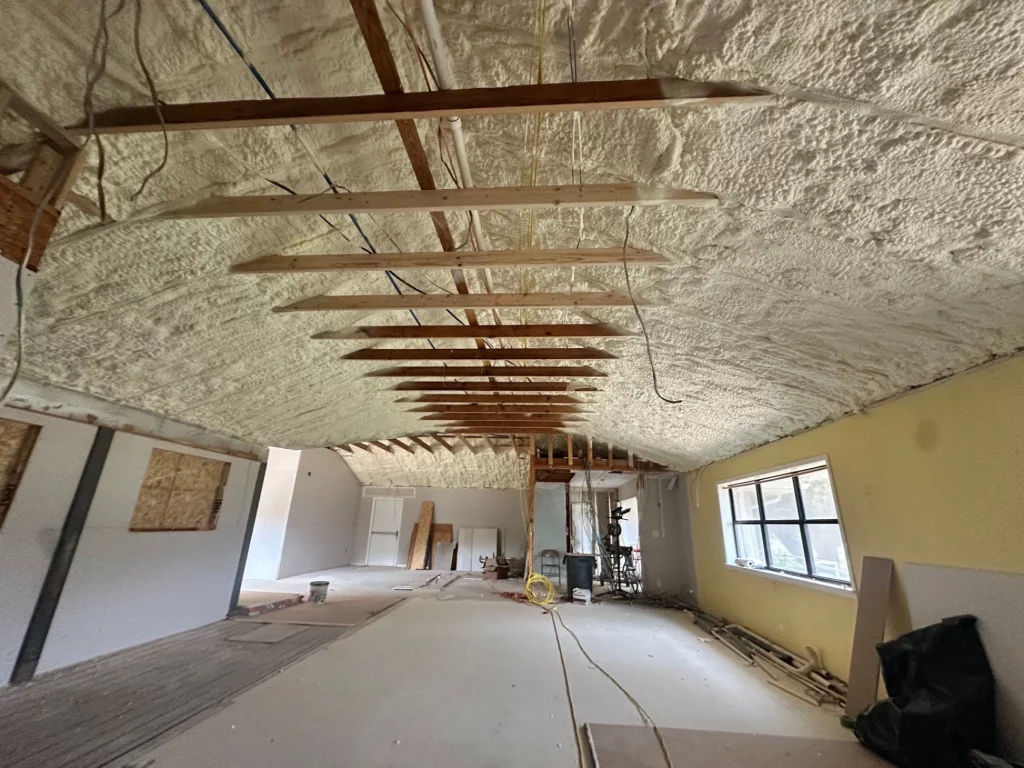
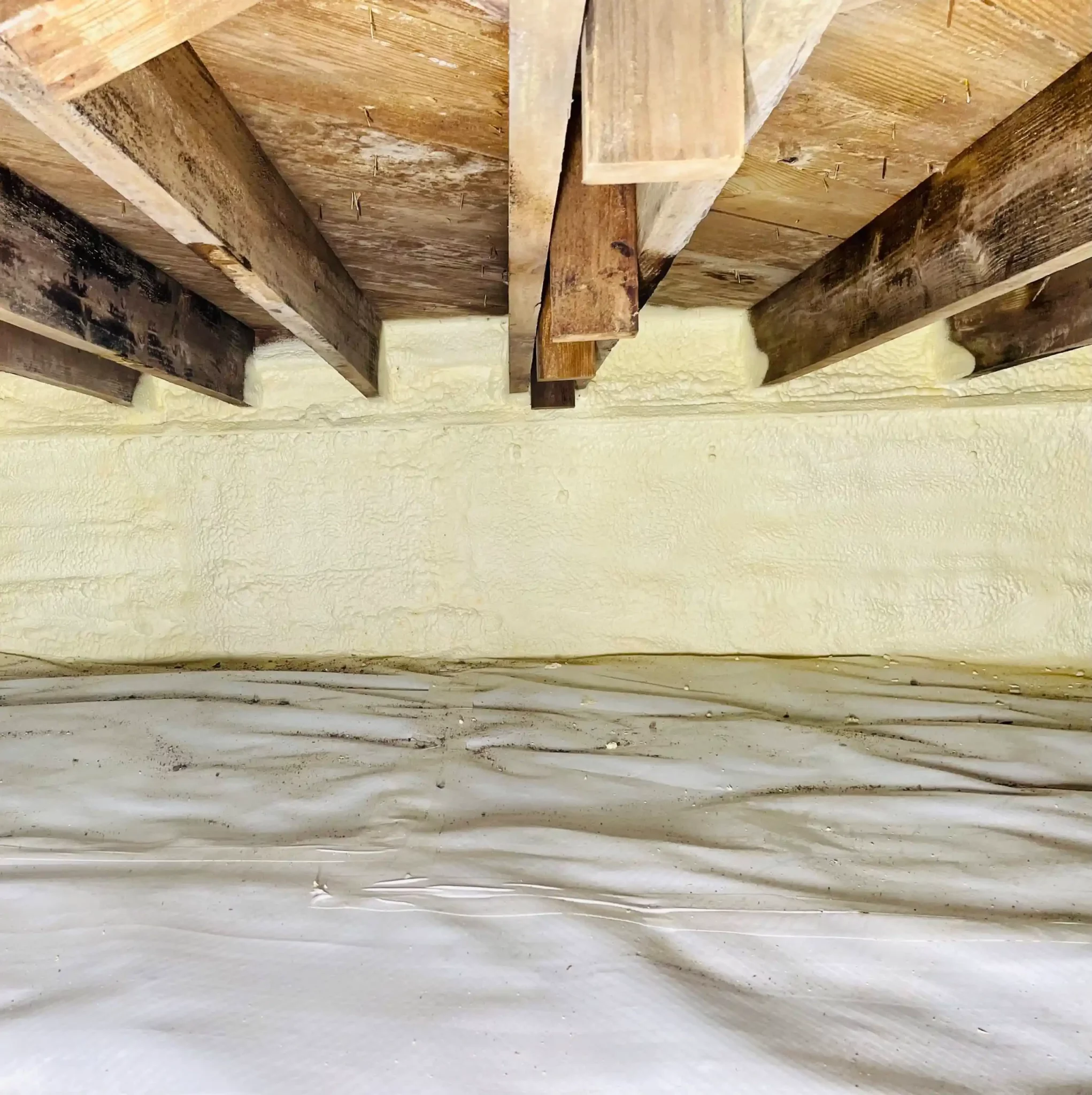
Moisture in a crawl space after insulation installation happens because the insulation itself traps water vapor, or because the underlying moisture sources were never addressed. Fiberglass insulation is particularly vulnerable, as it absorbs humidity like a sponge and loses its insulating properties when wet. The real problem is that insulation is often installed without eliminating the moisture sources feeding the crawl space, leading to persistent dampness, mold growth, and structural damage. Solving this requires controlling humidity at its source, choosing moisture-resistant insulation materials, and properly sealing the crawl space from ground and air-source moisture.
For a deeper understanding of insulation types and moisture prevention, explore this crawl space insulation guide.
Key Takeaways
- Fiberglass insulation absorbs and retains moisture, causing it to sag, lose R-value, and promote mold growth when installed in damp crawl spaces.
- The three primary moisture sources in crawl spaces are ground evaporation, humid air entering through vents, and condensation on cold surfaces.
- A vapor barrier alone only addresses ground moisture, leaving air-source humidity uncontrolled.
- Building science research consistently shows sealed crawl spaces outperform vented crawl spaces for humidity control.
- Closed-cell spray foam provides both thermal insulation and a moisture barrier in one application.
- Proper crawl space encapsulation combines sealed vents, a continuous vapor retarder, wall insulation, and dehumidification.
Understanding Why Crawl Spaces Stay Wet After Insulation
The most common reason crawl spaces develop moisture problems after insulation is that the installation focused on the floor assembly while ignoring the foundation walls, where the largest heat transfer occurs. Many older homes were built with fiberglass batts stuffed between the floor joists overhead, but this approach does not address moisture migrating upward through the soil or humid outdoor air entering through foundation vents.
Fiberglass insulation is particularly problematic in crawl spaces because it was never designed for below-grade, humid environments. While the individual glass fibers do not absorb water, the material traps air in its matrix, and when that air becomes humid, the moisture condenses within the fibers. The material holds water rather than repelling it, and once damp, it loses its R-value and begins to sag under its own weight. This sagging insulation then presses against the subfloor, creating extended contact surfaces where wood rot can develop over time.
The U.S. Department of Energy’s building science guidance confirms that air movement accounts for more than 98 percent of all water vapor movement in building cavities. In a vented crawl space, humid outdoor air enters freely through foundation vents, and as that air cools against foundation walls and floor joists, condensation forms on every cold surface. This process repeats continuously during warm, humid months, keeping the crawl space wet regardless of what insulation sits above it.
The Three Moisture Sources Active in Crawl Spaces
Ground evaporation is the most obvious moisture source, with exposed soil in a crawl space capable of releasing 10 to 15 gallons of water vapor per day into the space above, depending on soil moisture content and temperature. This vapor rises from the dirt floor and enters the crawl space air, raising relative humidity levels.
Air-source moisture enters through foundation vents, which were historically installed based on the assumption that outdoor air would dry out crawl spaces. In humid climates, this approach backfires because the incoming air is already saturated with moisture. Research by the Building America program shows that vents in humid climates actively introduce moisture rather than remove it, and that sealed crawl spaces consistently maintain lower humidity levels than vented crawl spaces with identical ground covers.
Condensation forms when warm, humid air contacts cool surfaces such as concrete foundation walls, ductwork, and floor joists. As air temperature drops below its dew point, moisture condenses on these surfaces. In a crawl space without proper insulation on the walls, the foundation concrete stays cool in summer because it is in contact with the relatively constant temperature of the surrounding soil, making it an ideal condensation surface for humid air.
Comparing Insulation Types for Crawl Space Applications
Not all insulation products perform equally in crawl space environments. Understanding the performance characteristics of each type helps homeowners and contractors choose the right solution for their climate and conditions.
| Insulation Type | R-Value per Inch | Moisture Resistance | Air Barrier | Best Application |
|---|---|---|---|---|
| Fiberglass batts | 3.1 to 3.4 | Absorbs and retains moisture | No | Not recommended for crawl spaces |
| Open-cell spray foam | 3.5 to 3.6 | Moderate, can absorb water | Yes | Limited crawl space use |
| Closed-cell spray foam | 6.0 to 6.5 | Water-resistant | Yes | Crawl space walls and rim joists |
| Rigid XPS foam board | 5.0 | Water-resistant | Yes | Crawl space walls |
| Rigid polyisocyanurate | 6.0 to 6.5 | Water-resistant | Yes | Crawl space walls |
Fiberglass batts are the least suitable option for crawl spaces because they lack moisture resistance, do not create an air barrier, and will inevitably become damp in humid conditions. Open-cell spray foam offers air-sealing properties but can absorb water over time, making it less reliable than closed-cell formulations. Closed-cell spray foam provides the highest R-value per inch while acting as both insulation and a moisture barrier, with cells that are completely closed and pressed together so air and moisture cannot penetrate the foam matrix.
Real-World Contractor Scenarios
Our professionals have encountered crawl space moisture problems in a wide range of home types, and the following scenarios illustrate common patterns and solutions.
| Scenario | Home Type | Problem | Solution | Outcome |
|---|---|---|---|---|
| Fiberglass sagging through joists | 1970s ranch home | Batt insulation is heavy with moisture, sagging 4 to 6 inches, and pressing against the subfloor | Removed all fiberglass, installed closed-cell spray foam on foundation walls, sealed all vents | Dry crawl space within 30 days, no further sagging |
| Condensation on ductwork | Two-story colonial with HVAC in crawl space | Metal ducts are sweating in summer, and water is pooling on the barrier | Insulated ducts with closed-cell foam, sealed crawl space, and installed a dehumidifier | No condensation observed through the next humid season |
| Mold on rim joists | Split-level home with open vented crawl space | Mold colonization on wood at the foundation perimeter | Closed all vents, installed a vapor barrier on the floor, and insulated the rim joists with spray foam | Mold and the growth stopped, wood dried to acceptable moisture levels |
| Ground moisture after heavy rain | Home with poor exterior drainage | Standing water against the foundation after rainfall events | Installed French drain exterior to foundation, extended downspouts, upgraded to 20-mil vapor barrier | No standing water observed after subsequent rainfall |
| Humidity spike in winter | Older home with mixed insulation | Relative humidity exceeding 70 percent despite sealed vents | Added crawl space dehumidifier on auto-humidistat | Stable humidity is maintained below 55 percent year-round |
Why Vented Crawl Spaces Often Make Moisture Problems Worse
Building codes historically required foundation vents in crawl spaces based on the assumption that outdoor air would circulate and dry out the space. This reasoning worked reasonably well in dry climates, but decades of building science research have demonstrated that in humid regions, open vents allow warm, moist outdoor air to enter the crawl space and condense on cool surfaces.
The American Society of Heating, Refrigerating, and Air-Conditioning Engineers has published research confirming that vents bring unwanted moisture into crawl spaces, leading to condensation, mold growth, and wood decay. In humid climates such as those found in the southeastern United States, outdoor summer relative humidity regularly reaches 75 to 85 percent, and when that air enters a cool crawl space, the relative humidity climbs even higher as the air temperature drops.
The ENERGY STAR program guidance specifically recommends sealing and insulating crawl spaces rather than relying on vented approaches. According to their technical guidance, a properly sealed, moisture-protected, and continuously insulated crawl space can improve comfort, reduce energy costs, enhance durability, and lower the entry of mold, soil gases, and other pollutants.
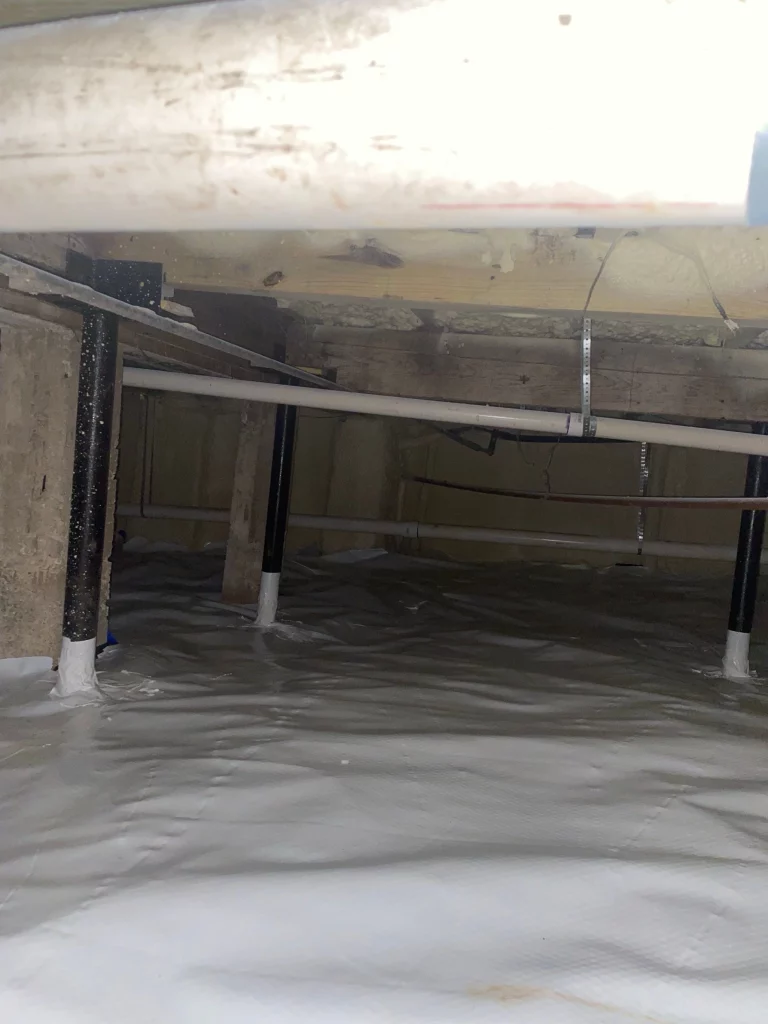
Steps to Fix a Wet Crawl Space After Insulation
Addressing moisture in a crawl space requires a systematic approach that eliminates each source of humidity rather than simply replacing damaged insulation.
Step 1: Remove all wet or sagging insulation. Wet fiberglass insulation must be safely removed using proper PPE, including coveralls, gloves, long sleeves, eye protection, and a full-face respirator mask rather than a standard dust mask. If the insulation has developed mold, the health risks require additional precautions during removal.
Step 2: Install a continuous vapor retarder on the floor. Cover the entire dirt floor with polyethylene sheeting that extends at least 6 inches up the foundation walls. Overlap all seams by 12 inches and seal them with polyethylene-compatible seam tape. Standard 6-mil polyethylene meets code minimums, but 10 to 20-mil reinforced sheeting offers substantially better puncture resistance and longevity.
Step 3: Seal all foundation vents. Fill each vent opening with rigid foam cut to fit snugly, then seal the perimeter with spray foam or caulk. This prevents humid outdoor air from entering the crawl space through the vent openings.
Step 4: Install insulation on the foundation walls rather than the floor. The Building America Solution Center recommends insulating the interior perimeter walls with rigid foam board or closed-cell spray foam, which addresses heat transfer at the foundation where it is most significant. Insulating the walls also keeps the crawl space warmer in winter, reducing condensation potential on pipes and ductwork.
Step 5: Insulate rim joists and seal air leaks. The rim joist area is a major source of air leakage and heat loss. Seal gaps and cracks around wiring, plumbing, and duct penetrations with spray foam, and insulate the rim joist cavities with rigid foam or spray foam.
Step 6: Add mechanical dehumidification. A crawl space dehumidifier rated for the square footage of the space keeps relative humidity below the 60 percent threshold where mold growth becomes likely. Set the humidistat to maintain 50 to 55 percent relative humidity for optimal results.
Factors That Influence Crawl Space Moisture Performance
Climate zone affects which strategies are most effective. In humid climates, sealing vents and adding dehumidification are essential because air-source moisture dominates. In drier climates, ground moisture control through vapor barriers may be sufficient without full encapsulation.
Soil drainage and water table elevation determine how much ground moisture the crawl space must manage. Homes built on clay soil with poor drainage generate more ground moisture than those on well-drained sandy soil. In areas with high water tables, exterior drainage improvements such as French drains and properly sloped grading may be necessary before interior moisture controls can be effective.
Building age and construction type influence which insulation approach is appropriate. Older homes with brick veneer or stone foundations may require different treatment than newer homes with poured concrete or concrete masonry unit walls. The pest control inspection requirements also vary by region, and in areas with significant termite pressure, a 3-inch inspection strip must be maintained at the top of foundation walls.
The presence of HVAC equipment in the crawl space adds both benefits and challenges. Supply and return ducts in an insulated, sealed crawl space experience less heat gain and loss, improving HVAC efficiency, but the mechanical ventilation requirements must be met to prevent combustion safety issues if any naturally drafting appliances draw air from the crawl space.
Long-Term Maintenance for a Dry Crawl Space
A properly insulated and sealed crawl space requires ongoing attention to remain dry. Inspect the vapor barrier annually for tears, punctures from foot traffic, or displacement around piers and penetrations. Repair any damage promptly with seam tape to maintain continuous ground coverage.
Monitor relative humidity with a hygrometer placed at the center of the crawl space. Readings above 60 percent indicate that moisture sources are still active or that the dehumidifier is not keeping pace. Check the dehumidifier drain pan and line regularly to ensure proper condensate removal.
Maintain positive exterior drainage by keeping gutters clean, downspouts directed away from the foundation, and grading sloped so earth drops at least 5 feet from the house at a minimum 5 percent slope. Water that pools against the foundation or infiltrates through the soil will increase the demand on interior moisture controls.
Our team evaluates every crawl space based on its specific conditions, from soil type and drainage to existing insulation and vent configuration. We then design a moisture control strategy that addresses each active humidity source rather than treating symptoms alone. Whether your crawl space needs targeted repairs or a complete encapsulation system, our experienced professionals have the expertise to deliver lasting results.
Contact our team at Stellrr Insulation & Spray Foam today to request a quote for your crawl space project, or reach out to schedule a professional assessment and learn which solutions best fit your home’s needs. Call us at 512-520-0044 or email info@stellrr.com to discuss your project. We will walk you through every option so you can make a confident, informed decision.
Frequently Asked Questions
Can I just replace the wet fiberglass insulation with new fiberglass batts?
Replacing wet fiberglass with more fiberglass will not solve the moisture problem. The underlying humidity sources will simply saturate the new insulation within the first humid season. You must address the moisture sources first by sealing vents, installing a vapor barrier, and adding dehumidification before installing any type of insulation.
How do I know if my crawl space has a moisture problem?
Place a digital hygrometer in the crawl space for 24 hours and check the reading. Relative humidity above 60 percent creates conditions favorable for mold growth. Also check for visible condensation on pipes, ducts, or foundation walls, and look for sagging or falling insulation between the floor joists.
Is closed-cell spray foam worth the higher cost for crawl space insulation?
Closed-cell spray foam provides both thermal insulation and a moisture barrier in a single application, which means it addresses the primary heat transfer at foundation walls while preventing moisture from contacting the wood structure. For humid climates or crawl spaces with persistent moisture issues, the long-term durability and moisture resistance often justify the higher upfront cost compared to lower-performing alternatives.
Should I close the crawl space vents permanently?
In most cases, yes. Building science research consistently demonstrates that sealed crawl spaces maintain lower humidity levels than vented crawl spaces. However, if you have naturally drafting combustion appliances located in the crawl space, sealing all vents can create backdrafting hazards. Consult a qualified home performance contractor to assess combustion safety before closing vents in homes with gas or oil appliances in the crawl space.
How long does it take to dry out a crawl space after fixing the moisture problem?
Once moisture sources are controlled and a dehumidifier is running, most crawl spaces reach target humidity levels within two to four weeks, depending on the initial moisture content of the soil, wood, and insulation. Severely saturated framing members may require several months to fully dry, but mold growth stops once humidity stays below 60 percent.
Sources
- ENERGY STAR – Basement and Crawlspace Air Sealing and Insulating Project – U.S. Department of Energy guidance on crawl space sealing, insulation methods, and climate-specific recommendations for enclosed crawl spaces.
- Building America Solution Center – Unvented, Insulated Crawlspaces – Technical guidance from Pacific Northwest National Laboratory on designing closed crawl spaces, including vapor retarder installation, rigid foam insulation specifications, and climate zone requirements.
- Department of Energy – Moisture Control – Government guidance explaining how moisture moves through buildings, the role of air movement versus diffusion, and foundation moisture management strategies.
- Crawl Space Energy Institute – Crawlspace Vapor Barriers – Industry guidance on vapor barrier materials, mil thickness comparisons, permeance ratings, and installation standards for effective ground moisture control.
- Crawl Space Ninja Supply – The Truth About Fiberglass Insulation in Crawl Spaces – Technical resource explaining why fiberglass insulation fails in crawl spaces, how it holds moisture, and the correct approach to wall insulation and humidity control.